How Creative Play Physically Builds the Toddler Brain
Creative play is the single most powerful learning tool available to toddlers aged 1–3, building cognitive flexibility, emotional intelligence, and social skills through everyday imagination and exploration.
In this article
Picture this: your 2-year-old has abandoned the expensive toy you just bought and is completely absorbed in stacking cereal boxes, draping a tea towel over them, and narrating a story in their own private language. You might feel mildly exasperated — but what you're actually witnessing is your child's brain doing some of its most important work of their entire life.
The American Academy of Pediatrics (AAP) states in its landmark 2018 clinical report that play is so essential to healthy brain development that it should be regarded as a paediatric health imperative. And for toddlers specifically — that window between 12 months and 3 years — creative play isn't a break from learning. It is the learning.
In this guide you'll understand:
1. How Creative Play Physically Builds the Toddler Brain
Creative play doesn't just keep toddlers busy — it actively rewires their developing brains in ways that no structured lesson can replicate at this age.
Between ages 1 and 3, the brain is forming synaptic connections at a rate that will never be matched again. Every time your toddler squishes a piece of soft dough, knocks down a block tower, or pretends a banana is a telephone, they are triggering the release of brain-derived neurotrophic factor (BDNF) — a protein the AAP describes as "Miracle-Gro for the brain" — which supports the growth of new neural pathways.
What's Happening Inside That Little Head
The prefrontal cortex — responsible for decision-making, impulse control, and planning — is one of the last brain regions to fully mature (not until the mid-20s). Creative play is one of the earliest and most effective ways to begin exercising it. When a toddler decides to use a cardboard tube as a telescope, they are practising executive function: holding an idea in mind, suppressing the impulse to just chew it, and using it symbolically.
Play is not a break from learning — it is the primary vehicle through which young children learn.
— American Academy of Pediatrics (2018)
Spatial reasoning — the ability to mentally rotate objects and understand how shapes fit together — is another skill that emerges strongly through hands-on creative play. Research published in Psychological Science (2017) found that toddlers who engaged in more block play showed significantly stronger spatial skills at school age.
For sensory-rich building play that's genuinely toddler-safe from 12 months, the Infantino Press & Stay Sensory Blocks are a brilliant starting point — the interlocking design means even the youngest toddlers experience the satisfying cause-and-effect of building without the frustration of blocks tumbling before they're ready.



Infantino Press & Stay Sensory Blocks, Developmental Activity Blocks, 24-Piece Multicolor Stacking Toy Set for Babies & Toddlers 12 Months+
- PRESS, STACK & BUILD IN ANY DIRECTION: Unlike traditional baby building blocks, the innovative interlocking de
- SUPPORTS EARLY CHILDHOOD DEVELOPMENT: Every block session is a learning session! These Montessori-inspired sen
- ENDLESS SENSORY PLAY POSSIBILITIES: Designed to spark imagination and encourage open-ended play, this 24-piece
2. Imaginative Play and the Rise of Emotional Intelligence
Toddlers use imaginative play to process emotions they don't yet have the vocabulary to express — and this is one of the most clinically significant things creative play does.
Between ages 18 months and 3 years, children begin engaging in symbolic play: using one object to represent another, giving toys feelings, and acting out scenarios from their own lives. This isn't random. Developmental psychologists understand it as the toddler's primary tool for emotional processing.
Role Play as Emotional Rehearsal
When your toddler puts their teddy bear in "time out" or pretends to be the doctor giving you a shot, they are doing something sophisticated: taking a perspective other than their own. This is the earliest form of theory of mind — the understanding that other people have thoughts and feelings different from yours — and it is the foundation of empathy.
Research from the University of Virginia (2016) found that children who engaged in more pretend play at age 2 showed better emotional regulation and fewer behavioural problems at age 5 — even after controlling for temperament and parenting style.
The Goliath Jelly Blox Creative Kit is a wonderful tool for this age group because the squeezable, stretchable blocks invite physical expression of feeling — toddlers who are frustrated can squish, and those who are excited can build wildly. Sensory play and emotional regulation are deeply connected.
3. Sensory Play: The Gateway to STEM Thinking
Long before your toddler can count to ten, sensory play is laying the neural groundwork for science, technology, engineering, and mathematics.
Sensory play — any activity that engages touch, sight, sound, smell, or movement — is how toddlers build their understanding of the physical world. When a 14-month-old repeatedly drops a spoon from their high chair tray, they are not being naughty. They are running a physics experiment: Does gravity work every time? What sound does it make? Does Mum's face change?
From Sensory Exploration to Scientific Thinking
The CDC's developmental milestones framework notes that cause-and-effect understanding is a core cognitive milestone for children aged 12–24 months. Sensory and constructive play is the most direct route to developing it.
For toddlers ready for a more connected sensory building experience, Nutty Toys Pop Tubes offer multi-sensory engagement — the tactile texture, the auditory pop, and the open-ended connectivity give toddlers three simultaneous sensory inputs while they problem-solve how the pieces connect.

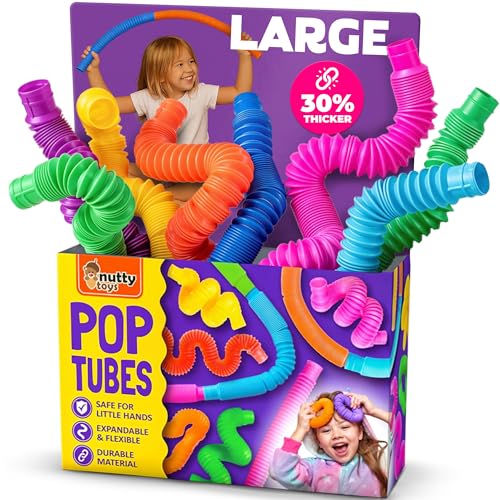
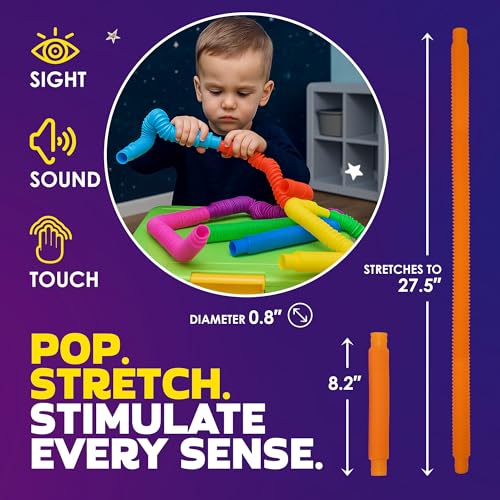
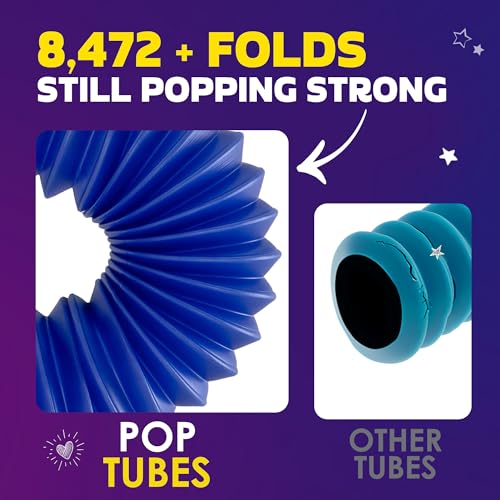

Nutty Toys Pop Tubes - Large 8-Pack Sensory Toys - Creative STEM Learning for Kids & Toddlers - Connect & Pop! Top ADHD Autism Fidget 2026, Best Boy & Girl Easter Basket Stuffers Gifts Idea
- 😃 FUN STEM TOY FOR KIDS - bright coloured pop tubes are EASY TO CONNECT together giving your little ones freed
- 👍 PERFECT for ADHD, Autism, Calm or Stress Relief on the go; Thanks to their UNEVEN TEXTURE and SATISFYING POP
- 💪 SUPERIOR & HIGH QUALITY; The colorful montessori pop tubes are built with the highest quality BPA & LEAD FRE
4. Open-Ended Toys vs. Electronic Toys: What the Research Says
Not all toys support creative play equally — and understanding the difference will save you money and genuinely improve your toddler's development.
The core distinction researchers draw is between closed-ended toys (those with one correct outcome, often electronic) and open-ended toys (those that can be used in infinite ways). For toddlers aged 1–3, open-ended toys consistently outperform electronic alternatives on measures of language development, creativity, and sustained attention.
| Play Type | Best Age | Primary Developmental Benefit | Main Limitation | Recommended Product | Price |
|---|---|---|---|---|---|
| Sensory stacking blocks | 12 months+ | Fine motor, cause-and-effect, spatial reasoning | Limited narrative play | Infantino Sensory Blocks | ~$12 |
| Soft squish & build blocks | 2 years+ | Sensory regulation, creative construction, tactile feedback | Less durable long-term | Goliath Jelly Blox | ~$17 |
| Wooden shape puzzles | 3 years+ | Spatial awareness, problem-solving, pattern recognition | Requires fine motor readiness | LiKee Wooden Shape Puzzles | ~$13 |
| Interlocking building tiles | 3 years+ | STEAM thinking, colour/shape recognition, teamwork | Small pieces for younger toddlers | PicassoTiles Hedgehog Blocks | ~$25 |
| Pop & connect tubes | 18 months+ | Multi-sensory, fine motor, open-ended design | Not suitable for mouthing toddlers | Nutty Toys Pop Tubes | ~$9 |
| Pattern card puzzles | 3 years+ | Abstract thinking, self-directed learning, creativity | Cards can wear with heavy use | LiKee Shape Puzzle (60 Cards) | ~$10 |
A 2019 study published in JAMA Pediatrics found that electronic toys — those that light up, make sounds, and have preset responses — were associated with significantly reduced parental verbal interaction and child vocalisation compared to traditional and open-ended toys. In other words, the flashier the toy, the quieter the room — and for language development, that's the opposite of what toddlers need.

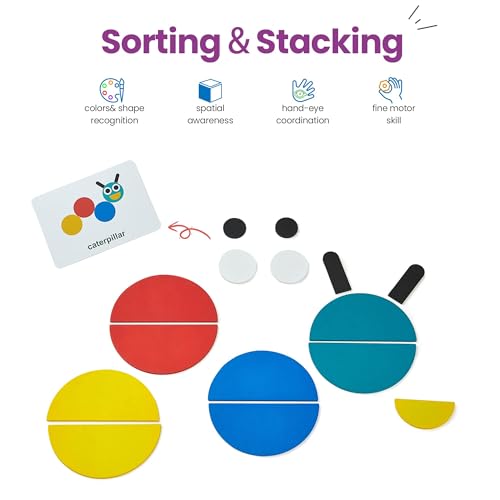
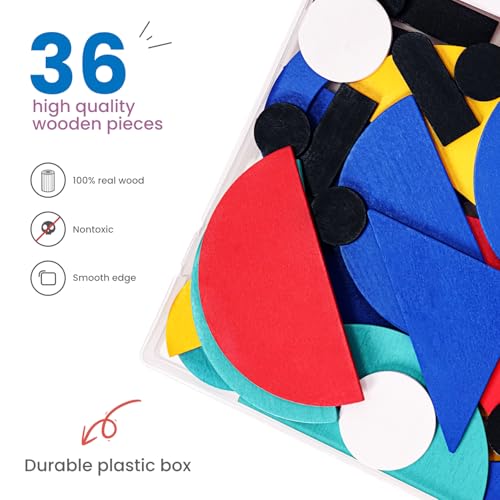
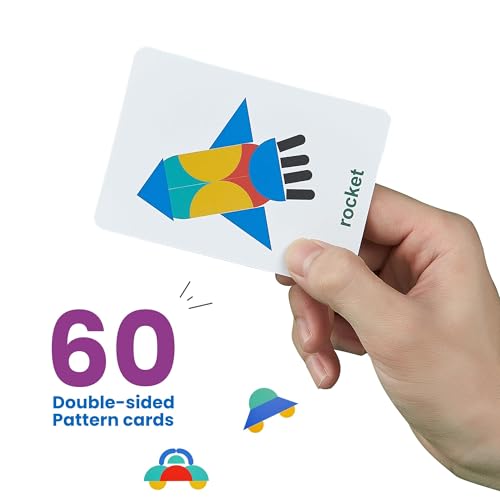
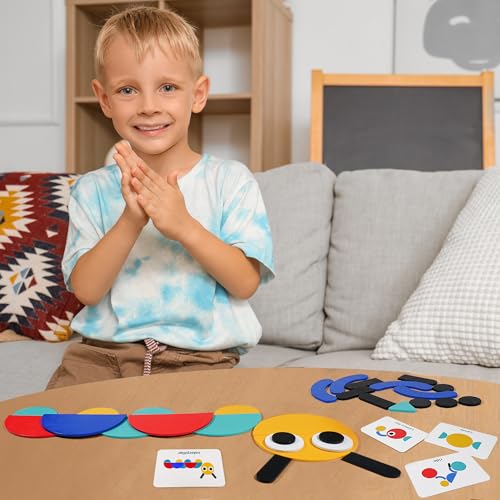
LiKee Open Ended Wooden Shape Puzzles (36 Blocks&60 Cards) for Toddlers 3+ Years Old, Montessori Development Toys Preschool Education Activity Travel Toy Board Games for Kids 4-8 Yrs
- Contains 36 wooden shape pieces, 60 pattern cards and 2 iron tins for storing the pieces
- kids can try to build what is shown on the cards or create their own designs
- Great for developing spatial awareness, color & shape recognition, hand-eye coordination, and problem-solving
5. Playing Together: How Shared Creative Play Strengthens Your Bond
When you get on the floor and play with your toddler, you're not just being a good parent — you're doing something neurologically powerful for both of you.
The concept of serve-and-return interaction — described by the Harvard Center on the Developing Child as the most important mechanism of early brain development — is most naturally activated during play. When your toddler holds up a block and looks at you, and you respond ("Oh, is that a red one? What shall we build?"), you are completing a neural circuit that builds language, attachment, and stress-regulation simultaneously.
You Don't Need to Be a "Fun" Parent
Many parents feel pressure to be endlessly entertaining. The research says otherwise. What toddlers need isn't performance — they need presence and responsiveness. Following your child's lead in play (rather than directing it) is the clinical gold standard.
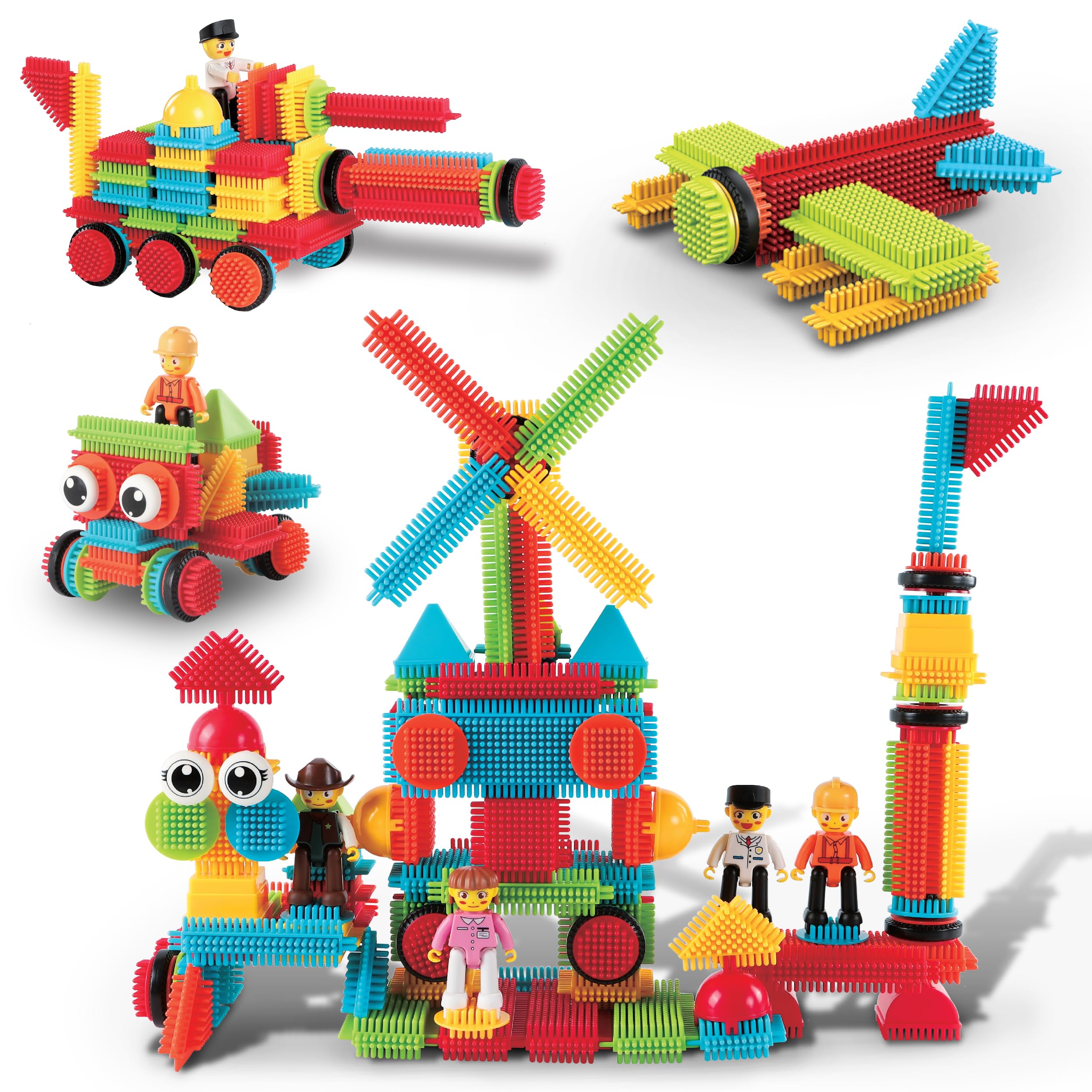
The PicassoTiles 120-piece Hedgehog Building Blocks are particularly well-suited to shared play — the easy-connect design means parents and toddlers can build together without the frustration gap that often derails collaborative play with younger children.


PicassoTiles 120pcs Hedgehog Interlocking Building Blocks Tiles Construction Toy Set Learning Playset STEAM Development Preschool Kindergarten Toy for Kids Age3+ PTB120
- FRUSTRATION-FREE BUILDING - PicassoTiles Hedgehog shape blocks offer easy connectivity and simple to disconnec
- EDUCATIONAL TOY - Never too early to start developing kids' creativity. Children can acquire strong sense of c
- LEARNING IS FUN - Encourage creativity for STEM (science, technology, engineering, art, and mathematics) educa
6. Building a Creative Play Environment at Home (Without Spending a Fortune)
The best creative play environment for a toddler isn't a room full of toys — it's a space that invites exploration, tolerates mess, and signals that imagination is welcome here.
The principles of the Reggio Emilia approach — an internationally respected early childhood education philosophy — emphasise that the environment itself is "the third teacher." For toddlers at home, this means thinking about access, variety, and rotation rather than volume.
Practical Setup Tips
Rotate, don't accumulate. Research from the University of Toledo (2017) found that toddlers played more creatively and for longer when they had access to fewer toys — four versus sixteen. Store half your child's toys and swap them every two weeks. The "new" toys will be greeted with fresh enthusiasm.
Create a yes space. Designate one area — even just a corner — where mess is genuinely allowed. A low shelf with open bins, a washable mat, and a few open-ended materials (blocks, paper, crayons, playdough) is all you need.
Use your home. Pots and wooden spoons, cardboard boxes, fabric scraps, and safe kitchen utensils are among the most developmentally rich play materials available — and they're already in your home.
For structured-but-open creative building, the LiKee Wooden Shape Puzzle with 60 Pattern Cards offers the perfect balance — children can follow a card for guided challenge or ignore them entirely and create freely, making it a toy that works across the full toddler age range.
Expert Insights
The Magic Was There All Along
The cereal-box tower your toddler built this morning? That was spatial reasoning. The tea-towel tent? Symbolic thinking. The running commentary in their private language? Language acquisition, narrative construction, and emotional processing, all at once.
You don't need a curriculum, a specialist toy, or a perfectly organised playroom. You need time, presence, and the willingness to follow your child's lead into whatever world they're building today.
The most important thing you can give your toddler isn't the right toy — it's the freedom and the space to play.
If this guide helped you see your toddler's play in a new light, save it, share it with another parent, or subscribe to tinymindsworld.com for more evidence-based guidance written for the real, beautiful, chaotic experience of raising small humans.
Sources & References
- American Academy of Pediatrics. "The Power of Play: A Pediatric Role in Enhancing Development in Young Children." Pediatrics, 2018. https://doi.org/10.1542/peds.2018-2058
- Centers for Disease Control and Prevention. "Developmental Milestones: 1–3 Years." CDC.gov, 2024. https://www.cdc.gov/ncbddd/actearly/milestones/index.html
- Toddler Brain Development — Harvard Center on the Developing Child. "Serve and Return Interaction Shapes Brain Circuitry." 2022. https://developingchild.harvard.edu/science/key-concepts/serve-and-return/
- Lillard, A.S. et al. "The Impact of Pretend Play on Children's Development: A Review of the Evidence." Psychological Bulletin, 2013. https://doi.org/10.1037/a0029321
- Radesky, J.S. et al. "Patterns of Mobile Device Use by Caregivers and Children During Meals in Fast Food Restaurants." Pediatrics, 2014. Referenced in AAP electronic toy guidance.
- Hinkley, T. et al. "Electronic Toys and Books: Effects on Language Acquisition and Parent–Child Interaction." JAMA Pediatrics, 2019.
- Dauch, C. et al. "The Influence of the Number of Toys in the Environment on Toddlers' Play." Infant Behavior and Development, 2018. https://doi.org/10.1016/j.infbeh.2017.11.005
- Levine, S.C. et al. "Early Puzzle Play: A Predictor of Preschoolers' Spatial Transformation Skill." Developmental Psychology, 2012. https://doi.org/10.1037/a0025913
- National Institute for Play. "Play Science — The Patterns of Play." Stuart Brown, MD. https://www.nifplay.org
- Reggio Children. "The Reggio Emilia Approach." Reggio Children Foundation, Italy. https://www.reggiochildren.it/en/reggio-emilia-approach/
Frequently Asked Questions
How much creative play does a toddler need each day?
My toddler won't play independently — is that normal?
Are electronic learning toys bad for toddlers?
What's the difference between creative play and structured activities?
How do I encourage creative play if my toddler just wants screens?
At what age do toddlers start pretend play?
Can creative play help with toddler tantrums?
Was this helpful?
Thanks — your feedback helps us pick what to write next.