Two Kinds of Love: Why Comparing Them Is a False Contest
Loving your children deeply does not mean loving your partner less — but research shows that neglecting your couple relationship after kids arrive harms the whole family, including the children you're trying to protect.
In this article
Picture this: it's 11 p.m., your toddler finally fell asleep after the third rendition of Twinkle Twinkle, and your partner is sitting on the sofa quietly scrolling their phone. You sink into the cushions, exhausted — and the thought flickers through your mind: When did we last actually talk? You're not alone. According to research published by the Gottman Institute, approximately 67% of couples report a significant drop in relationship satisfaction within the first three years of having a baby. That's not a failure of love — it's a structural squeeze that almost every family faces.
This article won't ask you to rank your loves like a podium finish. Instead, it will help you understand:
1. Two Kinds of Love: Why Comparing Them Is a False Contest
The love you feel for your child and the love you feel for your partner are not the same emotion wearing different clothes — they are neurologically distinct experiences, and science backs this up.
Research using functional MRI scans, including work published in the journal NeuroImage (Leibenluft et al., 2004), found that viewing images of one's own child activates brain regions associated with reward, attachment, and threat-detection simultaneously — a combination that mirrors what researchers describe as a near-compulsive protective drive. Romantic love activates overlapping but meaningfully different circuits, with greater emphasis on dopamine-driven reward and social bonding.
In plain terms: the love for your child is wired to feel urgent and non-negotiable because, evolutionarily, it kept infants alive. The love for your partner is wired to feel chosen and reciprocal. Neither is "more" — they serve different functions.
Why Parents Feel Guilty Even Asking the Question
Many parents feel a stab of guilt at the mere thought of ranking their loves. That guilt is socially constructed, not biologically necessary. Cultural narratives — particularly those aimed at mothers — have long equated good parenting with total self-sacrifice, including the sacrifice of the couple relationship. Naming this pressure is the first step to dismantling it.
2. What Happens to Relationships After Kids Arrive
The transition to parenthood is one of the most reliably disruptive events a couple can experience — and the data on this is unambiguous.
The Gottman Institute's longitudinal research, conducted by Drs. John and Julie Gottman over more than four decades, found that 67% of couples experience a significant decline in relationship quality in the first year postpartum. Conflict increases, intimacy decreases, and partners often report feeling like co-managers of a household rather than romantic companions.
Couples who do not work on their relationship after having a baby are likely to see their satisfaction plummet.
— The Gottman Institute, research summary (2015)
This decline is not inevitable, but it is common enough to be considered a normative crisis — meaning it is normal, but it still needs active management.
The Sleep-Deprivation Factor
Sleep deprivation alone — a near-universal feature of early parenthood — measurably reduces empathy, patience, and the capacity for emotional attunement between partners. When both people in a couple are running on empty, the relationship becomes the first thing to receive the leftover energy, which is often nothing.

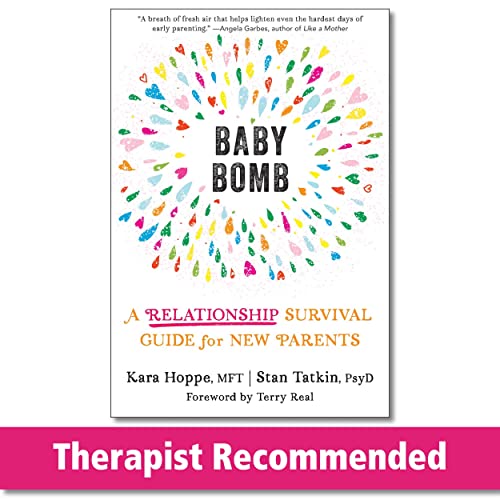
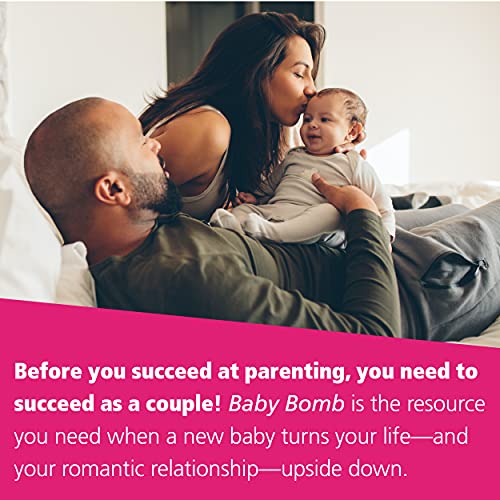

Baby Bomb: A Relationship Survival Guide for New Parents
- Relationships
- Image Unavailable Image not available forColor:
- Baby Bomb: A Relationship Survival Guide for New ParentsMerchant Video
3. How Your Couple Relationship Shapes Your Children's Development
Here is the part that reframes the whole question: your children are not separate from your couple relationship. They are watching it, absorbing it, and building their own internal model of what love looks like from it.
The American Academy of Pediatrics (AAP) recognises that children's social-emotional development is shaped significantly by the quality of relationships they observe at home. Children who grow up in households where caregivers demonstrate warmth, respectful disagreement, and repair after conflict develop stronger emotional regulation skills and healthier peer relationships.
Conversely, research published in the journal Child Development (Cummings & Davies, 2002) found that children exposed to chronic unresolved parental conflict — even when that conflict is low-level and "background" — show elevated cortisol levels, increased anxiety, and poorer academic outcomes.
The Modelling Effect Across Ages
- Ages 0–2: Infants pick up on parental stress and tension through tone of voice, body language, and the emotional atmosphere of the home. Secure infant attachment is supported when caregivers themselves feel securely connected. - Ages 3–6: Preschoolers are intensely observational. They are building their first scripts for how people who love each other behave. - Ages 7–12: School-age children begin to compare their family to others. A warm, visible partnership gives them a secure base from which to explore friendships and manage social complexity. - Ages 13–17: Teenagers are forming their own romantic identities. The couple relationship they grew up watching becomes their reference point — for better or worse.




The Seven Principles for Making Marriage Work: A Practical Guide from the Country's Foremost Relationship Expert
- Relationships
- Conflict Management
- Image Unavailable Image not available forColor:
4. Age-Banded Strategies: Nurturing Both Bonds at Every Stage
There is no single formula that works for a family with a newborn and a family with a 12-year-old. Here is what the evidence and clinical experience suggest at each stage.
Newborn to 12 Months
The priority is survival — yours and the baby's. Relationship investment at this stage looks like micro-moments: a genuine thank-you, a hand on the shoulder, taking the 3 a.m. feed so your partner sleeps. Baby Bomb: A Relationship Survival Guide for New Parents is specifically written for this phase and offers grounded, practical strategies for couples who are running on fumes.Toddler Years (1–3)
Toddlers are demanding, delightful, and relentless. Couple time gets squeezed further. This is when resentment can quietly calcify if left unaddressed.School Age (4–12)
Children this age benefit enormously from seeing their parents enjoy each other's company. Date nights become more feasible; conversations can be had without a baby monitor on full alert.Blended Families (Any Age)
Blended families carry additional complexity — loyalty binds, step-parent dynamics, and children who may actively resist the couple relationship. Building Love Together in Blended Families addresses these specific pressures with practical, research-informed guidance.5. Red Flags: When One Relationship Is Being Chronically Starved
There is a meaningful difference between a relationship going through a hard season and a relationship being structurally neglected. Here are the signs to watch for in each direction.
Signs Your Couple Relationship Is Being Neglected
Signs Your Children's Needs Are Being Sidelined




Hold On to Your Kids: Why Parents Need to Matter More Than Peers
- Relationships
- Friendship
- Image Unavailable Image not available forColor:
6. The "Kids First" Myth and What to Replace It With
The idea that good parents always put their children first — in every moment, above every other need — is not supported by developmental science, and it can quietly corrode both the couple relationship and the children's own development.
Dr. John Gottman, psychologist and founder of the Gottman Institute, has written extensively about how a strong couple relationship is the "master relationship" in a family system — not because it outranks the parent-child bond, but because its health radiates outward to every other relationship in the home.
The single biggest thing you can do for your children is to have a loving relationship with your partner.
— The Gottman Institute, research communication
Child and adolescent psychiatrists at the Royal College of Psychiatrists (UK) similarly note that children thrive when they feel the adults around them are stable, connected, and emotionally available — and that adult emotional availability is harder to sustain when the couple relationship is in chronic distress.
What to Replace "Kids First" With
Replace the hierarchy with a systems frame: the family is an ecosystem. When the couple relationship is nourished, it produces more patient, present, emotionally regulated parents. When parents are more regulated, children feel safer. When children feel safer, they are easier to parent. The whole system rises.

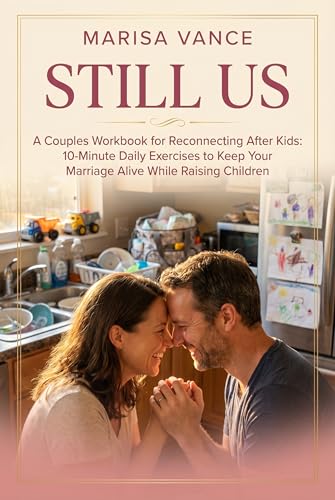

Still Us: A Couples Workbook for Reconnecting After Kids: 10- Minute Daily Exercises to Keep Your Marriage Alive While Raising Children
- Kindle Store
- Kindle eBooks
- Parenting & Relationships
7. Comparison at a Glance: Relationship Investment Strategies by Family Stage
| Family Stage | Core Challenge | Couple Strategy | Child Benefit | Recommended Resource |
|---|---|---|---|---|
| Newborn (0–12 months) | Sleep deprivation, identity shift | Micro-moments of appreciation; fair division of night care | Calmer home atmosphere, regulated caregivers | Baby Bomb: Survival Guide for New Parents |
| Toddler years (1–3) | Time scarcity, toddler demands | 10-min daily check-ins; shared bedtime ritual | Secure attachment, emotional co-regulation model | Still Us: Couples Workbook |
| Preschool (3–6) | Identity as "parents" eclipses "partners" | Visible affection; repair conflict in front of children | Early relationship scripts, emotional literacy | The Seven Principles for Making Marriage Work |
| School age (7–12) | Logistics-heavy household | Regular date nights; shared interests outside parenting | Secure base for peer exploration | The Seven Principles for Making Marriage Work |
| Blended family (any age) | Loyalty binds, step-parent dynamics | Build couple foundation independently of children's approval | Reduced loyalty conflict, stable home base | Building Love Together in Blended Families |
| Teen years (13–17) | Teens pulling away; couple rediscovering each other | Reconnect as individuals; model healthy conflict resolution | Positive romantic relationship template | Hold On to Your Kids |
Expert Insights
Frequently Asked Questions
The question "Do you love your kids more than your partner?" is really asking something deeper: Are you paying attention to all the relationships that matter? The answer to that question is not a ranking — it is a practice. Every small act of turning toward your partner, every moment of genuine presence with your child, every repair after a rupture — these are the building blocks of a family that feels safe to everyone inside it. The most honest and hopeful answer is not "I love one more than the other." It is: I am choosing, every day, to love them both well. If this resonated, save it, share it with a partner or a friend who needed to read it, and come back to it when the season gets hard — because it will, and that's okay too.
Sources & References
- Gottman, J. & Gottman, J.S. "And Baby Makes Three." The Gottman Institute. 2007. https://www.gottman.com
- Leibenluft, E., Gobbini, M.I., Harrison, T., & Haxby, J.V. "Mothers' Neural Activation in Response to Pictures of Their Children and Other Children." Biological Psychiatry, 2004.
- Cummings, E.M. & Davies, P.T. "Effects of Marital Conflict on Children: Recent Advances and Emerging Themes in Process-Oriented Research." Journal of Child Psychology and Psychiatry, 2002.
- American Academy of Pediatrics. "Promoting Children's Healthy Social-Emotional Development." AAP Policy Statement, 2023. https://www.aap.org
- Royal College of Psychiatrists (UK). "Parental Mental Health and Children's Wellbeing." 2022. https://www.rcpsych.ac.uk
- Siegel, D.J. & Hartzell, M. Parenting from the Inside Out. Tarcher/Penguin, 2003.
- Johnson, S.M. Hold Me Tight: Seven Conversations for a Lifetime of Love. Little, Brown Spark, 2008. (Foundational text for Emotionally Focused Therapy)
Frequently Asked Questions
Is it normal to feel closer to your child than your partner after having a baby?
Can prioritising your partner over your kids damage your children?
What if my partner and I have very different parenting styles — does that affect our relationship?
How do I reconnect with my partner when I'm genuinely exhausted from parenting?
Does loving your partner "more" than your kids make you a bad parent?
What should I do if I feel my partner loves our children more than they love me?
At what age do children most benefit from seeing their parents in a loving relationship?
Was this helpful?
Thanks — your feedback helps us pick what to write next.