What Does a Baby Food Maker Actually Do — and Why Does It Matter?
A baby food maker is worth the investment for most families — it saves time, preserves more nutrients than boiling, and gives you full control over ingredients from the first spoonful to toddler meals.

In this article
Picture this: it's 5:30 p.m., your four-month-old is gearing up for the evening cluster-feed, and you're staring at a sweet potato wondering how you're supposed to turn it into a silky, safe, nutrient-dense puree before the chaos peaks. Sound familiar?
You're not alone. According to the World Health Organization (WHO), complementary feeding — introducing solid foods alongside breast milk or formula — should begin at around six months of age, and the quality and variety of those early foods directly shapes a child's long-term health trajectory. Yet a 2022 survey by the American Academy of Pediatrics (AAP) found that more than 60% of parents feel overwhelmed by the transition to solids, citing time pressure and uncertainty about food preparation as top barriers.
A baby food maker promises to solve exactly that problem. But with prices ranging from under $70 to nearly $280, and dozens of models flooding the market in 2026, it's fair to ask: is this a genuinely useful tool or just another piece of baby-gear marketing?
By the end of this article, you'll understand:
1. What Does a Baby Food Maker Actually Do — and Why Does It Matter?
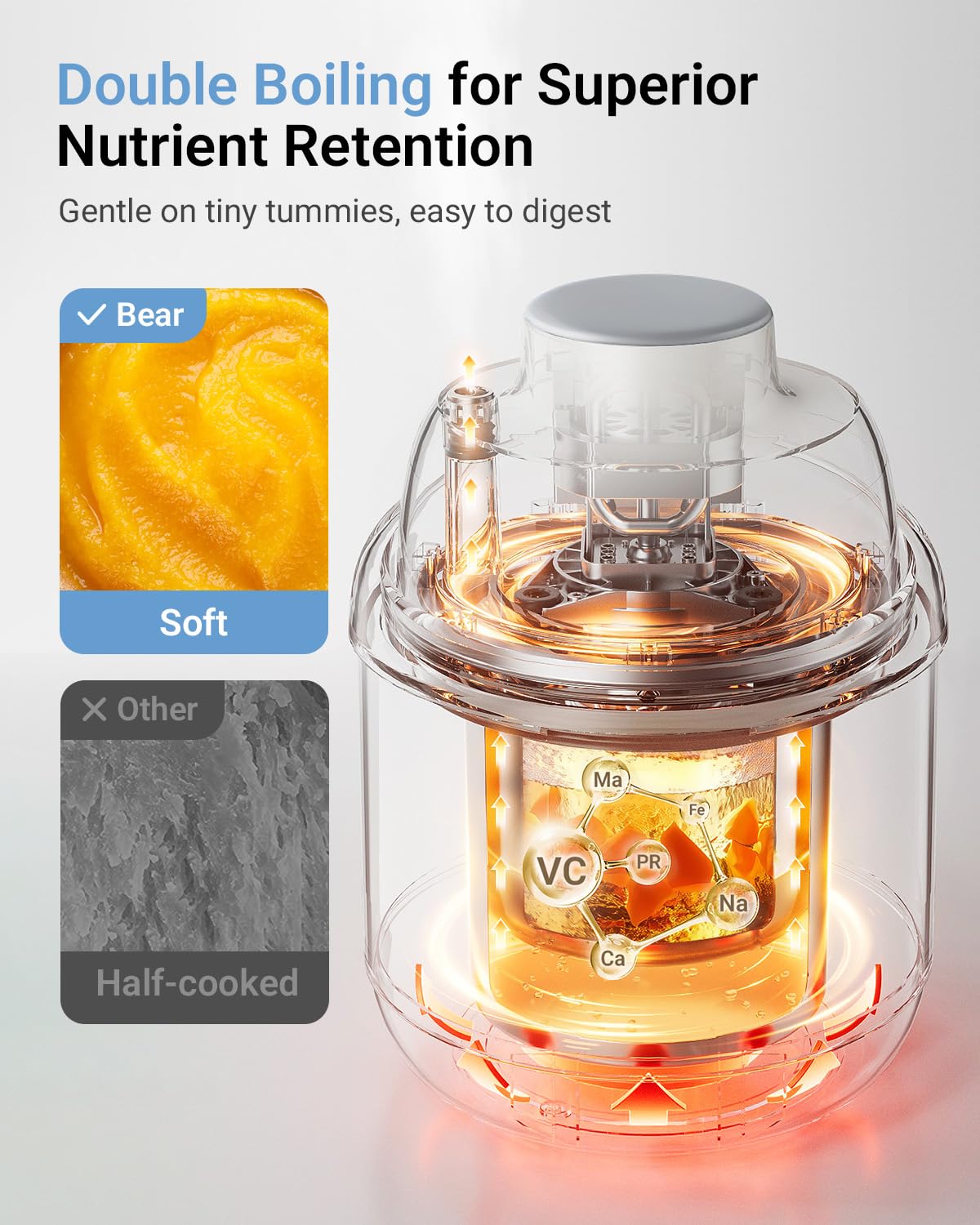
A baby food maker combines a steamer and a blender into a single countertop appliance designed specifically for infant and toddler food preparation. Instead of boiling vegetables in a pot (which leaches nutrients into the cooking water), steaming them in a sealed chamber above the water — then blending them in the same vessel — means fewer dishes, less time, and better nutrition in the bowl.
The core workflow is simple: add water to the reservoir, place chopped food in the steam basket, press a button, and within 10–20 minutes you have a puree ready to serve or freeze. Most 2026 models go further, offering:
- Multiple texture settings — from ultra-smooth (4–6 months) to chunky (9–12 months) - Auto programmes for different food types (fruit, veg, meat, fish) - Reheat and defrost functions so batch-cooked food is table-ready in minutes - Sterilise mode on some models, useful for cleaning the bowl between uses
What It Won't Replace
A baby food maker is not a pressure cooker, slow cooker, or full-size food processor. Dense root vegetables like raw beetroot or whole sweet potato chunks may need pre-cutting. It won't make large-batch family meals. And it won't replace the developmental value of baby-led weaning (BLW) finger foods — for that, you still need a chopping board and a safe soft-food strategy.
Who Benefits Most
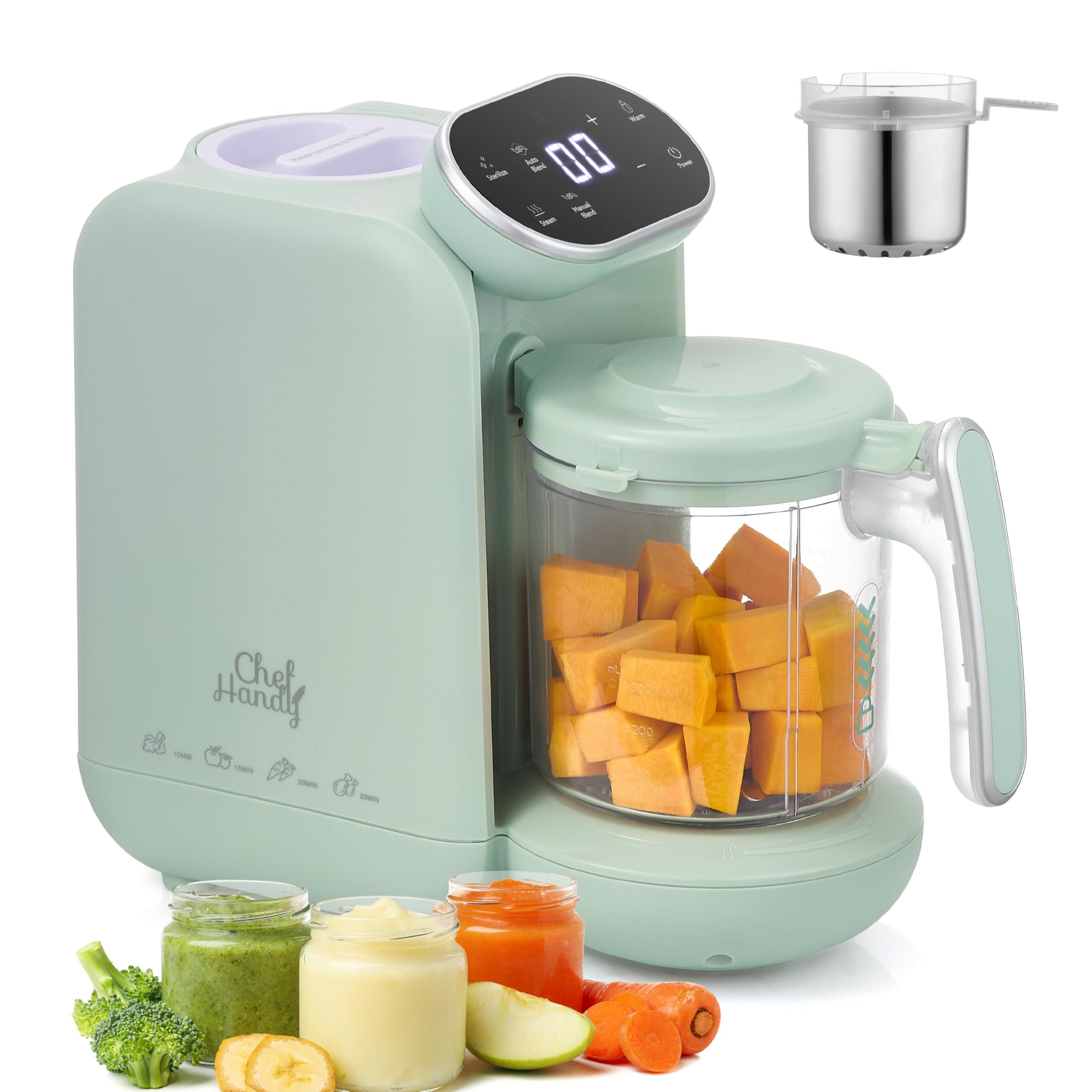
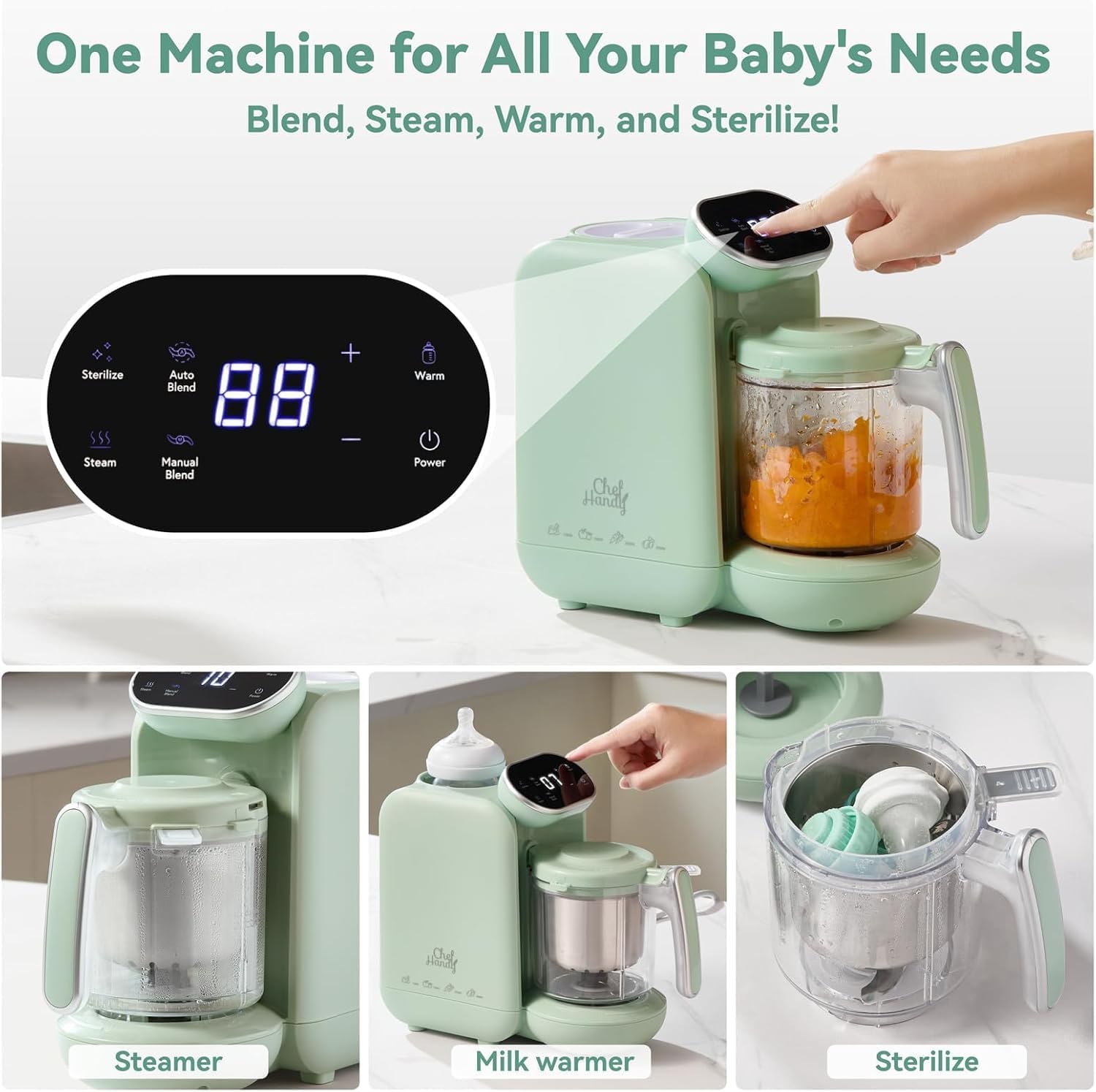
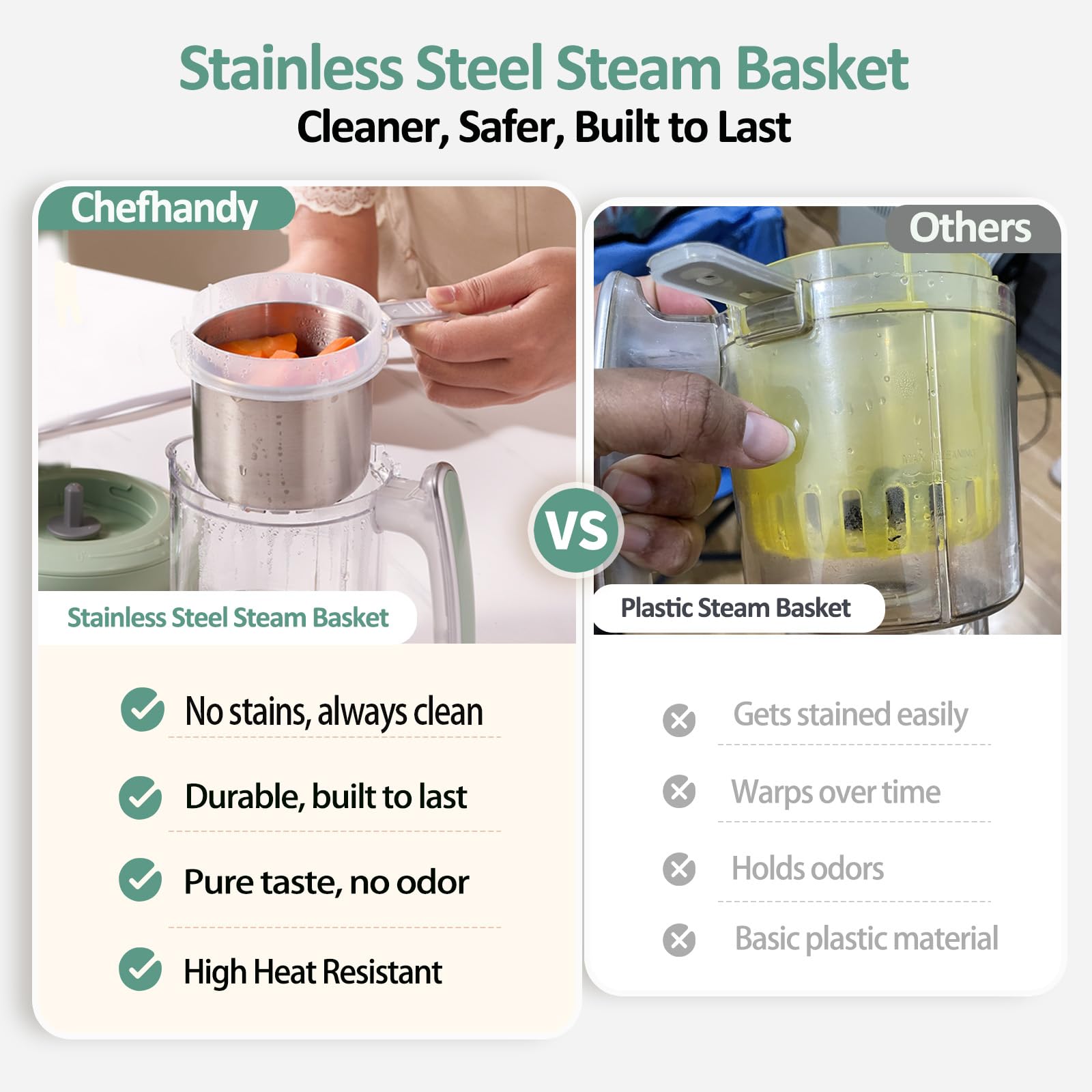
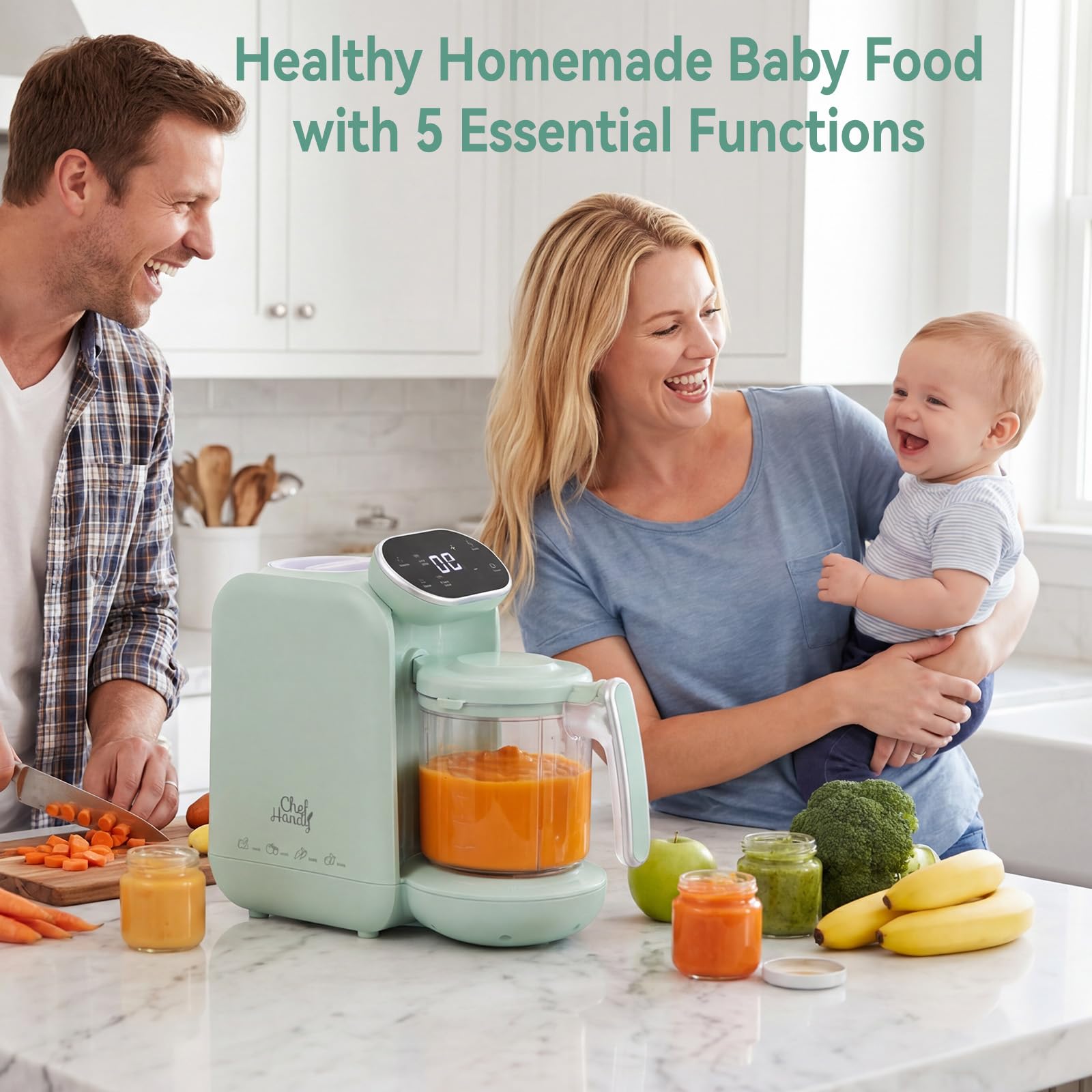
Chefhandy Baby Food Maker with Stainless Steel Steam Basket | 5-in-1 Baby Food Processor, Steamer & Blender for Homemade Baby Food, BPA-Free, 6 Reusable Pouches, Ideal for Newborns & Infants, Green
- 𝗡𝘂𝘁𝗿𝗶𝗲𝗻𝘁-𝗙𝗿𝗶𝗲𝗻𝗱𝗹𝘆 𝗦𝘁𝗲𝗮𝗺𝗶𝗻𝗴 𝗕𝗮𝘀𝗸𝗲𝘁 : Tired of losing nutrients when making baby food at home? During daily meal
- 𝗔𝗹𝗹-𝗶𝗻-𝗢𝗻𝗲 𝗕𝗮𝗯𝘆 𝗙𝗼𝗼𝗱 𝗚𝗿𝗶𝗻𝗱𝗲𝗿 : Busy parents often struggle to prepare fresh meals while managing daily routine
- 𝗘𝗮𝘀𝘆 𝗧𝗲𝘅𝘁𝘂𝗿𝗲 𝗖𝗼𝗻𝘁𝗿𝗼𝗹 𝗳𝗼𝗿 𝗘𝘃𝗲𝗿𝘆 𝗦𝘁𝗮𝗴𝗲 : As your baby grows, their feeding needs change. With both auto and manu
2. The Nutrient-Retention Science: Does Steam Cooking Really Make a Difference?
Yes — and the evidence is clear enough that it should influence how you choose to cook your baby's food. Steaming consistently outperforms boiling for water-soluble vitamin retention, and this matters most for the vitamins your baby needs most during the weaning window.
A study published in the Journal of Food Science and Technology found that steaming broccoli retained approximately 90% of its vitamin C, compared to around 66% when boiled. For vitamin B9 (folate) — critical for neurological development — steaming retained roughly 75–80%, versus closer to 50% after boiling. These aren't marginal differences; for a baby whose entire nutritional intake from solids is measured in tablespoons, every percentage point counts.
Steaming is one of the best cooking methods for preserving nutrients in vegetables, as it minimises leaching of water-soluble vitamins into cooking water.
— British Dietetic Association (2021)
Why the Steam Basket Design Matters
Not all "steamers" are equal. The BEABA Babycook Neo specifically highlights that its elevated steam basket holds food above the water — true steam cooking. When food sits in the water (more like braising or poaching), nutrients still leach out. This is a meaningful distinction when comparing budget models.


BEABA Babycook Neo, Baby Food Maker, Glass Bowl Baby Food Processor, 4 in 1 Steam Cook & Blender, Stainless Steel Steam Basket, Easy Clean Reservoir, 5.5 Cup Capacity, Eucalyptus
- THE ORIGINAL CREATORS OF THE BABY FOOD MAKER Newest model with glass bowl, stainless steel steam basket, & lar
- 4-IN-1 FUNCTION - steam cook, blend, defrost, reheat healthy food all in one baby food maker. Babycooks Elevat
- LARGER CAPACITY - 1,250ml size bowl makes 5.2 cups (up to 20 servings) of fresh baby food in just one cooking
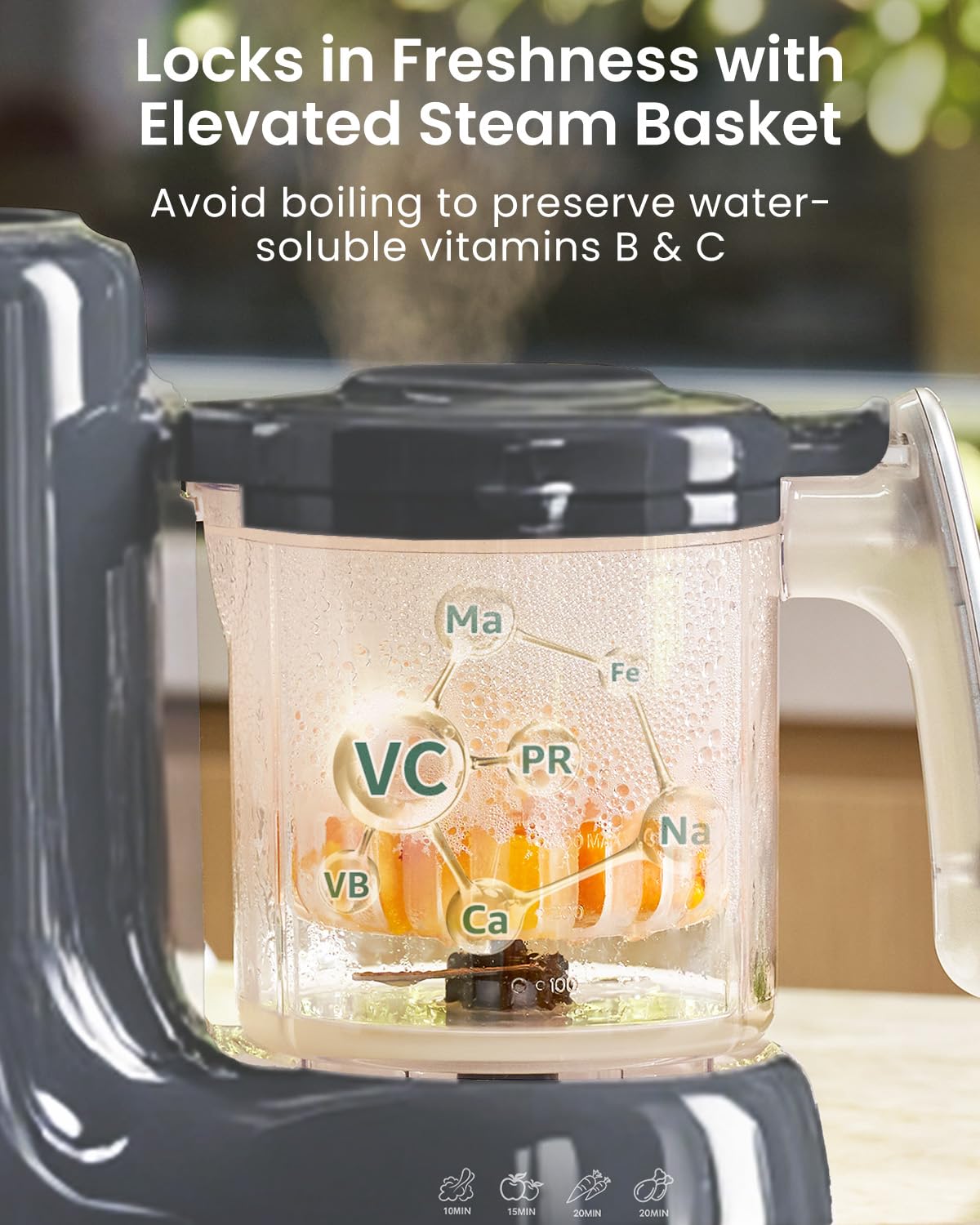
Similarly, the Grownsy Baby Food Maker uses an elevated basket design specifically to protect water-soluble vitamins B and C, and the Chefhandy Baby Food Maker features a stainless steel steam basket rather than plastic, which resists discolouration and doesn't add any chemical taste over repeated use.
Practical Nutrient-Preservation Checklist
3. Feeding Stages Explained: Matching Your Machine to Your Baby's Development
The right texture at the right time isn't just about preference — it's a safety and developmental issue. The AAP recommends introducing single-ingredient purees at around 6 months (not before 4 months), progressing to mashed and soft-chopped foods by 9–12 months, and moving toward family foods by 12 months.
A good baby food maker should grow with your baby through these stages — and the best 2026 models are explicitly designed to do exactly that.
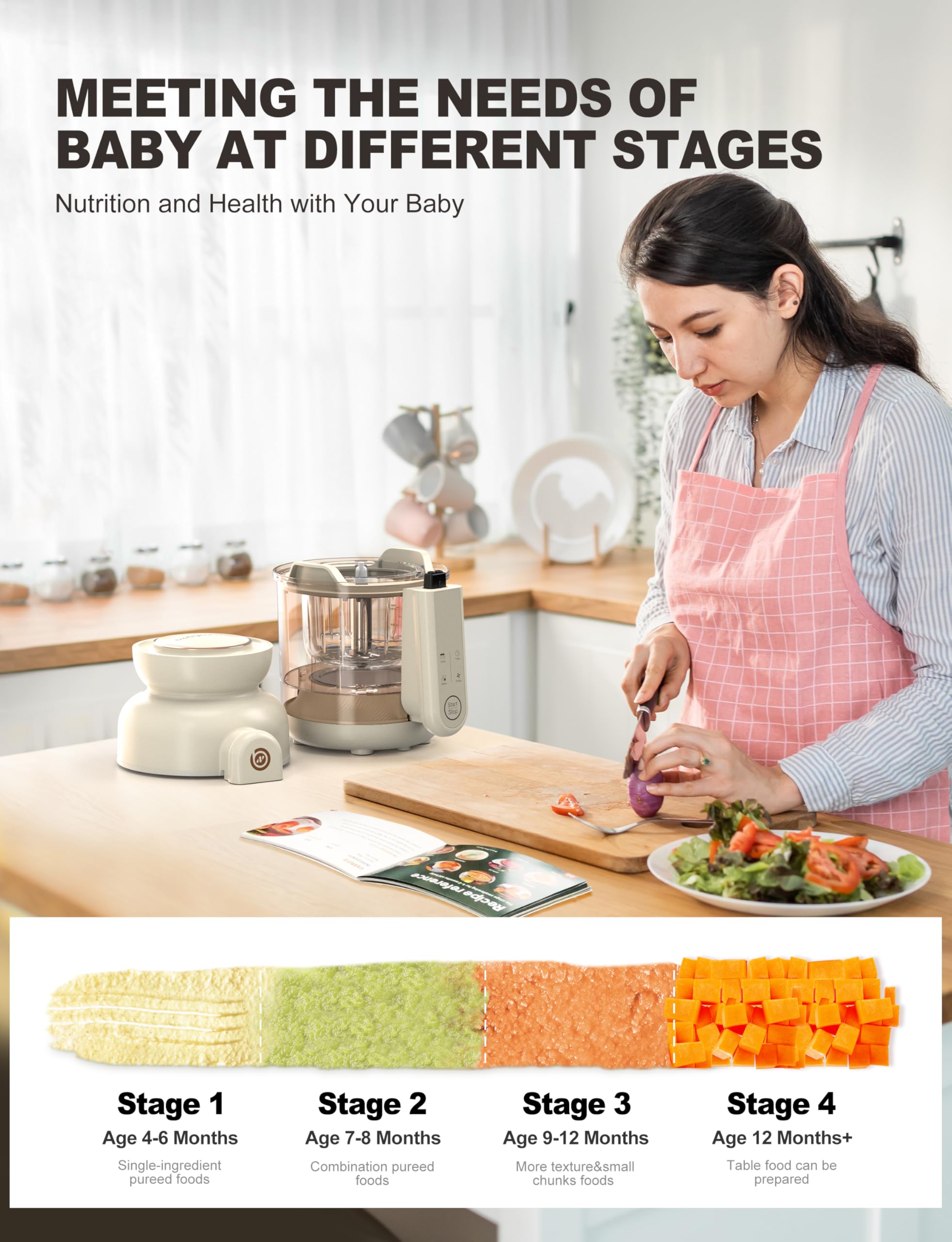
Stage-by-Stage Texture Guide
Stage 1 (Around 6 months): Smooth Purees Ultra-smooth, single-ingredient purees. No lumps. Think runny pea puree or silky butternut squash. Most machines handle this on their default auto-blend setting.
Stage 2 (7–8 months): Thicker Purees and Soft Mashes More texture, combinations of 2–3 ingredients, slightly thicker consistency. You'll want a machine with a manual blend mode so you can pulse rather than fully liquefy.
Stage 3 (9–10 months): Lumpy Mashes and Soft Pieces Recognisable soft lumps. Babies are developing the oral motor skills to handle texture. Pulse blending for 2–3 seconds at a time gives you control.
Stage 4 (10–12 months): Minced and Chopped Soft Foods Near-family-food consistency. Some machines double as a mini food processor for finely chopping soft-cooked meat or pasta.
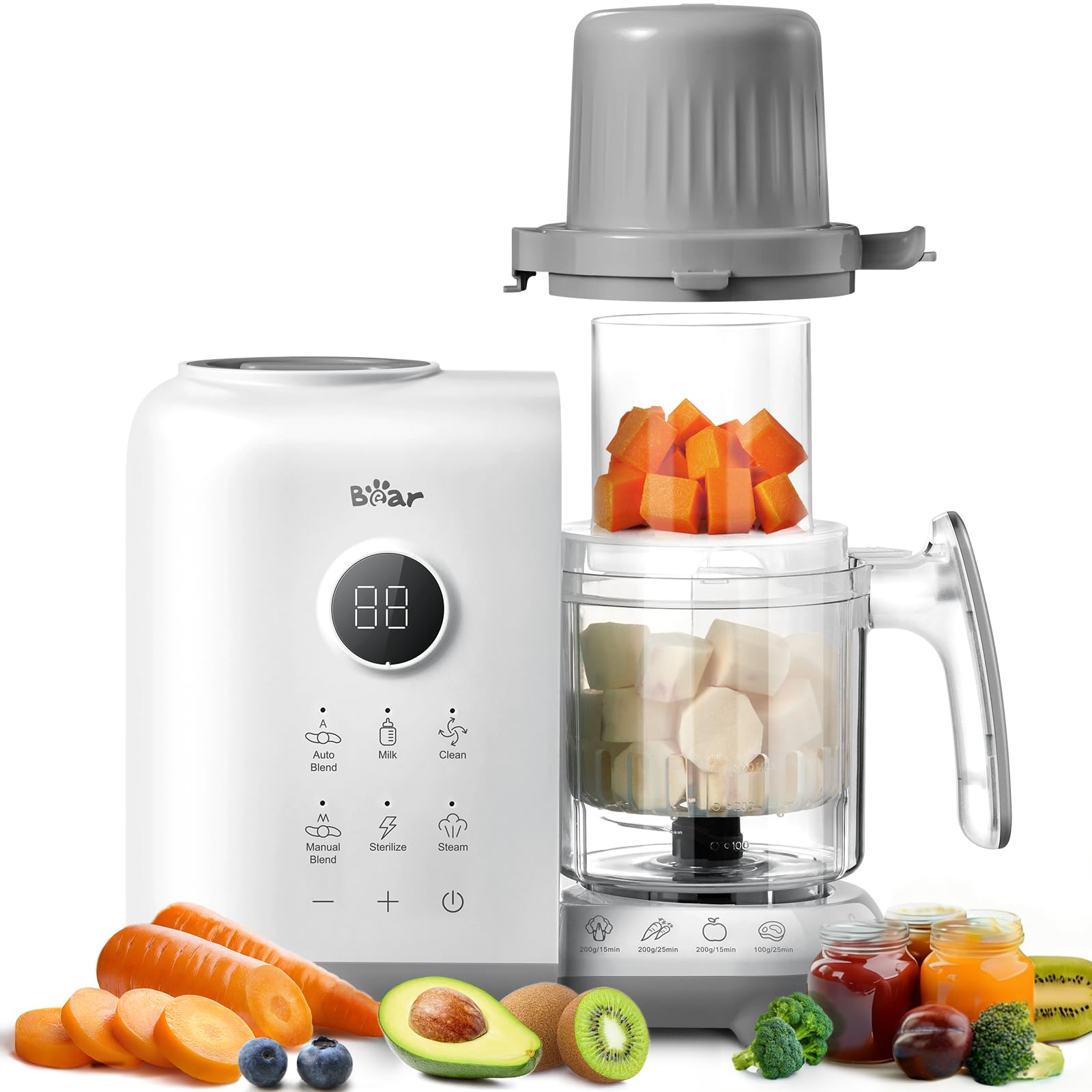
The Bear NutriEase AllStage Baby Food Maker stands out here with its three dedicated age-stage settings (4–7 months, 8–10 months, 11 months+) and one-touch food-type programmes for vegetables, fruit, root vegetables, meat, fish, and stew — essentially a developmental roadmap built into the control panel.
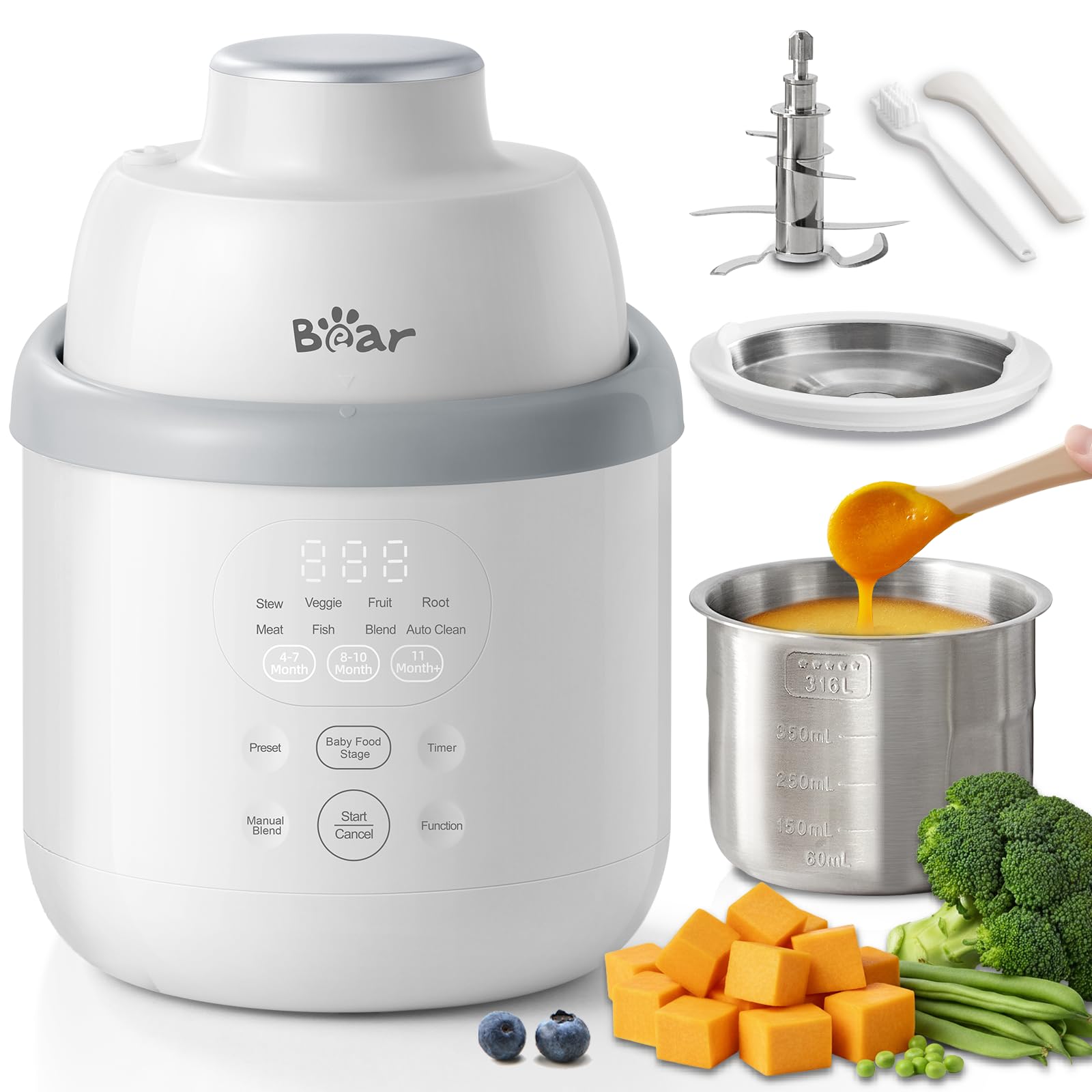
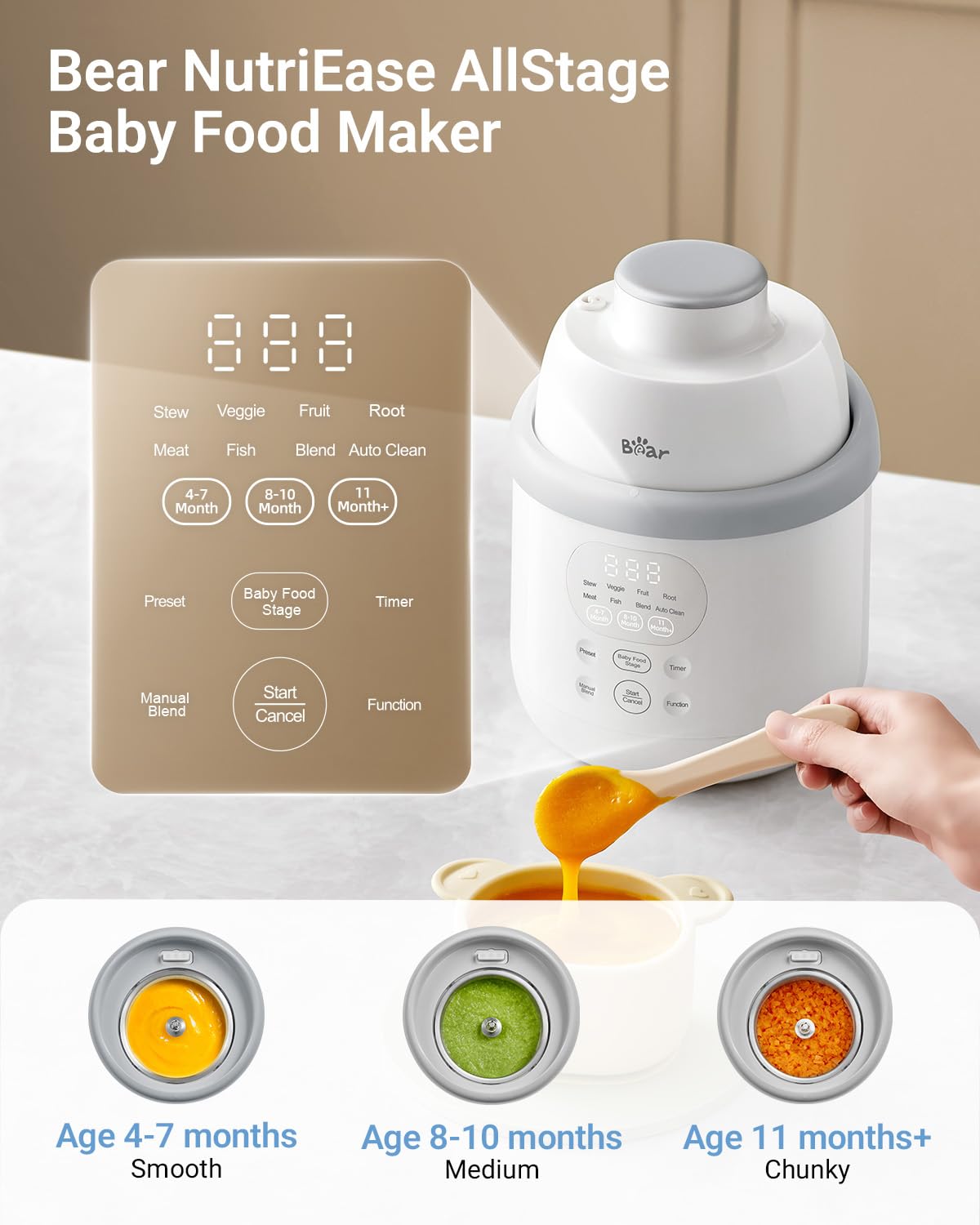
Bear NutriEase AllStage Stainless Steel Baby Food Maker Steamer and Blender, Truly OneStep Baby Food Processor Puree Maker Grinder Mills, Auto Cooking&Grinding for Healthy Homemade Baby Food, BPA-Free
- 𝗧𝗿𝘂𝗹𝘆 𝗔𝗹𝗹-𝗶𝗻-𝗼𝗻𝗲 𝗕𝗮𝗯𝘆 𝗙𝗼𝗼𝗱 𝗠𝗮𝗸𝗲𝗿 – The Bear baby food maker is your ultimate kitchen partner, combining a stea
- 𝗖𝘂𝘀𝘁𝗼𝗺𝗶𝘇𝗲 𝗜𝗱𝗲𝗮 𝗙𝗼𝗼𝗱 𝗖𝗼𝗻𝘀𝗶𝘀𝘁𝗲𝗻𝗰𝘆 – Choose between auto or manual mixing modes to precisely control food consist
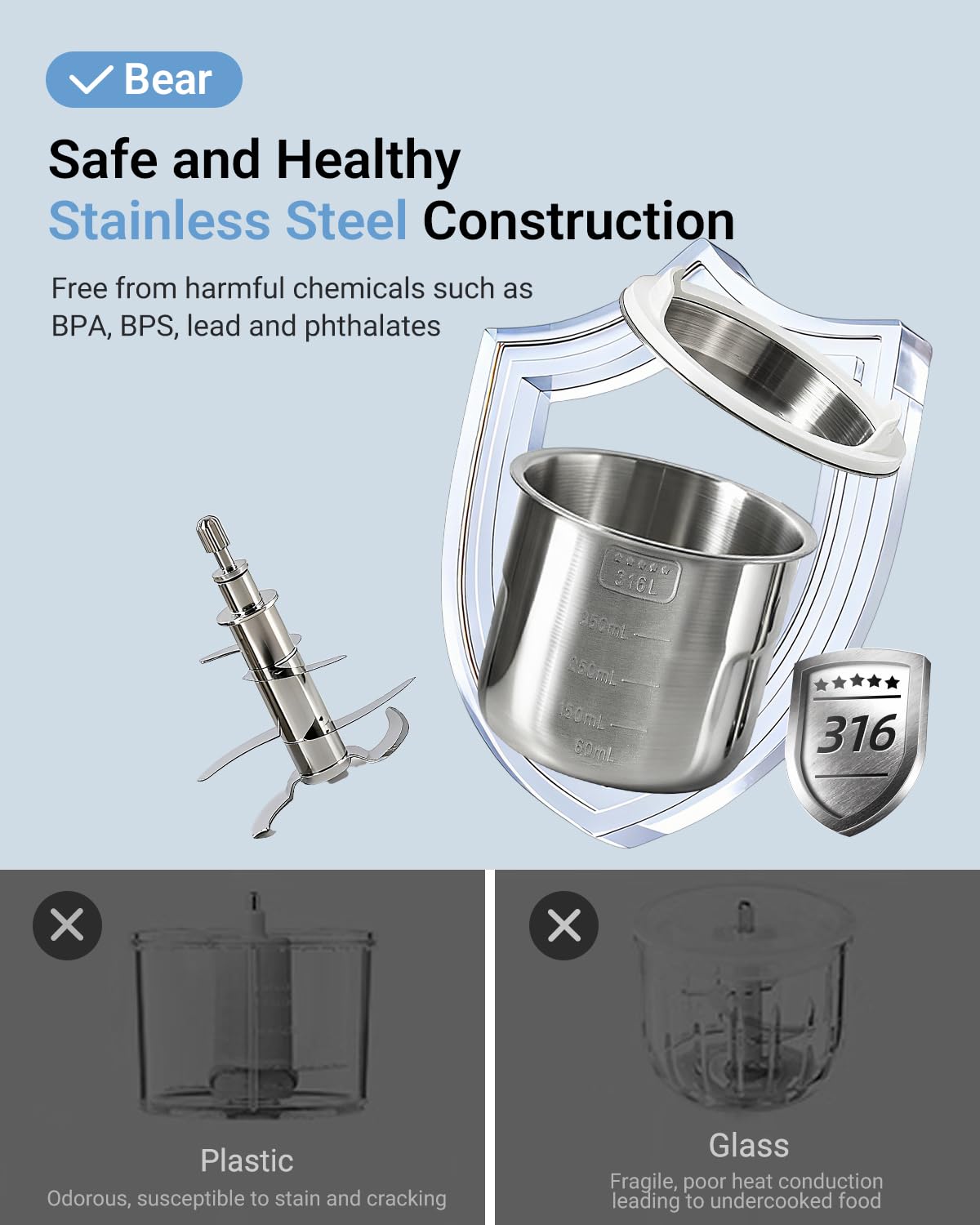
- 𝗦𝘂𝗽𝗲𝗿𝗶𝗼𝗿 & 𝗦𝗮𝗳𝗲 𝗦𝘁𝗮𝗶𝗻𝗹𝗲𝘀𝘀 𝗦𝘁𝗲𝗲𝗹 𝗖𝗼𝗻𝘀𝘁𝗿𝘂𝗰𝘁𝗶𝗼𝗻 – Durable, non-toxic, and premium, our stainless steel bowl, cove
4. Key Features to Look For (and Three You Can Safely Ignore)
Shopping for a baby food maker in 2026 means navigating a wall of feature claims. Here's how to cut through the noise and identify what genuinely matters for your family's daily routine.
Features That Genuinely Matter
1. Bowl and Steam Basket Material Stainless steel and glass are the gold standards. They don't absorb odours, don't discolour, and carry no BPA or phthalate concerns. The BEABA Babycook Neo uses a glass bowl and stainless steel basket — the premium choice. The BabyNutri Auto Baby Food Maker also uses glass and stainless steel at a mid-range price point.
2. Capacity If you batch-cook weekly, you want at least 800ml–1,000ml capacity. The BEABA Babycook Neo's 1,250ml bowl makes up to 20 servings per cycle — genuinely useful for Sunday meal prep. Smaller machines like the BabyNutri (12oz / ~355ml) suit daily cooking but require multiple cycles for batch prep.
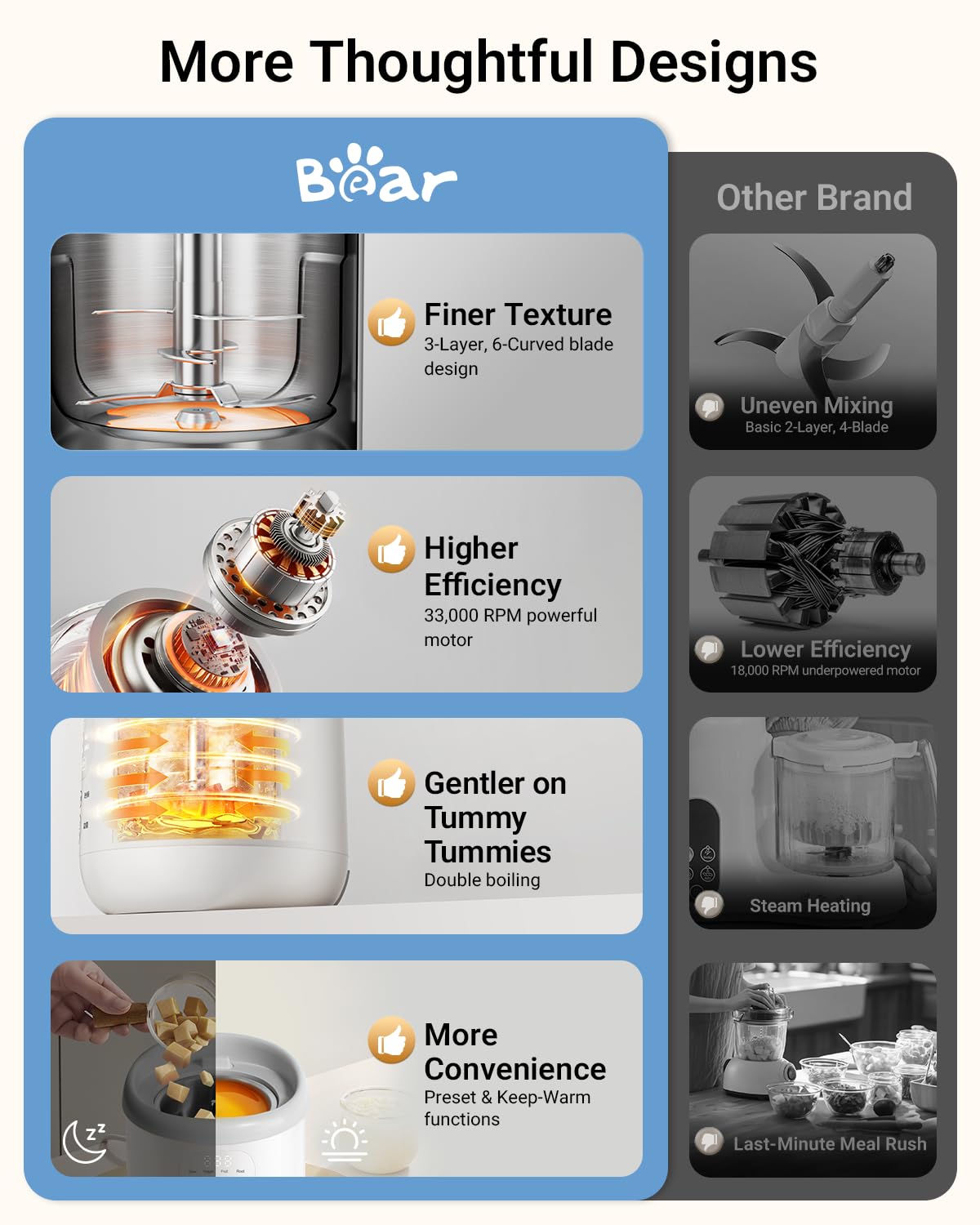
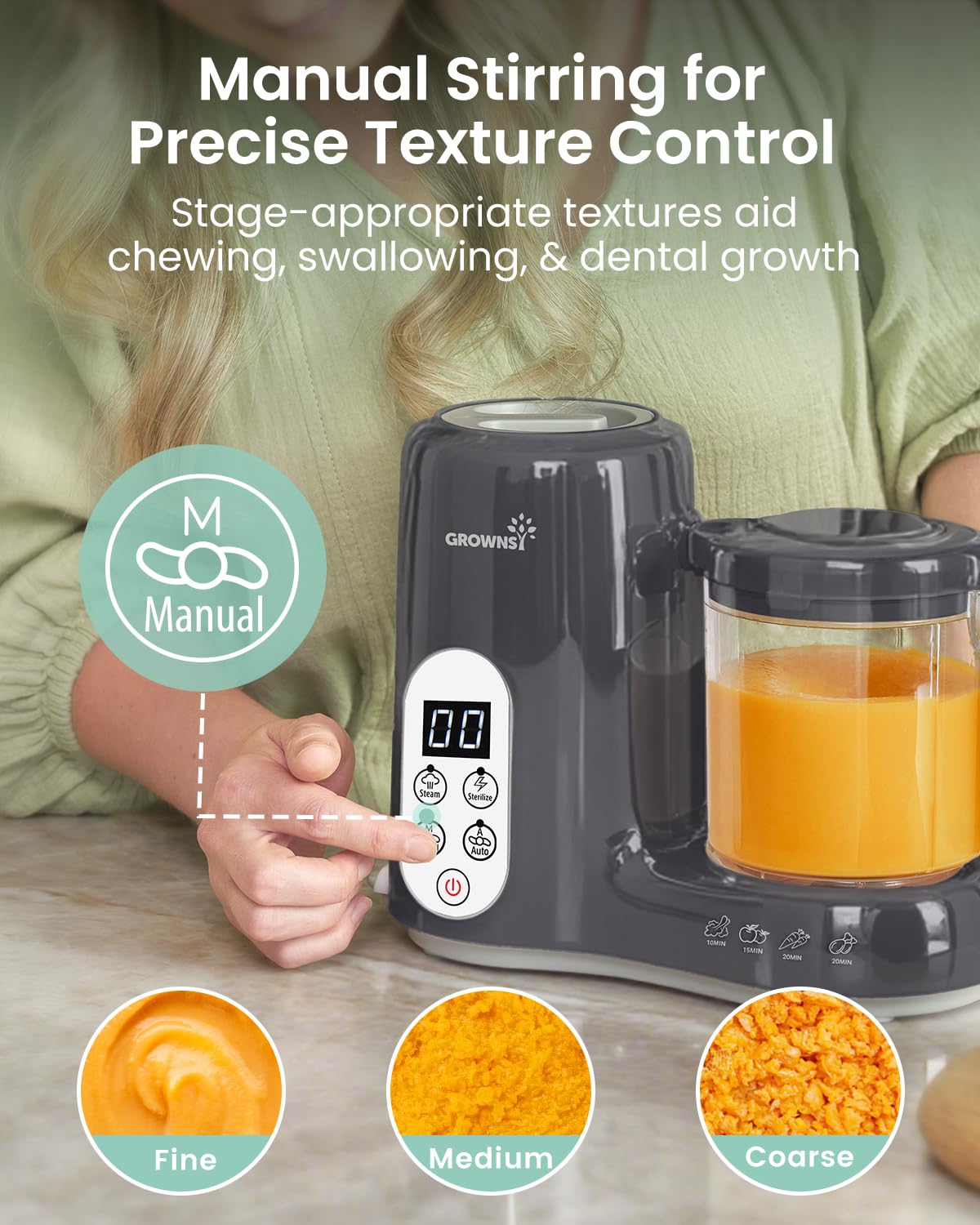
3. Texture Control (Auto + Manual Modes) Every machine on this list offers both. What differs is precision. The Bear NutriEase uses 3D floating stainless steel blades that produce notably smooth results; the Grownsy Baby Food Maker offers smart digital controls for quick switching between modes.
4. Ease of Cleaning This is the feature parents most regret ignoring at purchase. Dishwasher-safe components save enormous time. The BabyNutri is explicitly dishwasher safe. Look for wide-mouth bowls with no hard-to-reach crevices.
5. Safety Locks All reputable 2026 models activate only when the lid is securely locked — a non-negotiable safety feature when toddlers are underfoot.
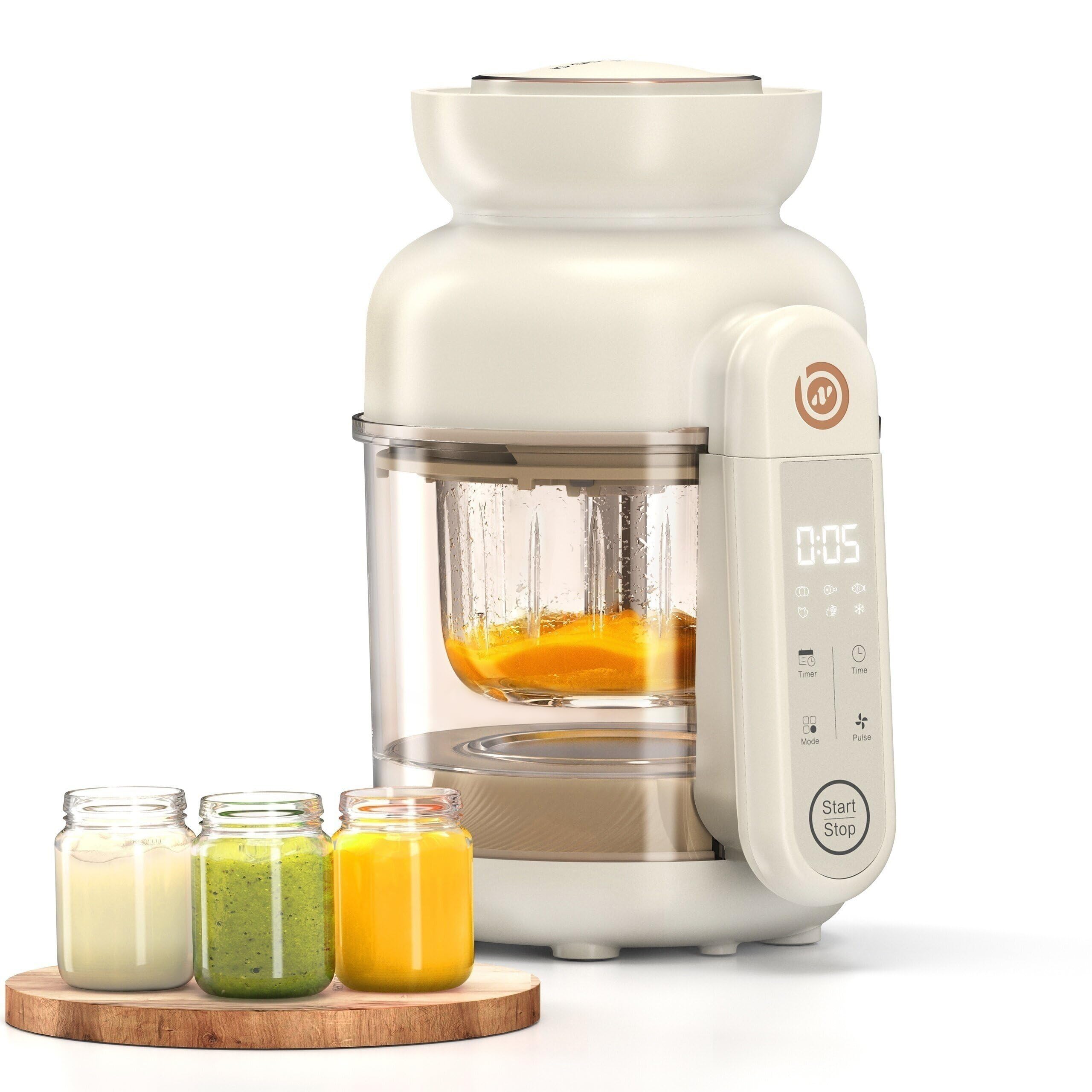
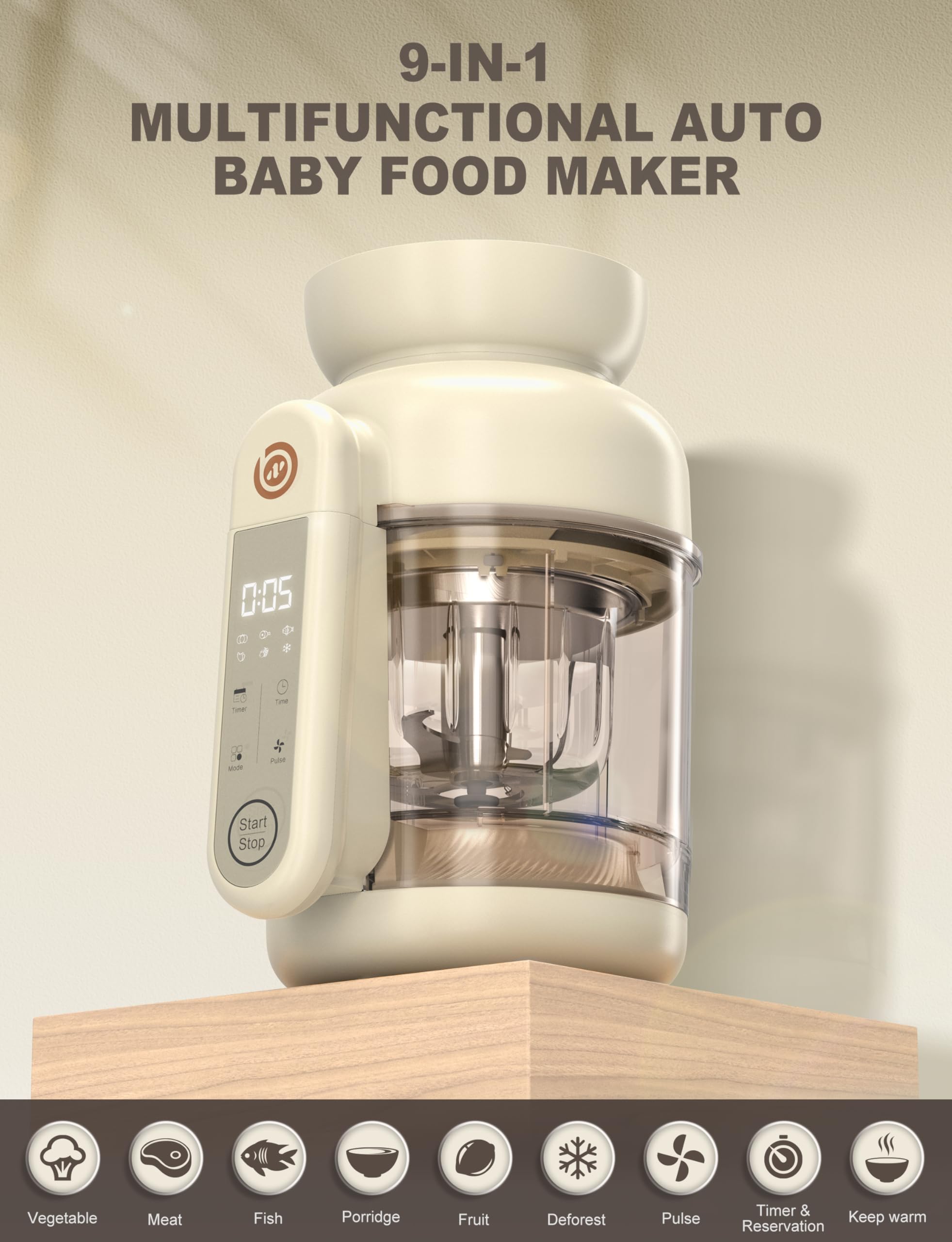
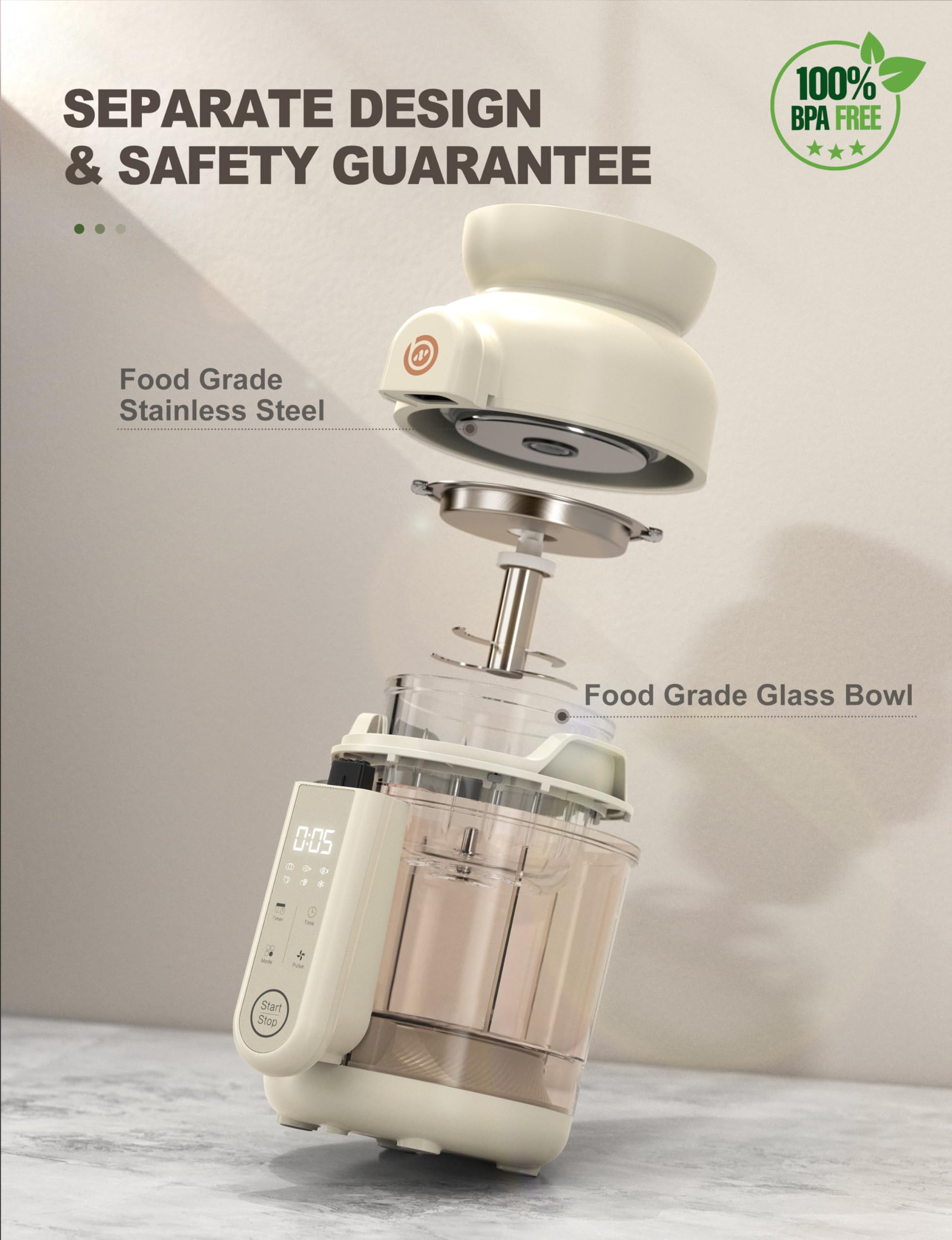
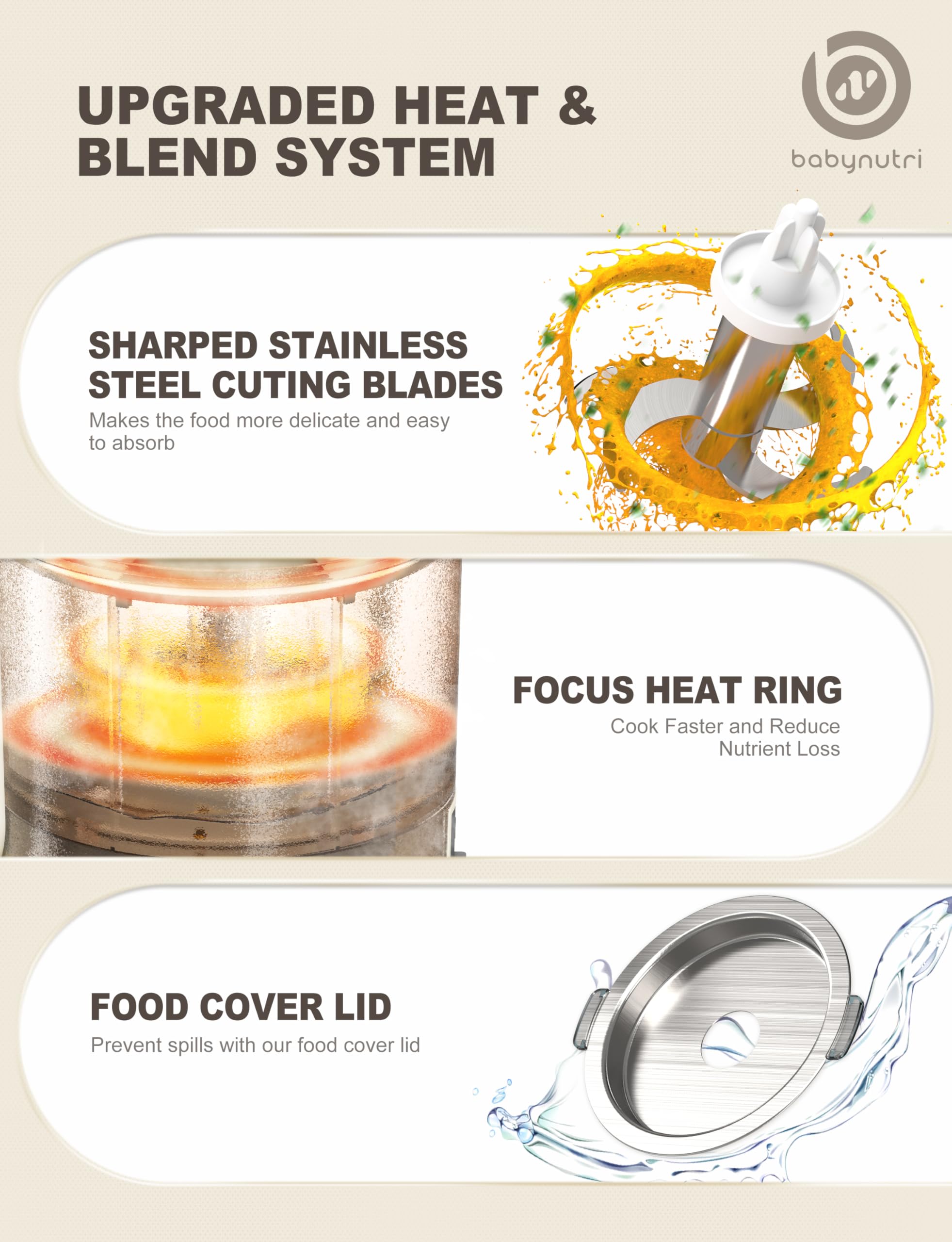
Auto Baby Food Maker, Glass Baby Food Mill, Baby Blender & Steamer and Puree Maker with Auto Cooking, Easy Cleaning, Touch Screen, Dishwasher Safe(12oz)
- All-in-One Marvel: BabyNutri redefines convenience with its multifunctional prowess. Seamlessly integrating st
- Cutting-Edge Precision Blades: Elevate your baby's dining experience with BabyNutri's Precision Blade Technolo
- Uncompromising Safety Standards: Crafted from premium stainless steel and glass, BabyNutri sets the gold stand
Features You Can Safely Deprioritise
✗ Wi-Fi connectivity / app control — Adds cost and complexity; you won't use it after week two ✗ Built-in recipe databases — Useful novelty, but you'll find better recipes online ✗ Colour options — The Grownsy in Dark Grey and Grownsy in White are functionally identical; choose whichever matches your kitchen
5. Cost Analysis: Does Making Your Own Baby Food Actually Save Money?
Making homemade baby food is genuinely more cost-effective than buying commercial pouches — but the savings depend on how consistently you use the machine and how you shop for ingredients.
The Numbers
A standard commercial baby food pouch (90–120g, single ingredient) costs approximately $1.50–$2.50 in 2026. A single sweet potato (roughly 300g after peeling) costs around $0.80–$1.20 and yields approximately 3–4 servings of puree — a per-serving cost of $0.20–$0.40.
That's a saving of roughly $1.10–$2.10 per serving. If your baby eats two servings of solids per day, you're saving approximately $15–$30 per week, or $60–$120 per month — meaning even a $130 machine like the Bear NutriEase pays for itself within 5–9 weeks of regular use.
Home preparation of complementary foods can significantly reduce household food costs while offering greater control over ingredients, salt, and sugar content.
— World Health Organization, Complementary Feeding Guidance (2023)
Hidden Costs to Factor In
The Chefhandy Baby Food Maker includes 6 BPA-free reusable storage pouches in the box, which partially offsets the need to buy separate storage — a thoughtful inclusion at its $68.99 price point.
When Commercial Pouches Still Make Sense

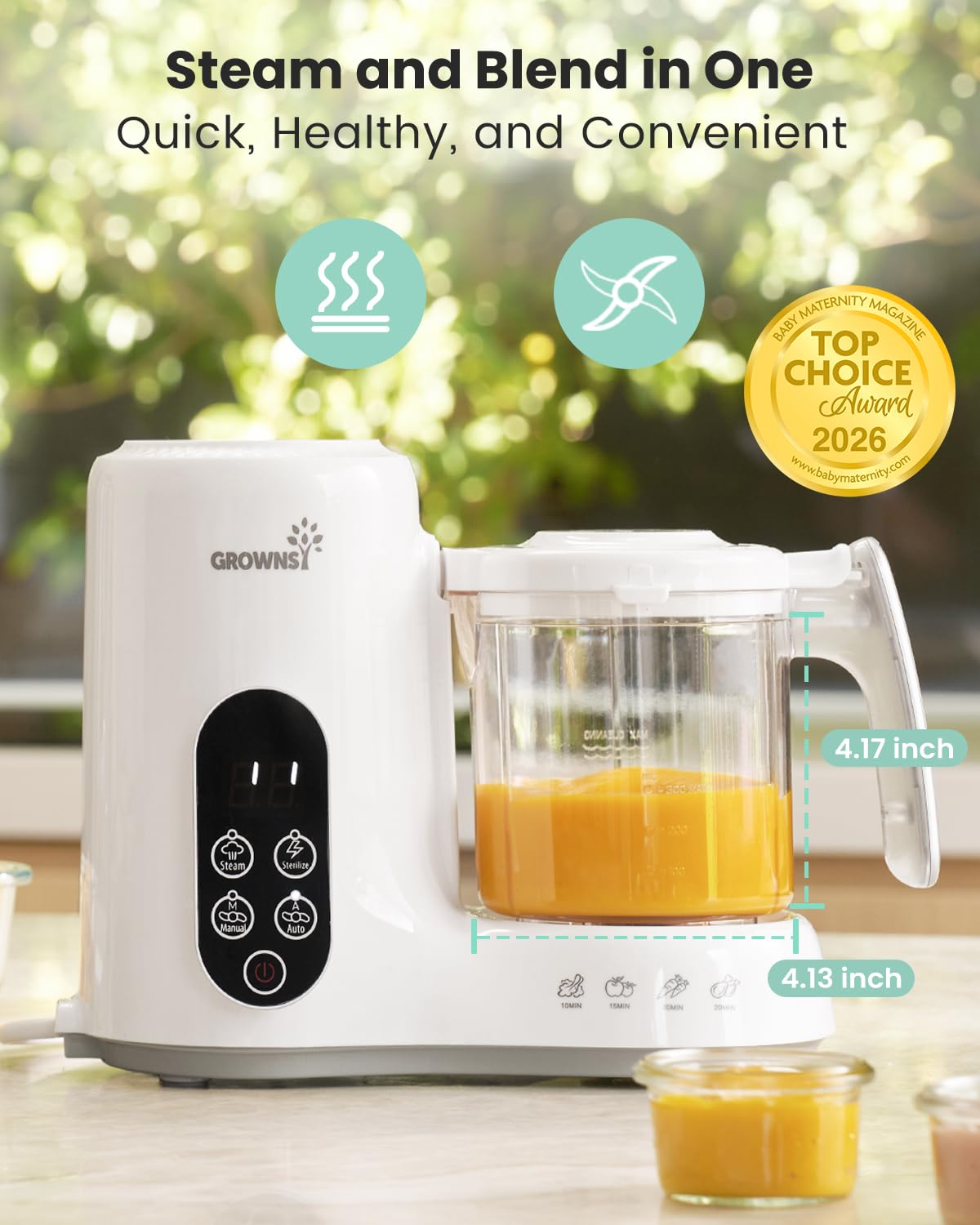

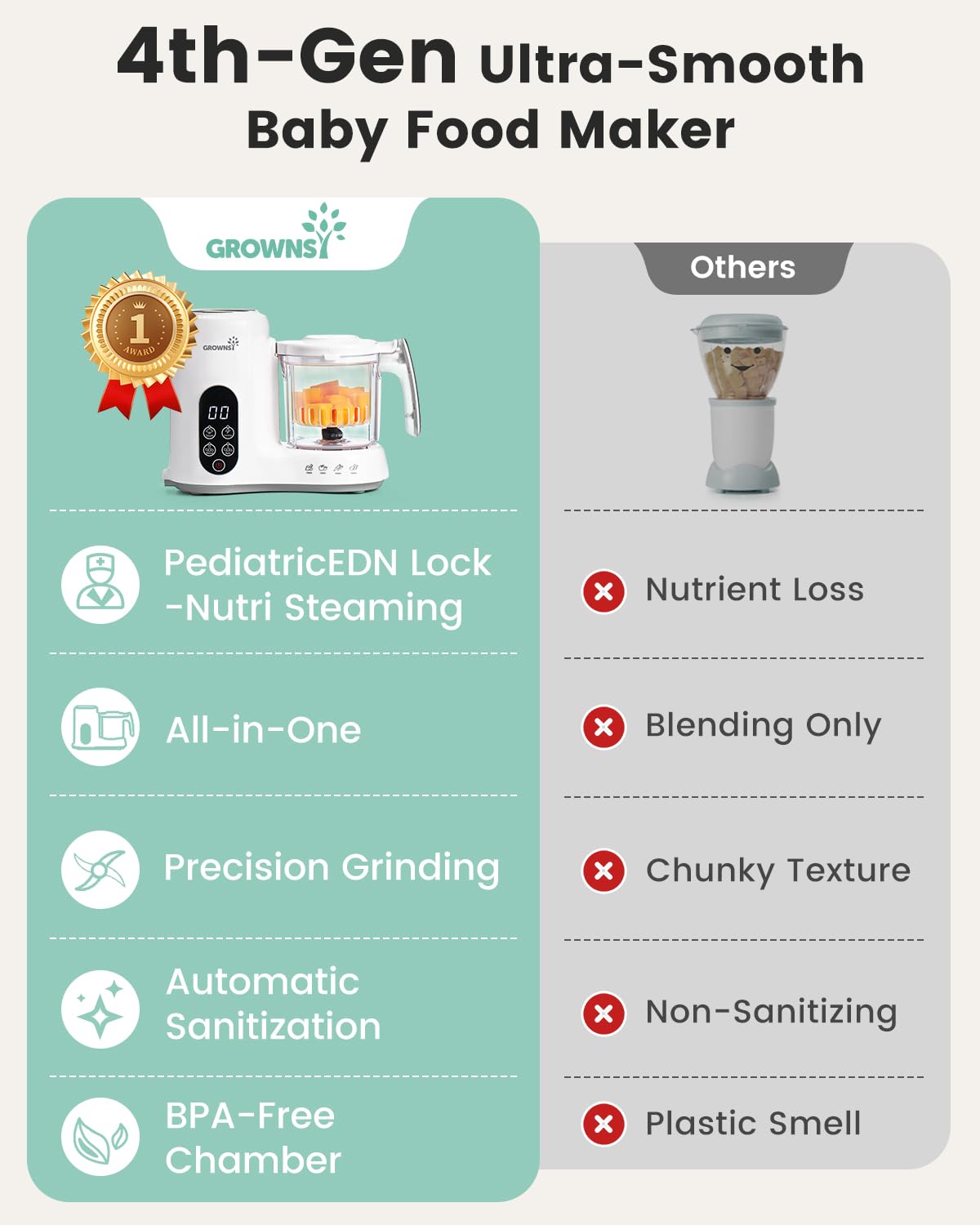

Grownsy Baby Food Maker with Steam Basket, One Step Baby Food Processor Steamer Puree Blender Grinder Mills Machine, Auto Cooking Grinding and Sterili-zing for Healthy Homemade Baby Food, White
- 𝗦𝘁𝗲𝗮𝗺𝗶𝗻𝗴 𝗮𝗻𝗱 𝗕𝗹𝗲𝗻𝗱𝗶𝗻𝗴 𝗶𝗻 𝗢𝗻𝗲: The height of the blender container is 4.13 inches, and the outer diameter is 4.
- 𝗡𝘂𝘁𝗿𝗶𝗲𝗻𝘁-𝗣𝗿𝗲𝘀𝗲𝗿𝘃𝗶𝗻𝗴 𝗦𝘁𝗲𝗮𝗺𝗶𝗻𝗴 𝗕𝗮𝘀𝗸𝗲𝘁: The elevated design of our steaming basket enables true steam cooking, mi
- 𝗧𝘄𝗼 𝗠𝗶𝘅𝗶𝗻𝗴 𝗠𝗼𝗱𝗲𝘀: This baby food steamer and blender simplifies starting solids and everyday baby meal prep wi
6. The 2026 Baby Food Maker Lineup: Honest Strengths and Weaknesses
Here's a frank look at each machine in this year's market, based on their specifications, verified user ratings, and clinical relevance to infant feeding.
Budget Pick: Chefhandy 5-in-1 ($68.99 | 4.6★)
The Chefhandy Baby Food Maker punches above its price with a stainless steel steam basket (rare at this price), 5-in-1 functionality, and the included storage pouches. Its 4.6-star rating across nearly 2,900 reviews is one of the strongest in this category. The main limitation is capacity — it's better suited to daily small-batch cooking than weekly bulk prep.Mid-Range Contender: Grownsy ($99.99 | 4.7★)
Available in White and Dark Grey, the Grownsy earns its 4.7-star rating (across 2,235 reviews) through consistent performance and a built-in sterilise mode — a genuine differentiator. The digital controls are intuitive, and the elevated steam basket design is explicitly engineered for nutrient preservation.Tech-Forward Option: Bear NutriEase AllStage ($129.99 | 4★)
The Bear NutriEase is the most developmentally thoughtful machine here — its three age-stage settings and six food-type programmes remove guesswork for new parents. The 3D floating blades produce exceptionally smooth purees. Fewer reviews (126) than competitors, but the feature set justifies the price for parents who want a guided experience.Mid-Range Glass Option: BabyNutri ($89.99 | 4.1★)
The BabyNutri Auto Baby Food Maker offers glass bowl and stainless steel construction at a mid-range price, with the added convenience of dishwasher-safe components and a touch screen. The 12oz capacity is compact — ideal for daily cooking, less so for batch prep.Premium Pick: BEABA Babycook Neo ($279.99 | 4.1★)
The BEABA Babycook Neo is the market originator — BEABA invented the baby food maker category — and the Neo is their most refined model. The glass bowl, stainless steel basket, 1,250ml capacity, and true elevated steam cooking make this the clinician's choice for families who will use it daily for 12+ months. The price is significant, but the build quality and capacity justify it for committed batch-cookers.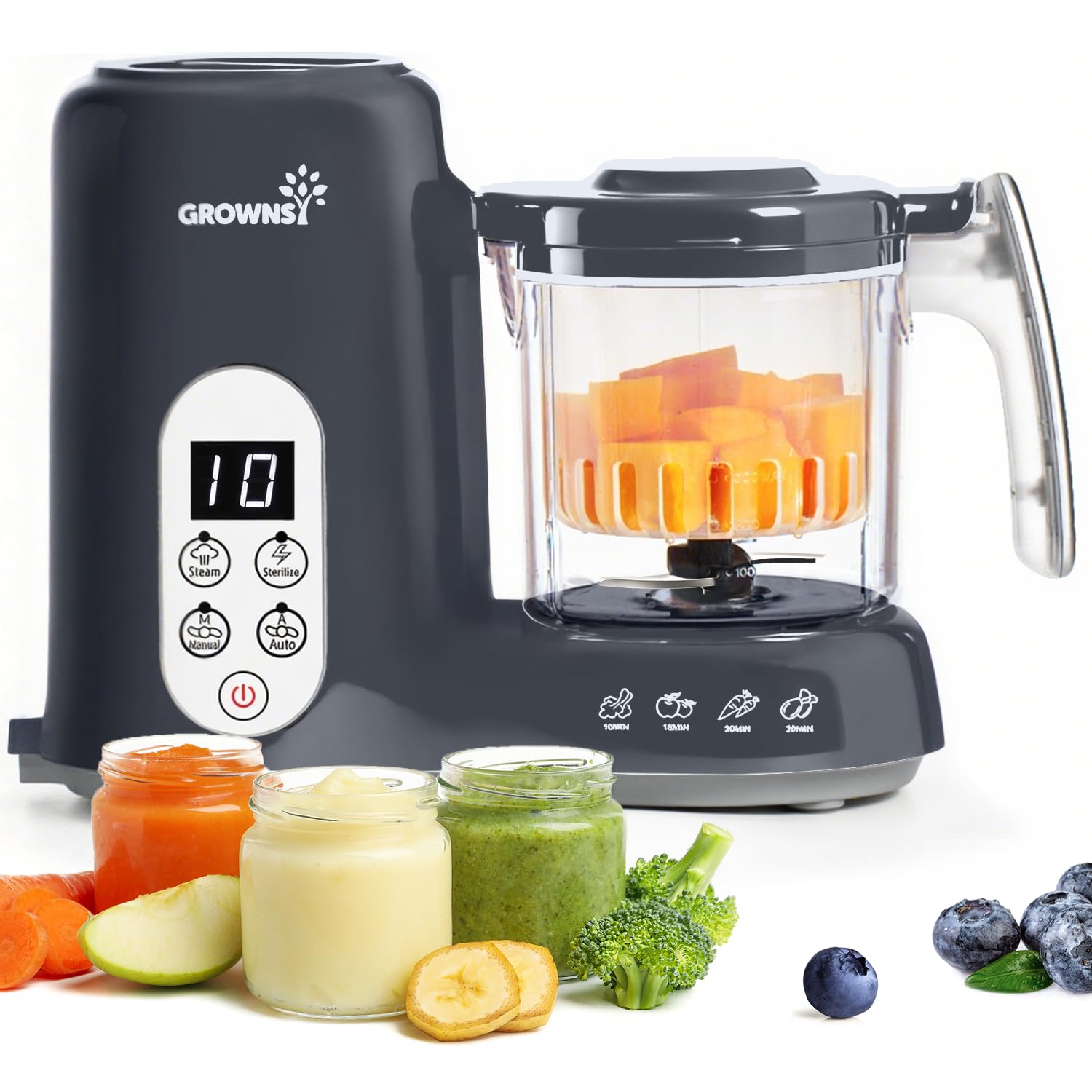
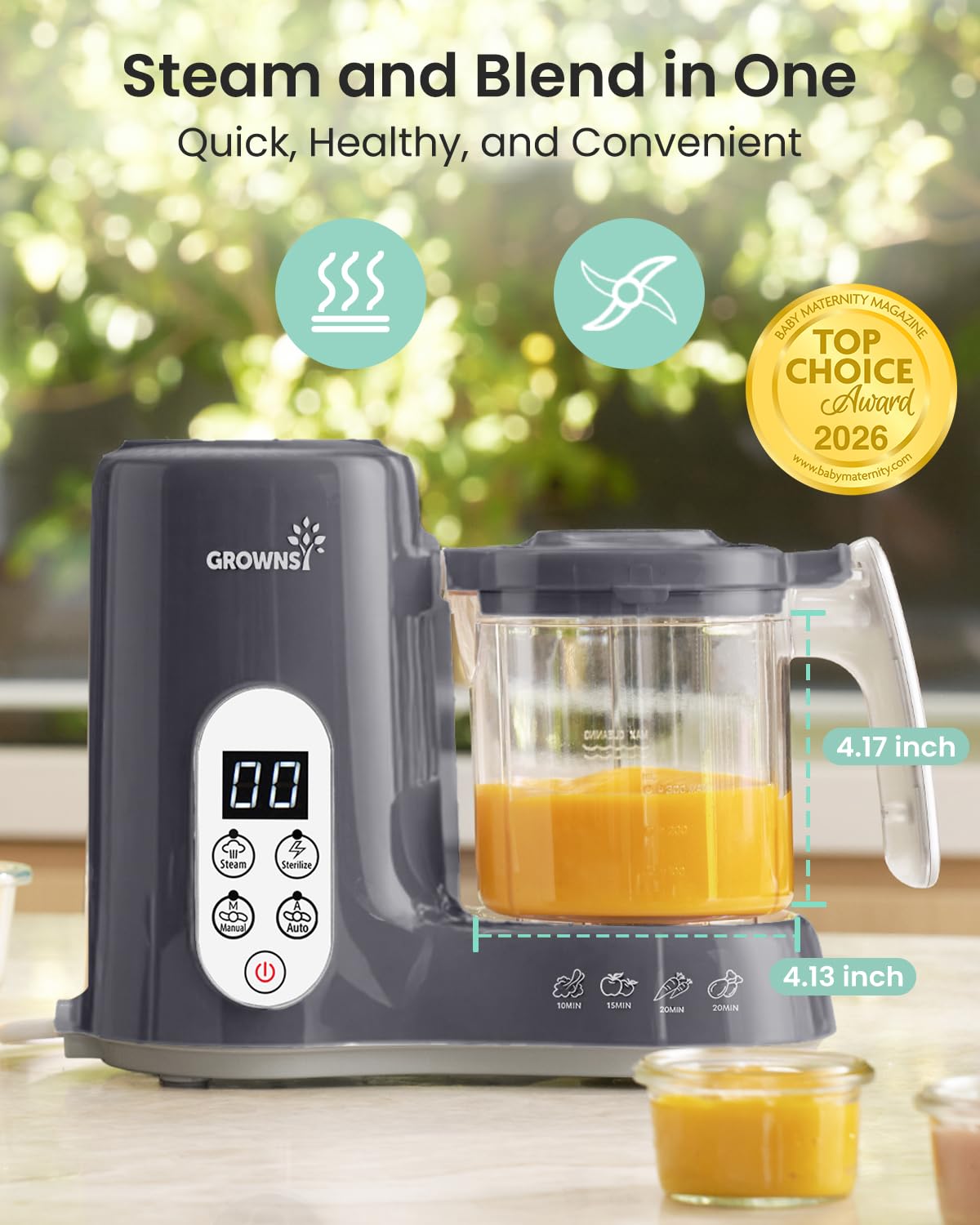
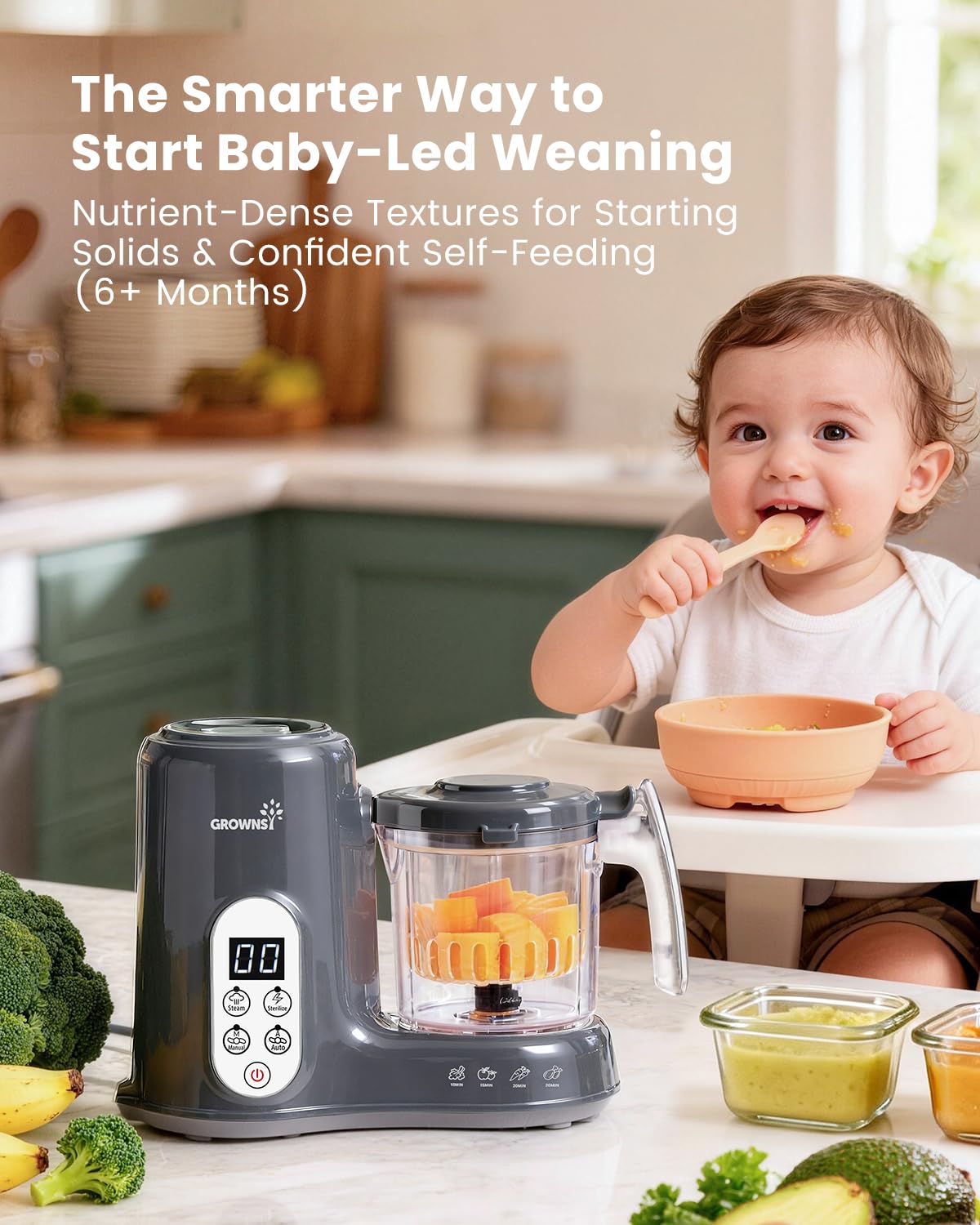
Grownsy Baby Food Maker with Steam Basket, One Step Baby Food Processor Steamer Puree Blender Grinder Mills Machine, Auto Cooking Grinding and Sterili-zing for Healthy Homemade Baby Food, Dark Grey
- 𝗦𝘁𝗲𝗮𝗺𝗶𝗻𝗴 𝗮𝗻𝗱 𝗕𝗹𝗲𝗻𝗱𝗶𝗻𝗴 𝗶𝗻 𝗢𝗻𝗲: This baby food maker seamlessly combines steaming and blending in a single devic
- 𝗡𝘂𝘁𝗿𝗶𝗲𝗻𝘁-𝗣𝗿𝗲𝘀𝗲𝗿𝘃𝗶𝗻𝗴 𝗦𝘁𝗲𝗮𝗺𝗶𝗻𝗴 𝗕𝗮𝘀𝗸𝗲𝘁: The elevated design of our steaming basket enables true steam cooking, mi
- 𝗧𝘄𝗼 𝗠𝗶𝘅𝗶𝗻𝗴 𝗠𝗼𝗱𝗲𝘀: The baby food steamer and blender feature smart digital controls for quick and easy settings
Baby Food Maker Comparison Table
| Machine | Best For | Bowl Material | Capacity | Key Differentiator | Price | Recommended Product |
|---|---|---|---|---|---|---|
| Chefhandy 5-in-1 | Budget-conscious first-timers | Stainless steel basket | Small-medium | Includes 6 reusable pouches | $68.99 | Chefhandy Baby Food Maker |
| Bear NutriEase AllStage | Parents wanting guided stage-by-stage cooking | Full stainless steel | Medium | Age-stage + food-type programmes | $129.99 | Bear NutriEase |
| BEABA Babycook Neo | Batch cookers, premium buyers | Glass bowl + SS basket | Large (1,250ml / ~20 servings) | True elevated steam, original brand | $279.99 | BEABA Babycook Neo |
| BabyNutri Auto | Daily cookers wanting glass at mid-range | Glass + stainless steel | Small (12oz) | Dishwasher safe, touch screen | $89.99 | BabyNutri Auto |
| Grownsy (White) | Everyday use, highest-rated | Plastic outer / SS basket | Medium | Built-in sterilise mode, 4.7★ | $99.99 | Grownsy White |
| Grownsy (Dark Grey) | Same as above, different colour | Plastic outer / SS basket | Medium | Built-in sterilise mode, 4.7★ | $99.99 | Grownsy Dark Grey |
Expert Insights on Baby Food Preparation
Frequently Asked Questions
Conclusion
Every parent wants to give their baby the best possible start — and what goes into that tiny bowl in the first year genuinely matters. A baby food maker won't make you a perfect parent, but it will make the daily work of feeding your baby a little less overwhelming, a little more nutritious, and — over time — meaningfully more affordable.
The right machine isn't the most expensive one or the one with the most features. It's the one that fits your kitchen, your schedule, and your honest cooking habits. Whether that's the straightforward value of the Chefhandy, the developmental intelligence of the Bear NutriEase, or the batch-cooking powerhouse that is the BEABA Babycook Neo — there's a machine here for every family.
Here's the thought worth holding onto: every homemade meal you put in front of your baby is an act of love and an investment in their future health. A good tool just makes that act a little easier.
If this guide helped you, save it for when your baby hits the next texture stage — and share it with a parent who's just starting solids for the first time.
Sources & References
- World Health Organization. "Complementary Feeding: Guiding Principles for Breastfed Children." 2023. https://www.who.int/nutrition/topics/complementary_feeding/en/
- American Academy of Pediatrics. "Starting Solid Foods." HealthyChildren.org. 2022. https://www.healthychildren.org/English/ages-stages/baby/feeding-nutrition/Pages/Starting-Solid-Foods.aspx
- British Dietetic Association. "Cooking Methods and Nutrient Retention." Food Fact Sheet. 2021. https://www.bda.uk.com/resource/cooking-methods.html
- Coulthard, H., Harris, G., & Emmett, P. "Delayed introduction of lumpy foods to children during the complementary feeding period affects child's food acceptance and feeding at 7 years of age." Maternal & Child Nutrition, 5(1), 75–85. 2009. https://doi.org/10.1111/j.1740-8709.2008.00153.x
- Miglio, C., Chiavaro, E., Visconti, A., Fogliano, V., & Pellegrini, N. "Effects of Different Cooking Methods on Nutritional and Physicochemical Characteristics of Selected Vegetables." Journal of Agricultural and Food Chemistry, 56(1), 139–147. 2008. https://doi.org/10.1021/jf072304b
- Centers for Disease Control and Prevention (CDC). "Making and Storing Homemade Baby Food." 2023. https://www.cdc.gov/nutrition/infantandtoddlernutrition/foods-and-drinks/homemade-baby-food.html
- Muth, N.D., Dietz, W.H., Magge, S.N., et al. "Public Policies to Reduce Sugary Drink Consumption in Children and Adolescents." Pediatrics, 143(4). American Academy of Pediatrics. 2019.
- European Food Safety Authority (EFSA). "BPA Re-evaluation: Bisphenol A (BPA) hazard assessment protocol." 2023. https://www.efsa.europa.eu/en/topics/topic/bisphenol
- NHS. "Your baby's first solid foods." National Health Service, UK. 2023. https://www.nhs.uk/conditions/baby/weaning-and-feeding/babys-first-solid-foods/
Frequently Asked Questions
At what age should I start using a baby food maker?
Is a baby food maker better than a regular blender?
How do I clean a baby food maker safely?
Can I use a baby food maker to make food for toddlers too?
Are BPA-free claims on baby food makers reliable?
How long does homemade baby food last in the fridge and freezer?
Do I need a baby food maker if I'm doing baby-led weaning (BLW)?
Was this helpful?
Thanks — your feedback helps us pick what to write next.