Why Adolescence Is a Neurological Pressure Cooker for Neurodivergent Teens
Neurodivergent teens face a uniquely demanding developmental window — but with the right strategies, supports, and self-understanding, they can thrive academically, socially, and emotionally.

In this article
Imagine your 15-year-old — bright, funny, full of potential — coming home from school every single day completely depleted, unable to explain why. According to the CDC, approximately 1 in 6 children aged 3–17 in the United States has a diagnosed developmental disability, and for many of them, adolescence is when the gap between their inner world and the world around them feels widest. The social script becomes more complex, the academic workload intensifies, and the pressure to "just fit in" reaches a fever pitch — all while their brain is wiring itself in ways that don't always match the neurotypical template.
This guide is for you: the parent who is already doing the reading, already advocating, and still wondering whether you're getting it right.
By the end, you'll understand:
1. Why Adolescence Is a Neurological Pressure Cooker for Neurodivergent Teens
The teen years are neurologically intense for every adolescent — but for neurodivergent teens, the challenges compound in ways that can feel overwhelming for the whole family.
The prefrontal cortex, responsible for impulse control, planning, and social judgment, isn't fully developed until the mid-20s. For teens with ADHD, autism, dyslexia, dyspraxia, or co-occurring conditions, this developmental lag is often more pronounced. Add puberty's hormonal cascade, rising academic expectations, and the social complexity of secondary school, and you have a perfect storm.
The Social Complexity Spike
Neurotypical social rules become dramatically more unspoken around ages 13–15. Sarcasm, subtext, shifting friend groups, romantic interest — all of these rely on rapid, intuitive social processing. For autistic teens or those with social communication differences, this is the period when the gap between them and their peers becomes most visible — and most painful.
The Identity Question
Teens are biologically wired to ask "Who am I?" — and for a neurodivergent teen, that question arrives tangled with "Why is my brain different?" and "Does my diagnosis define me?" This is actually a healthy and necessary process, but it needs active support.

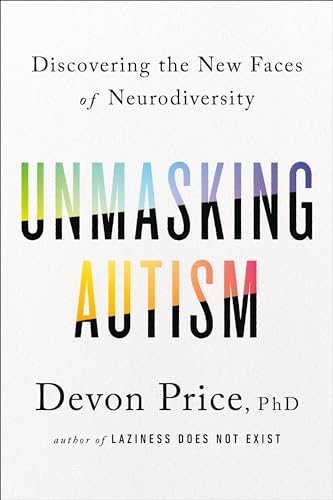


Unmasking Autism: Discovering the New Faces of Neurodiversity
- Health, Fitness & Dieting
- Children & Adolescent's Health
- Autism Spectrum
2. Executive Function: The Hidden Engine Your Teen Needs Help Starting
Executive function (EF) difficulties are one of the most common and most disruptive challenges for neurodivergent teens — and one of the most misunderstood by teachers, relatives, and even some clinicians.
EF is the collective term for the brain's management system: planning, organising, initiating tasks, managing time, regulating emotions, and holding information in working memory. For teens with ADHD, autism, dyslexia, or traumatic brain injury, EF deficits can look like laziness, defiance, or lack of motivation — when in reality, the teen's brain is genuinely struggling to execute.
What EF Struggles Actually Look Like at 13–17
- Homework that never gets started despite good intentions - Chronic lateness and lost belongings - Emotional explosions that seem disproportionate to the trigger - Difficulty transitioning between tasks or ending screen time - Projects completed in a frantic all-nighter rather than incrementally



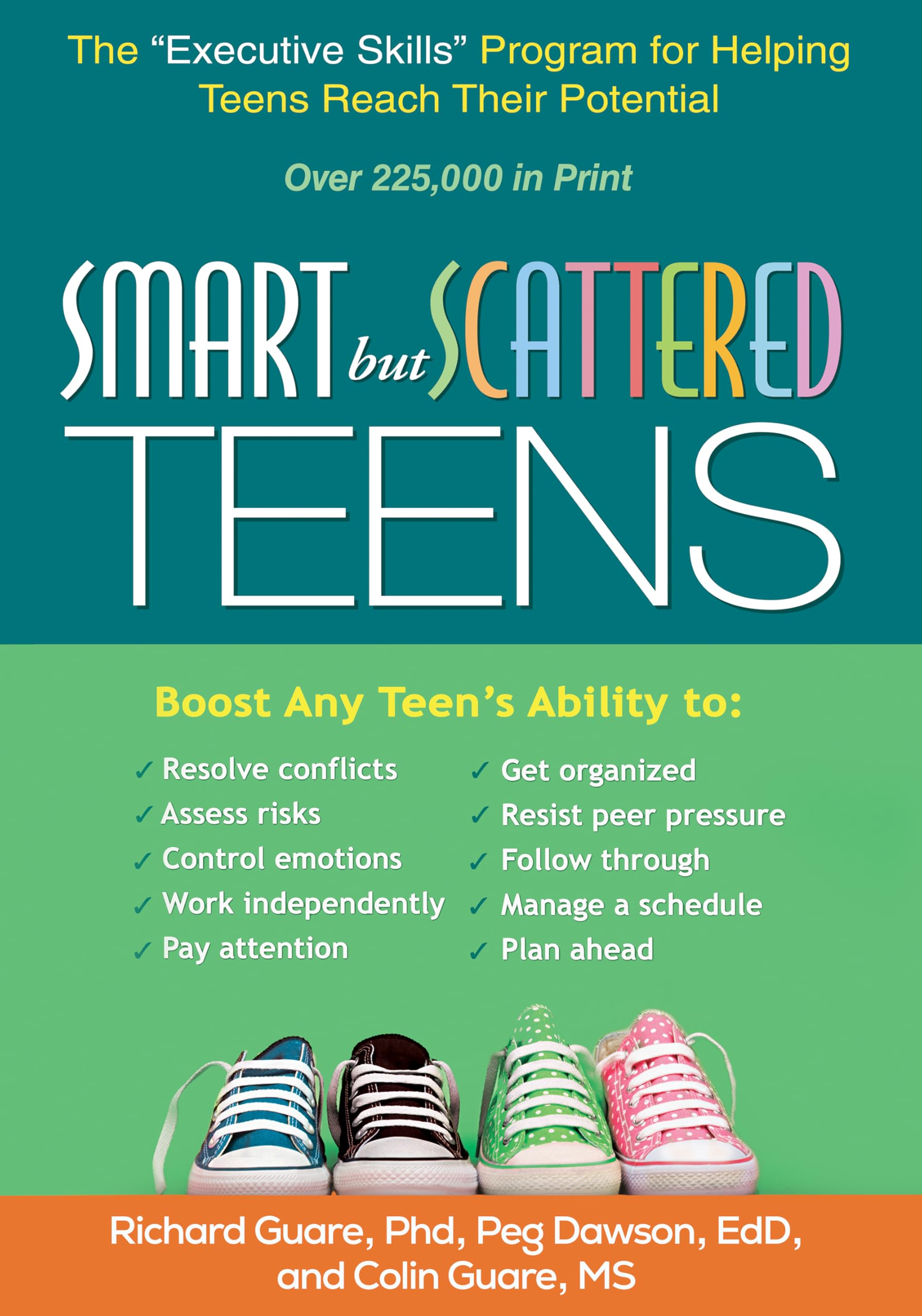

Smart but Scattered Teens: The "Executive Skills" Program for Helping Teens Reach Their Potential
- Health, Fitness & Dieting
- Mental Health
- Attention-Deficit/Hyperactivity
Practical EF Scaffolds for Home
1. Externalise everything. Whiteboards, visual schedules, phone alarms — if it lives only in your teen's head, it will likely be forgotten. 2. Break tasks into micro-steps. "Do your essay" is not a task; "open a Google Doc and write the title" is. 3. Use transition warnings. "In 10 minutes we're leaving" gives the brain time to shift gears. 4. Separate the skill from the will. When your teen doesn't start a task, ask "What's the first tiny step?" before assuming avoidance.
3. Navigating School: IEPs, 504 Plans, and Fighting for What Your Teen Deserves
Your teen has legal rights at school — knowing them is one of the most powerful things you can do as their advocate.
In the United States, two main frameworks protect neurodivergent students in secondary education:
- IDEA (Individuals with Disabilities Education Act): Provides an Individualised Education Program (IEP) for students whose disability significantly impacts their education. Covers specific learning goals, specialised instruction, and related services. - Section 504 of the Rehabilitation Act: Provides a 504 Plan for students who need accommodations but may not require specialised instruction. Common accommodations include extended time, preferential seating, and reduced-distraction testing environments.
In the UK, the equivalent is an Education, Health and Care Plan (EHCP), administered by the local authority.
What to Push For at IEP/504 Meetings
4. Emotional Regulation and Mental Health: What the Research Actually Says
Neurodivergent teens are significantly more likely to experience anxiety, depression, and emotional dysregulation than their neurotypical peers — and these challenges deserve the same clinical attention as the primary diagnosis.
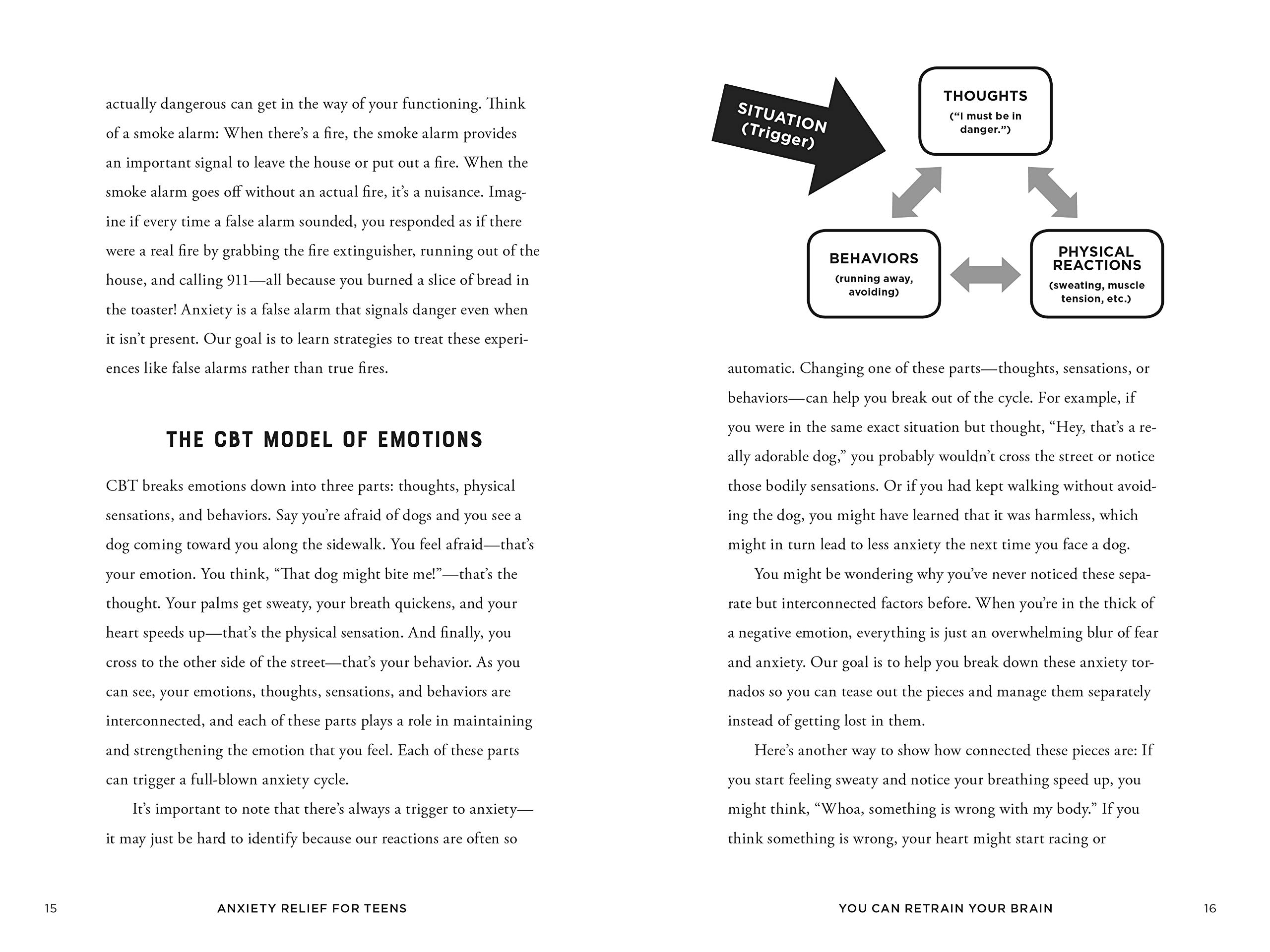
The National Institute of Mental Health (NIMH) notes that approximately 50% of individuals with ADHD will experience an anxiety disorder at some point in their lives. For autistic individuals, research published in Autism Research (Simonoff et al.) found that up to 70% of autistic children and teens meet criteria for at least one co-occurring mental health condition.
Emotional Dysregulation vs. Behavioural Problems
This distinction matters enormously. Emotional dysregulation — the inability to modulate the intensity or duration of an emotional response — is neurological, not a character flaw. When your teen explodes over a seemingly small frustration, their nervous system is genuinely overwhelmed, not manipulating you.
Rejection sensitive dysphoria — an extreme emotional response to perceived criticism or failure — is one of the most impairing and least discussed features of ADHD in adolescents.
— Dr. William Dodson, ADHD Experts Panel, ADDitude Magazine (2019)
Strategies That Actually Help
- DBT-informed skills: Dialectical Behaviour Therapy skills (distress tolerance, emotional regulation, mindfulness) have strong evidence for neurodivergent teens - Co-regulation first: You can't teach regulation skills in the middle of a meltdown — connect first, problem-solve later - Identify the sensory triggers: Many emotional explosions in neurodivergent teens are preceded by sensory overload that nobody noticed - Therapy with a neurodiversity-affirming clinician: Not all therapists are trained to work with neurodivergent teens — ask explicitly about their experience



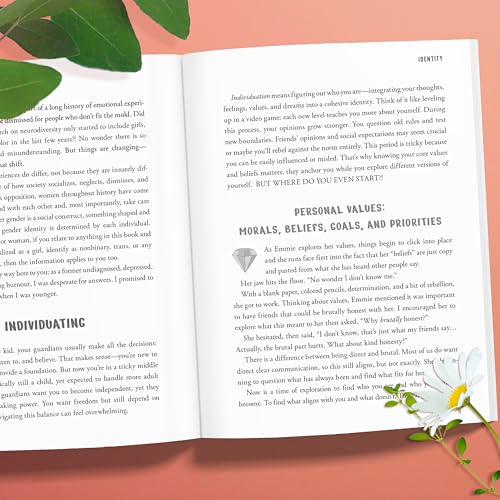
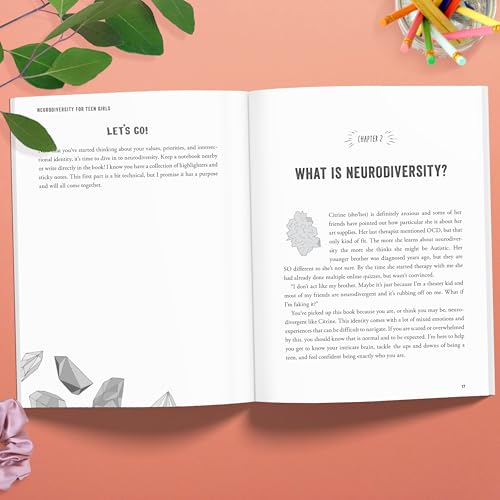
Neurodiversity for Teen Girls: Shine Bright as You Embrace Your Brain, Your Emotions, and Your Life (The Instant Help Solutions Series)
- Health, Fitness & Dieting
- Children & Adolescent's Health
- Learning Disorders
5. Social Navigation and Masking: Helping Your Teen Be Authentically Themselves
Masking — the conscious or unconscious suppression of neurodivergent traits to appear neurotypical — is one of the most exhausting and damaging coping strategies a teen can develop.
Research by Dr. Devon Price, social psychologist and author, describes masking as "performing neurotypicality at tremendous psychological cost." Autistic teens who heavily mask show significantly higher rates of anxiety, depression, and suicidal ideation than those who are supported to be authentic.
What Masking Looks Like in Teens
Unmasking Autism: Discovering the New Faces of Neurodiversity
- Health, Fitness & Dieting
- Children & Adolescent's Health
- Autism Spectrum
The goal isn't to teach your teen to mask more effectively — it's to help them build genuine social competence and choose, consciously, when and how to adapt.



The Asperkid's (Secret) Book of Social Rules, 10th Anniversary Edition: The Handbook of (Not-So-Obvious) Neurotypical Social Guidelines for Autistic Teens
- Teen & Young Adult
- Personal Health
- Self-Esteem
For teen girls specifically, masking tends to be more sophisticated and therefore more invisible — which means girls are often diagnosed later and their struggles go unrecognised longer.
Neurodiversity for Teen Girls: Shine Bright as You Embrace Your Brain, Your Emotions, and Your Life (The Instant Help Solutions Series)
- Health, Fitness & Dieting
- Children & Adolescent's Health
- Learning Disorders
6. Building Self-Advocacy and Identity: Raising a Teen Who Knows Their Own Brain
The single most protective factor for neurodivergent teens entering adulthood is self-awareness combined with the ability to communicate their needs.
Self-advocacy isn't a personality trait — it's a skill set, and it can be taught. It includes knowing your diagnosis, understanding how your brain works differently, being able to name what you need, and having the confidence to ask for it.
How to Build It Deliberately
1. Teach the diagnosis, not just the label. "You have ADHD" is less useful than "Your brain has a harder time filtering out distractions and getting started on tasks — here's what that means and what helps." 2. Use the language of neurodiversity, not deficit. "Your brain works differently" rather than "your brain doesn't work properly." 3. Practise in low-stakes settings. Role-play asking a teacher for extra time, or explaining a sensory need to a friend. 4. Celebrate neurodivergent strengths explicitly. Hyperfocus, pattern recognition, creativity, empathy, lateral thinking — these are real assets, not consolation prizes.


The Neurodivergent Teen’s Guide to Surviving School: How to Exist at School Without Imploding
- Teen & Young Adult
- Personal Health
- Self-Esteem
7. Supporting Neurodivergent Teen Girls: A Group That's Chronically Underserved
Girls with ADHD, autism, and learning differences are diagnosed later, supported less, and more likely to internalise their struggles than boys — and the teen years are when this disparity causes the most harm.
The reasons are partly social: girls are socialised to be compliant and socially skilled, which means they mask more effectively and their difficulties go unnoticed. They're more likely to be told they're "too sensitive," "dramatic," or "anxious" before anyone considers a neurodevelopmental explanation.
Signs That Are Often Missed in Teen Girls


Wonderfully Wired Brains: An Introduction to the World of Neurodiversity
- Children's Books
- Growing Up & Facts of Life
- Friendship, Social Skills & School Life
Comparing Support Approaches for Neurodivergent Teens
| Support Approach | Best For | Key Strengths | Limitations | Recommended Resource | Typical Cost |
|---|---|---|---|---|---|
| IEP (Individualised Education Program) | Teens needing specialised instruction | Legally binding, covers academics + transition | Requires school agreement, can be under-resourced | Smart but Scattered Teens | Free via school |
| 504 Plan | Teens needing accommodations only | Faster to obtain, flexible | No specialised instruction, less enforceable | Neurodivergent Teen's Guide to Surviving School | Free via school |
| CBT / DBT Therapy | Anxiety, emotional dysregulation | Strong evidence base, skill-building | Access and cost barriers, therapist quality varies | Neurodiversity for Teen Girls | $100–200/session |
| EF Coaching | ADHD, planning/organisation deficits | Practical, strength-based, teen-led | Not regulated, quality varies | Smart but Scattered Teens | $75–150/session |
| Peer Support / Neurodivergent Communities | Social isolation, identity | Normalising, empowering, low cost | Supervision needed for online groups | Wonderfully Wired Brains | Free–low cost |
| Social Skills Programmes | Autistic teens, social communication | Structured, evidence-informed | Risk of reinforcing masking if poorly designed | Asperkid's Book of Social Rules | $50–200/programme |
Expert Insights
Conclusion
Parenting a neurodivergent teen is one of the most demanding and most meaningful things you'll ever do. The stakes feel high because they are — but so is the potential. Your teen's brain is not broken. It is different, and different brains have changed the world in every era of human history.
The work you do now — advocating at school, building emotional safety at home, teaching self-knowledge, and refusing to let the world define your child by their deficits — is the work that shapes who they become. You won't get every moment right. Neither will they. That's exactly as it should be.
The most powerful thing you can give a neurodivergent teen is the belief that their brain is worth understanding — not fixing.
If this guide was useful, save it, share it with another parent who's in the thick of it, or bookmark it for the next IEP meeting. You've got this.
Sources & References
- Centers for Disease Control and Prevention (CDC). "Developmental Disabilities." 2023. https://www.cdc.gov/ncbddd/developmentaldisabilities/index.html
- Simonoff, E., et al. "Psychiatric Disorders in Children with Autism Spectrum Disorders: Prevalence, Comorbidity, and Associated Factors in a Population-Derived Sample." Journal of the American Academy of Child & Adolescent Psychiatry, 2008.
- National Institute of Mental Health (NIMH). "Attention-Deficit/Hyperactivity Disorder." 2023. https://www.nimh.nih.gov/health/topics/attention-deficit-hyperactivity-disorder-adhd
- Dodson, W. "Rejection Sensitive Dysphoria and ADHD." ADDitude Magazine Expert Webinar Series. 2019. https://www.additudemag.com
- Price, D. Unmasking Autism: Discovering the New Faces of Neurodiversity. Harmony Books, 2022.
- Hendrickx, S. Women and Girls with Autism Spectrum Disorder. Jessica Kingsley Publishers, 2015.
- Hallowell, E. & Ratey, J. ADHD 2.0: New Science and Essential Strategies for Thriving with Distraction. Ballantine Books, 2021.
- Dawson, P. & Guare, R. Smart but Scattered Teens. Guilford Press, 2013.
- U.S. Department of Education. "Individuals with Disabilities Education Act (IDEA)." https://sites.ed.gov/idea/
- Brown, T.E. Smart but Stuck: Unraveling the Mystery of the Intelligent Underachiever. Jossey-Bass, 2014.
Frequently Asked Questions
What's the difference between an IEP and a 504 plan for my teen?
My teen refuses to talk about their diagnosis. What should I do?
How do I know if my teen is masking at school?
My neurodivergent teen is struggling with anxiety. Should I get a separate anxiety diagnosis?
At what age should my teen start attending their own IEP meetings?
Are there good books my teen can read themselves about being neurodivergent?
My daughter was just diagnosed with ADHD at 15. Is it too late to make a difference?
Was this helpful?
Thanks — your feedback helps us pick what to write next.