Why Swaddling Works: The Science Behind the Snug Wrap
The HALO Sleepsack Swaddle helps newborns sleep more safely and soundly by containing the Moro startle reflex, replacing loose blankets, and supporting the back-sleep position recommended by the American Academy of Pediatrics.
In this article
It's 2 a.m. and your newborn has drifted off beautifully — only to fling both arms outward, startle awake, and cry all over again. You've just met the Moro reflex, and it will visit you dozens of times tonight unless you have a plan. According to the American Academy of Pediatrics (AAP), newborns sleep up to 16–17 hours in every 24-hour period, yet that sleep is fragmented across short cycles — making anything that smooths the transitions between cycles genuinely life-changing for exhausted parents.
This guide will show you exactly how to use the HALO Sleepsack Swaddle to work with your baby's biology, not against it.
By the end, you'll understand:
1. Why Swaddling Works: The Science Behind the Snug Wrap
Swaddling works because it mimics the contained feeling of the womb and dampens the Moro (startle) reflex that wakes babies between sleep cycles.
The Moro Reflex Explained
The Moro reflex is a primitive neurological response: any sudden sensation — a noise, a positional shift, even a hiccup — causes your newborn to throw their arms wide and then pull them back in. It's completely normal, peaks in the first four to six weeks, and typically fades by three to four months. The problem is that it fires right at the light-sleep stage your baby passes through every 45–60 minutes.
A snug swaddle physically limits that arm fling, reducing the sensory feedback that completes the reflex loop. The result: your baby stirs but doesn't fully rouse.
Swaddling, when done correctly, can be an effective technique to calm infants and promote sleep.
— American Academy of Pediatrics, Safe Sleep Guidelines (2022)
Research published in Pediatrics (van Sleuwen et al., 2007) reviewed data on more than 2,500 infants and found that swaddled babies cried less, slept longer, and were more easily consoled — but only when swaddled correctly and placed on their backs.
What Makes HALO Different from a Muslin Blanket
A traditional muslin swaddle can loosen, ride up over the face, or restrict hip movement. HALO's Sleepsack Swaddle is a wearable sack with integrated wing fasteners — it can't become a loose blanket in the crib, which directly addresses one of the AAP's core safe-sleep recommendations.
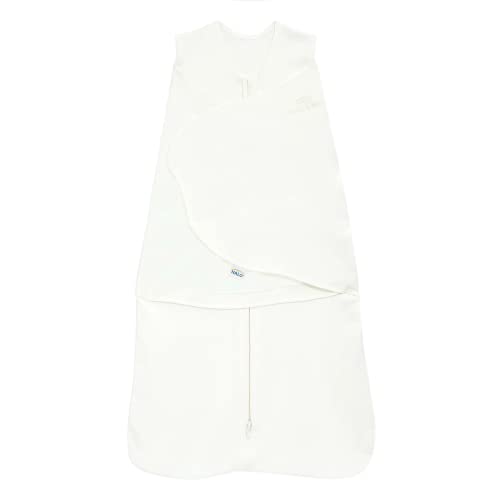

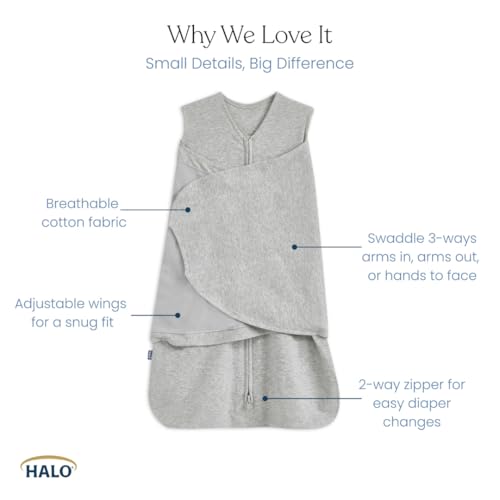
HALO 100% Cotton Sleepsack Swaddle, 3-Way Adjustable Wearable Blanket, TOG 1.5, Cream, Newborn, 0-3 Months
- SAFE AND SECURE SLEEP SOLUTION: The Original Halo Sleepsack Swaddle replaces loose blankets in the crib, creat
- SOFT AND STRETCHY COTTON: Made from 100% cotton with a double-knit construction, offering a cozy and slightly
- 3-WAY ADJUSTABLE SWADDLE DESIGN: Generously sized fasteners allow a perfect, customizable fit. Adjust the swad
2. Choosing the Right HALO Swaddle: TOG, Fabric, and Fit
The right HALO swaddle depends on three variables: your baby's weight, your nursery temperature, and the season.
Understanding TOG Ratings
TOG (Thermal Overall Grade) measures warmth. The higher the number, the warmer the garment. A simple rule of thumb:
- 0.5 TOG — warm rooms (above 75°F / 24°C) or summer - 1.5 TOG — moderate rooms (68–72°F / 20–22°C), the AAP-recommended sleep temperature range - 2.0–3.0 TOG — cooler rooms (below 68°F / 20°C) or winter
Sizing by Weight, Not Age
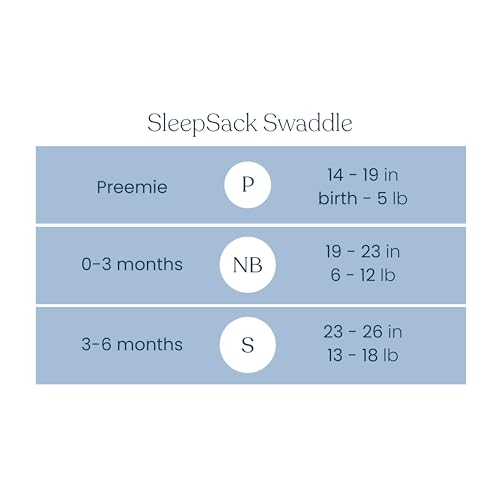
Age labels on packaging are a guide, not a rule. Always cross-check the weight range on the HALO size chart:
- Newborn: up to ~13 lb (6 kg) - Small: 10–18 lb (4.5–8 kg) - Medium: 16–24 lb (7–11 kg)
If your baby is near the top of a weight range, size up. A swaddle that's too small creates pressure on the hips and doesn't allow the natural frog-leg position essential for healthy hip development.

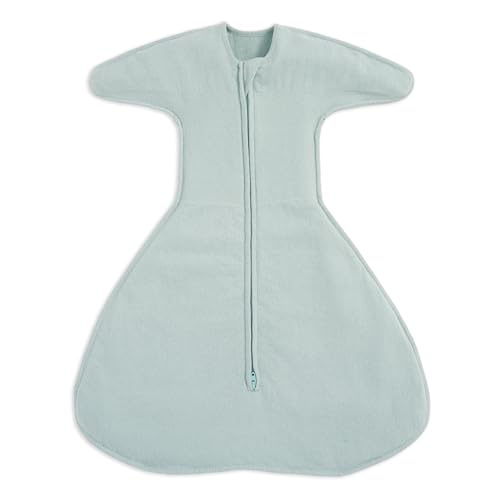
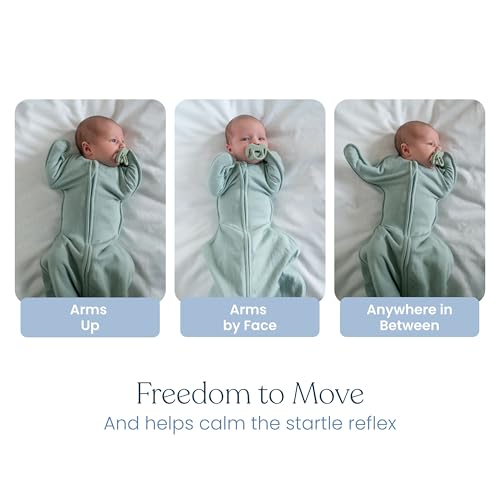
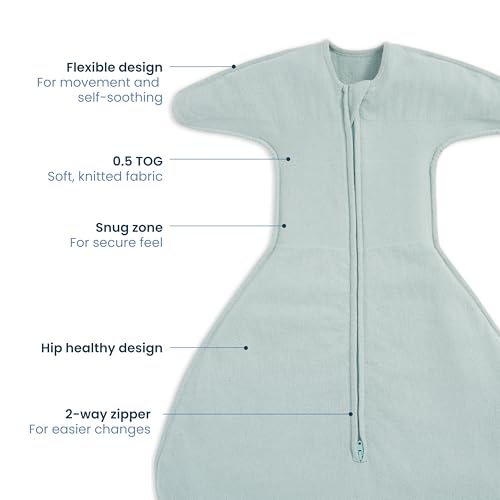
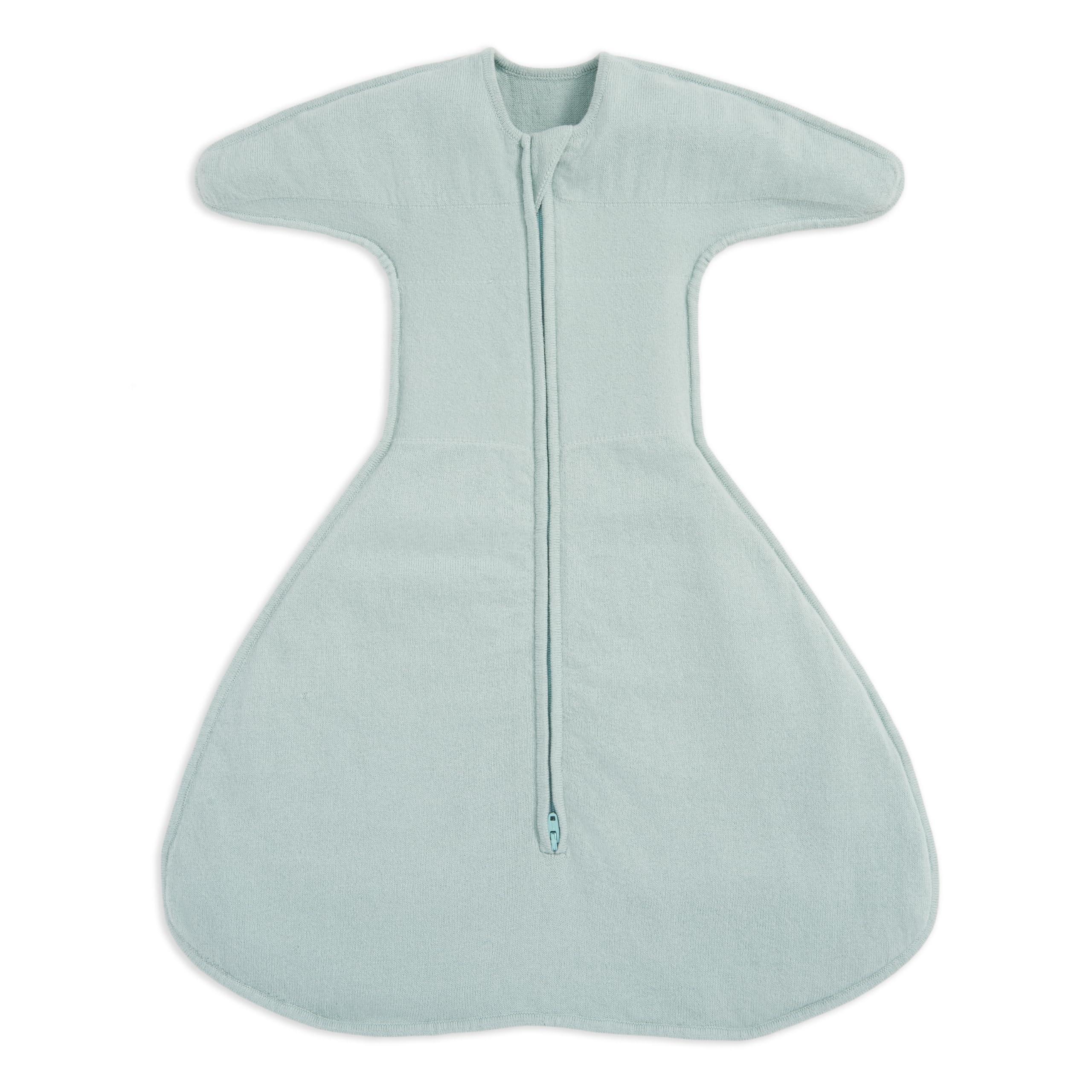
HALO Sleepsack SwaddleStretch, Arms Up or Extended Arms, Newborn Baby Swaddle, 0 – 3 Months, 0.5 TOG, Calm Sage
- FREEDOM TO MOVE: Stretchy sleeves support a natural sleep position, allowing arms to move up, out, or anywhere
- STARTLE-SOOTHING: Patent-pending design with unique sleeve construction and stretch fabric help ease the start
- HELPS THEM FEEL SECURE: Snug zone creates a cozy, held feeling that can help your little one settle for sleep.
3. Mastering the HALO Swaddle Technique Step by Step
A correctly applied HALO swaddle takes under two minutes once you've practised it three or four times.
The Three Arm Positions
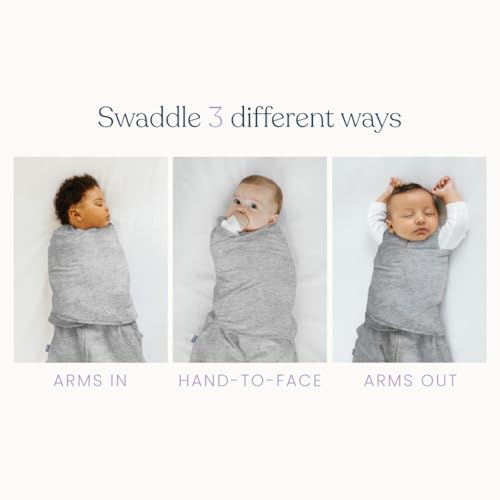
The HALO 3-way design gives you genuine flexibility:
1. Arms In — best for the first four to six weeks when the Moro reflex is strongest 2. One Arm Out (hand-to-face) — ideal when your baby is beginning to self-soothe with fingers 3. Both Arms Out — the transition step before moving to a wearable blanket entirely
Step-by-Step Wrap
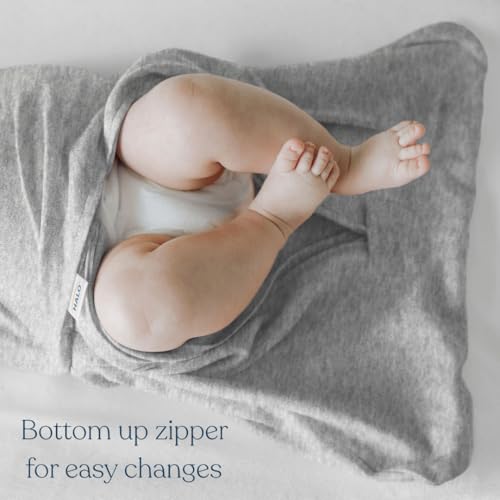
1. Lay the sleepsack flat, zipper side down, armholes at the top. 2. Place your baby so shoulders align with the armholes and feet sit at the bottom of the sack. 3. Zip up from the feet (the two-way zipper means you can access the nappy without unwrapping). 4. For arms-in: fold the left wing snugly across your baby's body and secure the fastener. Repeat with the right wing, overlapping across the left. 5. Fit check: slide two fingers between the swaddle and your baby's chest — snug but not tight. Confirm the hip pocket is roomy enough for bent, frog-leg positioning. 6. Place baby on their back in the crib. Always.

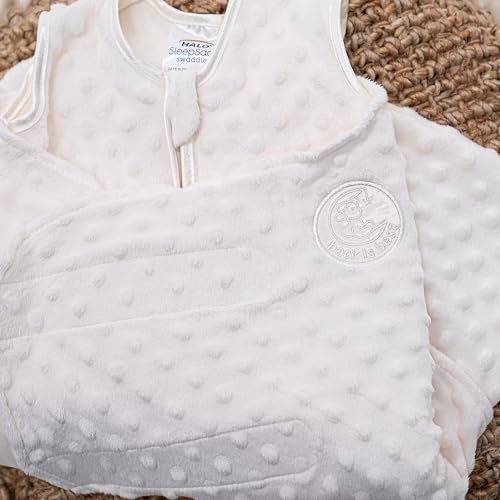
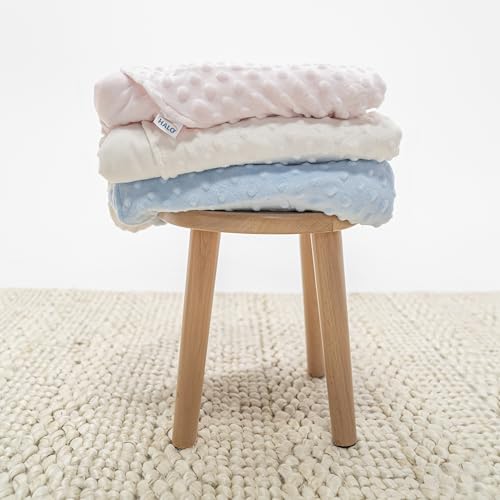
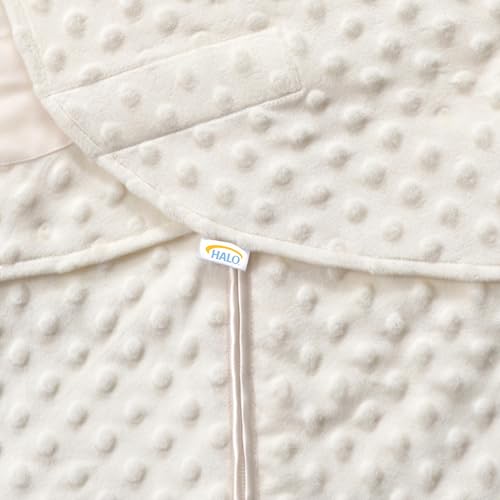
HALO Sleepsack Swaddle, 3-Way Adjustable Swaddle Blanket, TOG 3.0, Velboa Plush Dots, Cream, Newborn, 0-3 Months
- 3-way adjustable swaddle that adjusts to your baby's sleep style. Swaddle arms in, hands-to-face, one or both
- Used by hospitals nationwide as their swaddle of choice for safe sleep education. "Back is Best" embroidery re
- Strong, adjustable fasteners ensure a perfect fit and resist breakouts for more secure swaddling. Unzips from
4. Building a Sleep Environment That Works With the Swaddle
The swaddle is one layer of a sleep system. The room itself needs to support it.
Temperature and Light
The AAP recommends keeping the sleep room between 68–72°F (20–22°C). Blackout curtains help regulate both light and temperature, and they signal to your baby's developing circadian rhythm that night is different from day. Even newborns begin to distinguish light/dark cycles within the first few weeks.
White Noise
Continuous, low-level white noise (around 50–60 dB — roughly the volume of a gentle shower) masks household sounds that could trigger the Moro reflex mid-cycle. A 2021 study in Archives of Disease in Childhood found that white noise reduced sleep-onset time in infants. Keep the machine at least 7 feet from the crib and below 50 dB at the baby's ear level to stay within safe hearing guidelines from the American Speech-Language-Hearing Association (ASHA).
Feed → Change → Swaddle Sequence
Order matters. Feed first, then change the nappy (the zipper bottom on HALO swaddles means you can do a quick change without fully unwrapping), then swaddle and settle. Swaddling after the nappy change — not before — prevents you from unravelling a perfectly sleepy baby.
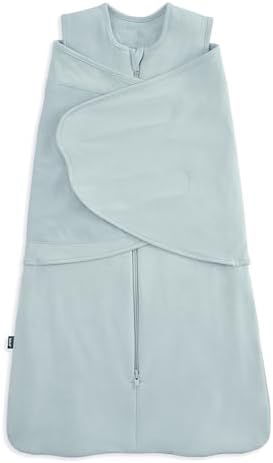

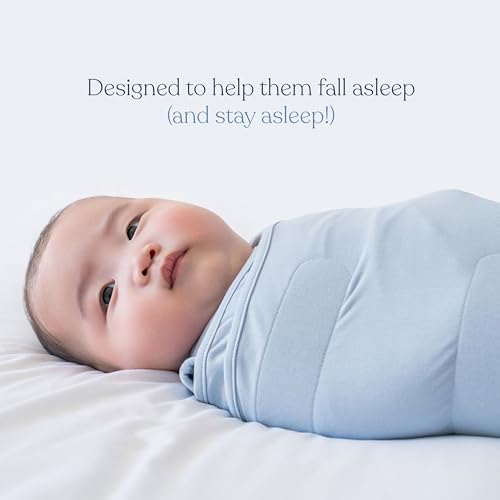


HALO SleepSack SuperSoft Swaddle, Cozy Bamboo Viscose, 3-Way Adjustable Swaddle, 2 Way Zipper, 2 TOG
- Baby Products
- Blankets & Swaddling
- Swaddling Blankets
5. Safe Swaddling: Rules That Are Non-Negotiable
Swaddling is safe when done correctly; it carries real risks when done wrong.
The AAP Safe Sleep Framework
The AAP's 2022 updated safe-sleep guidelines emphasise: - Back to sleep, every sleep — swaddled or not - Firm, flat sleep surface — no inclined sleepers, no bed-sharing while swaddled - No loose bedding — the HALO sack eliminates this risk by design - Room-sharing (not bed-sharing) for at least the first six months
Infants who are swaddled should always be placed on their back.
— American Academy of Pediatrics, Safe Sleep Policy Statement (2022)
Hip Health
The International Hip Dysplasia Institute (IHDI) warns that wrapping the legs straight and tight — as traditional blanket swaddling sometimes does — increases the risk of developmental dysplasia of the hip (DDH). HALO's sack design specifically preserves the hip pocket: legs can bend up and out in the natural frog position even when the arms are snugly wrapped.
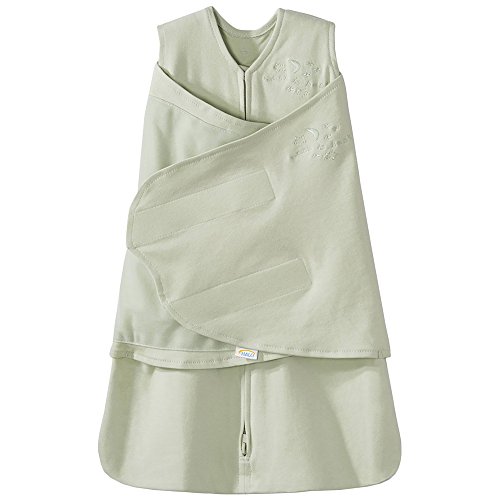
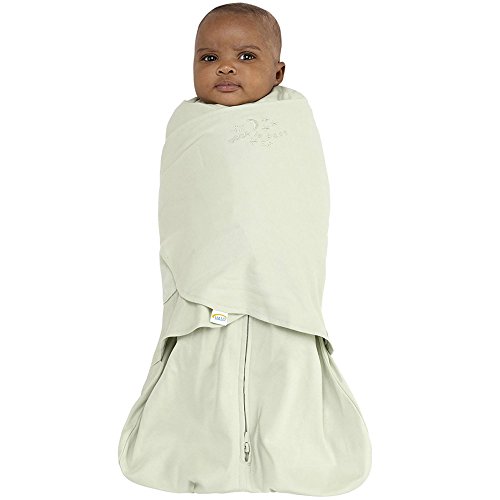
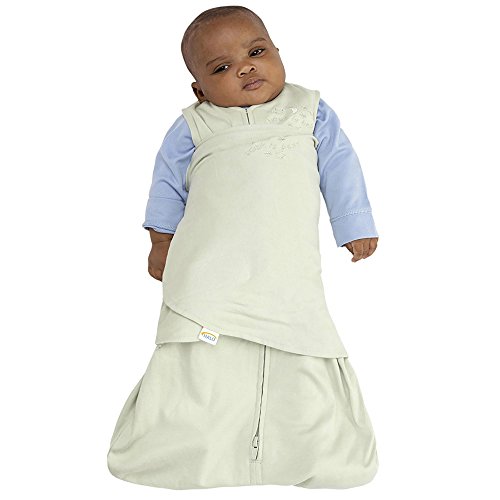
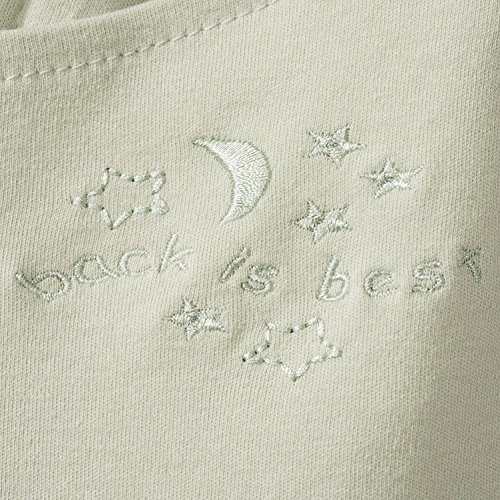
HALO 100% Cotton Sleepsack Swaddle, 3-Way Adjustable Wearable Blanket, TOG 1.5, Sage, Newborn, 0-3 Months
- SAFE AND SECURE SLEEP SOLUTION: The Original Halo Sleepsack Swaddle replaces loose blankets in the crib, creat
- SOFT AND STRETCHY COTTON: Made from 100% cotton with a double-knit construction, offering a cozy and slightly
- 3-WAY ADJUSTABLE SWADDLE DESIGN: Generously sized fasteners allow a perfect, customizable fit. Adjust the swad
6. Transitioning Out of the Swaddle: Timing and How-To
You should stop swaddling when your baby shows signs of rolling, which can happen as early as 8 weeks — not at a fixed calendar date.
Signs It's Time
The Gradual Method
Cold turkey works for some families, but a step-down approach reduces sleep disruption:
1. Week 1: Switch to one arm out using the HALO 3-way design 2. Week 2: Both arms out, still in the HALO swaddle sack (the sack still provides the "held" feeling around the body) 3. Week 3+: Transition to a HALO Sleepsack wearable blanket with no arm wrapping — the HALO Sleepsack Supersoft Wearable Blanket in bamboo viscose is a popular next step for babies moving into the 6–12 month range
7. HALO Swaddle Comparison: Which Model Is Right for Your Baby?
| Model | TOG | Best For | Fabric | Key Feature | Recommended Product | Price |
|---|---|---|---|---|---|---|
| Cotton Swaddle (Cream) | 1.5 | Moderate rooms, 68–72°F | 100% cotton double-knit | 3-way adjustable, classic fit | HALO Cotton Sleepsack Swaddle Cream | $34.95 |
| Cotton Swaddle (Sage) | 1.5 | Moderate rooms, 68–72°F | 100% cotton double-knit | 3-way adjustable, gender-neutral colour | HALO Cotton Sleepsack Swaddle Sage | $34.95 |
| Velboa Plush Dots Swaddle | 3.0 | Cooler rooms, below 68°F / winter | Velboa plush | Extra warmth, cosy texture | HALO Velboa Plush Swaddle TOG 3.0 | $34.95 |
| SwaddleStretch | 0.5 | Warm rooms, above 75°F / summer | Stretch fabric | Arms-up position, freedom of movement | HALO SwaddleStretch 0.5 TOG | $34.95 |
| SuperSoft Bamboo Swaddle | 2.0 | Cool rooms, sensitive skin | 95% bamboo viscose | Ultra-soft, hypoallergenic | HALO SuperSoft Bamboo Swaddle | $49.95 |
| Sleepsack Wearable Blanket | 1.5 | Post-swaddle, 6–12 months | Bamboo viscose/elastane | No arm wrap, transition product | HALO Sleepsack Supersoft Wearable Blanket | $44.95 |
Expert Insights on Infant Sleep and Swaddling
Those first twelve weeks are simultaneously the most exhausting and the most tender stretch of early parenthood. Every extra hour of sleep your baby gets is an hour of restoration for you both — and the right swaddle, used correctly, genuinely moves the needle. The HALO Sleepsack Swaddle isn't magic, but it is well-designed, evidence-aligned, and used in hospitals across the country for good reason.
The best swaddle is the one that keeps your baby safe, warm, and on their back — every single sleep.
If this guide helped you, save it for the 3 a.m. moments when you need a quick reminder, and share it with a fellow new parent who could use a better night's sleep.
Sources & References
- American Academy of Pediatrics. "Safe Sleep: Recommendations." Updated 2022. https://www.aap.org/en/patient-care/safe-sleep/
- Moon RY, Carlin RF, Hand I; AAP Task Force on Sudden Infant Death Syndrome. "Evidence Base for 2022 Updated AAP Recommendations on Safe Infant Sleep Environment." Pediatrics. 2022;150(1):e2022057991.
- van Sleuwen BE, Engelberts AC, Boere-Boonekamp MM, et al. "Swaddling: A Systematic Review." Pediatrics. 2007;120(4):e1097–e1106.
- International Hip Dysplasia Institute. "Hip-Healthy Swaddling." Clinical Advisory Statement. 2020. https://hipdysplasia.org/developmental-dysplasia-of-the-hip/hip-healthy-swaddling/
- American Speech-Language-Hearing Association (ASHA). "Noise and Hearing Loss Prevention." https://www.asha.org/public/hearing/noise/
- Forquer LM, Johnson CM. "Continuous white noise to reduce resistance going to sleep and night wakings in toddlers." Sleep Medicine. 2005;6(3):247–250.
- Karp H. The Happiest Baby on the Block. 2nd ed. Bantam Books, 2015.
Frequently Asked Questions
Is it safe to swaddle my baby all night?
How do I know if the swaddle is too tight?
My baby keeps breaking out of the swaddle — what should I do?
Can I swaddle a baby who is breastfeeding on demand?
What should my baby wear underneath the HALO swaddle?
At what age should I stop swaddling?
Can swaddling cause SIDS?
Was this helpful?
Thanks — your feedback helps us pick what to write next.