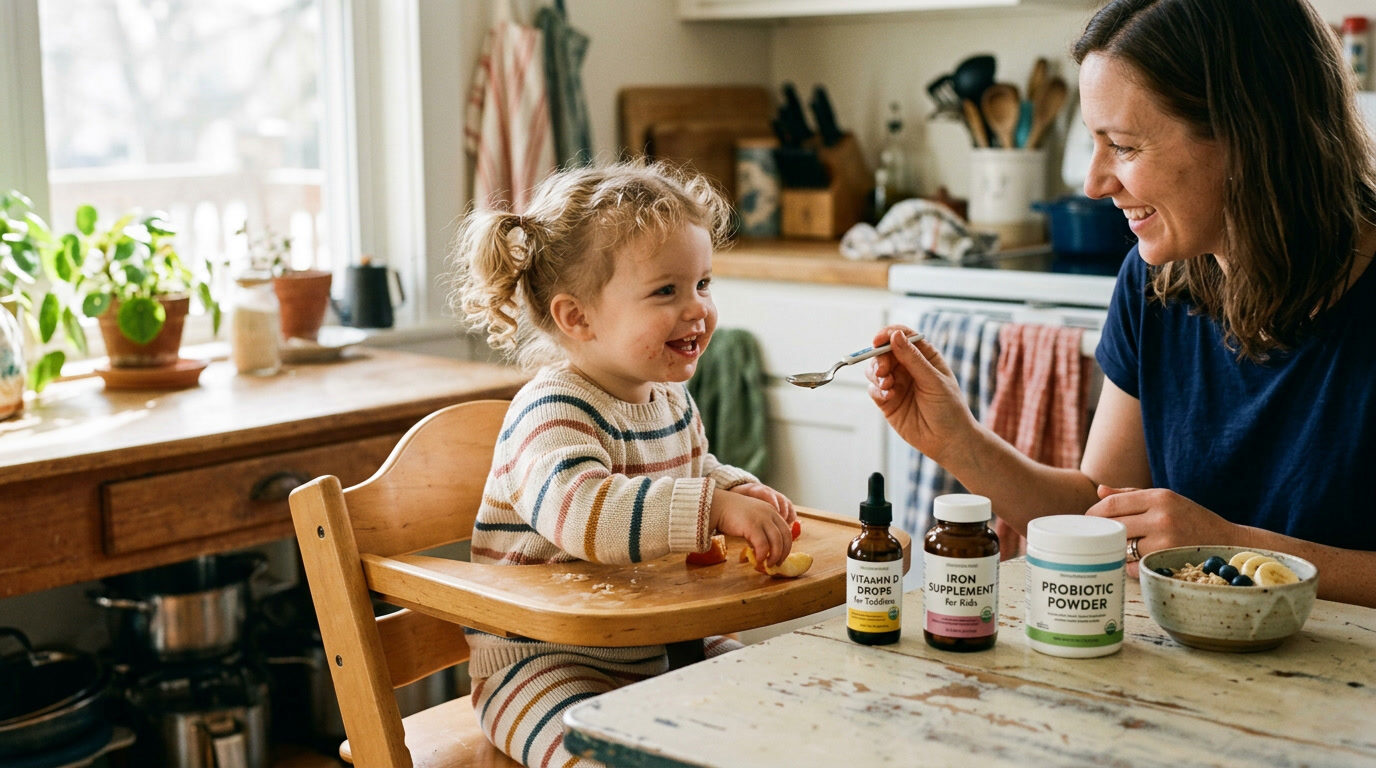
Why the Cup You Choose Actually Matters for Your Toddler's Development
For most toddlers, a straw cup is the best transition cup — it supports healthy oral motor development, protects emerging teeth, and mirrors the mechanics of open-cup drinking more closely than a traditional sippy cup.
In this article
Picture this: you're standing in the baby aisle, staring at a wall of colourful cups, and your 11-month-old is at home stubbornly refusing to give up the bottle. Sound familiar? You are not alone. According to the American Academy of Pediatrics (AAP), children should be weaned from the bottle by 12–18 months of age — yet surveys consistently show that a significant number of toddlers are still using bottles well past their second birthday, raising the risk of iron-deficiency anaemia, dental decay, and delayed speech development.
Choosing the right transition cup is one of the most practical things you can do right now to set your child up for healthy drinking habits for life. But with sippy cups, straw cups, 360 cups, and hybrid designs all competing for your attention (and your money), how do you actually decide?
By the end of this article, you'll understand:
1. Why the Cup You Choose Actually Matters for Your Toddler's Development
The transition cup your toddler uses every day is not just a vessel for water — it actively shapes the muscles in their mouth, the position of their tongue, and even the alignment of their developing teeth. Most parents are surprised to learn that something as ordinary as a sippy cup can have measurable effects on oral motor development and speech clarity.
The mouth is a busy place during the toddler years. Between 6 and 36 months, children are simultaneously learning to chew, swallow, babble, form words, and manage saliva. The way a child sucks from a cup trains specific muscle groups. A hard-spout sippy cup, for instance, requires a child to thrust their tongue forward and clamp down — very similar to bottle mechanics. Do that for 18 months, several times a day, and you reinforce a swallowing pattern that paediatric speech-language pathologists call "tongue thrust," which can affect both speech sound production and tooth positioning.
Why Bottle Weaning Timing Matters
The AAP recommends introducing a cup at around 6 months, alongside the introduction of solid foods, and completing the transition away from the bottle by 12–18 months. Waiting longer significantly increases the risk of:
The good news? There is a genuinely good option for every stage. Let's break them down one by one.
2. Traditional Sippy Cups — Convenient, But Not Always the Best First Choice
Traditional sippy cups — the ones with a hard plastic or soft silicone spout and a valve underneath — are the most widely sold transition cup in the world, and also the most debated among paediatric professionals. They are convenient, spill-proof, and familiar to most parents. But their reputation in clinical circles has become more complicated over the past decade.
The core concern is this: a hard-spout sippy cup asks a child to drink in almost exactly the same way as a bottle. The tongue moves forward, the lips clamp, and the jaw stays relatively passive. There is no meaningful "upgrade" in oral motor skill — the child is simply using the same muscle pattern with a different-shaped container. For families who are trying to move away from bottle mechanics, this can feel like one step forward and one step back.
That said, sippy cups are not all bad. Soft-spout versions are gentler on gum tissue and require slightly different tongue positioning. And for very young babies (6–9 months) who are just beginning to explore cups, a handled sippy can be an excellent first introduction — something easy to hold, hard to spill, and low-stakes.
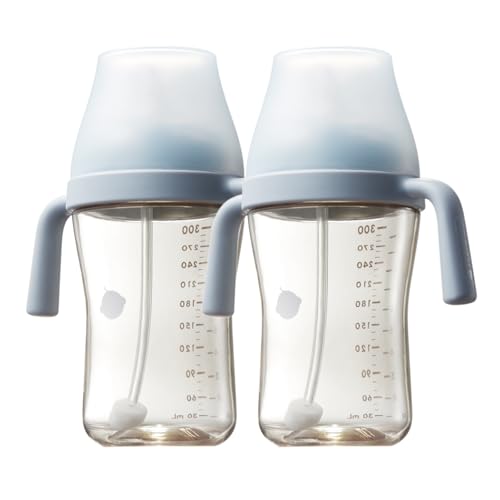
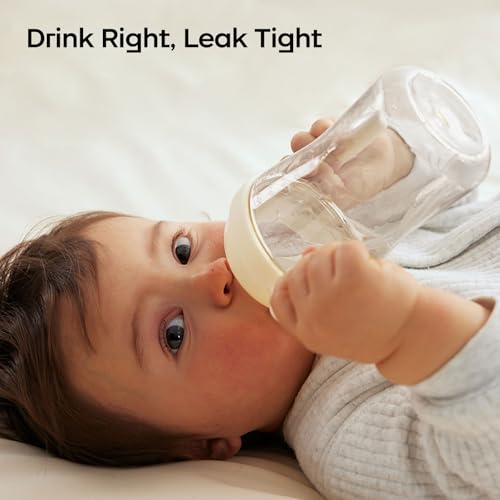
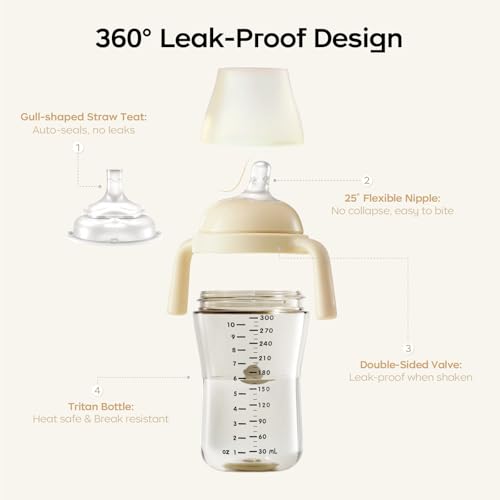
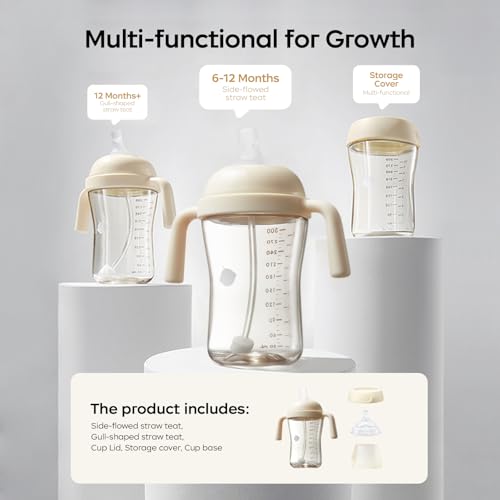
bc babycare Sippy Cup Learner for 6+ Month Old with Nipples & Handles, Spill Proof Sippy Cup, Weighted Straw Toddler Cups, Anti-Choking Baby Cups 2 Packs, Blue
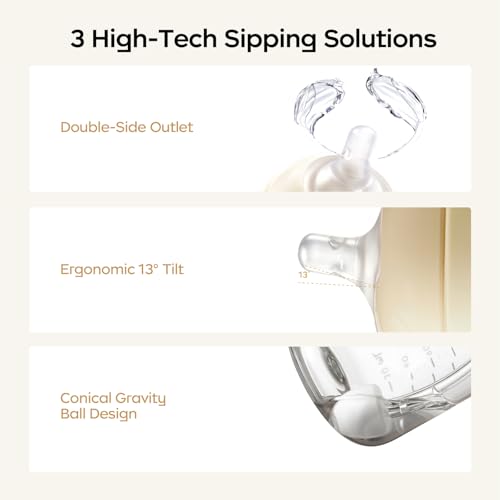
- 【13° Inclination】Sippy cup is designed with 13° inclination Angle, so that the baby can let the liquid enter t
- 【Double-side Outlet】Straw cups uses a new outlet method with double-side outlet, which can make the water flow
- 【Conical Gravity Ball】Baby milk cup with new conical gravity ball, easier to suck even low water level. sippy
The bc babycare Sippy Cup Learner is a thoughtful example of a sippy cup that tries to address the clinical concerns head-on. Its 13-degree inclined angle means your baby doesn't have to tip their head back sharply to drink — a position that can actually encourage better swallowing mechanics. The double-sided outlet slows liquid flow, reducing the risk of choking, and the soft silicone pacifier-style nipple is gentler than a hard spout. For babies transitioning from breastfeeding especially, the familiar soft tip can make the first cup experience far less stressful.
When a Sippy Cup Makes Sense
3. Straw Cups — The Gold Standard for Oral Motor Development
If you ask a paediatric speech-language pathologist or a paediatric dentist which cup they recommend, the answer is almost always the same: a straw cup. And the reasoning is grounded in how the mouth actually works during healthy, mature swallowing.
When a child drinks from a straw, the tip of the tongue lifts toward the roof of the mouth — a movement called "tongue tip elevation." This is the same movement required for producing sounds like /t/, /d/, /n/, and /l/ clearly. It also mirrors the tongue position used in a mature swallow, where liquid is directed to the back of the mouth without pooling at the front. In short, straw drinking actively exercises the muscles and movement patterns that support both clear speech and safe swallowing.
We recommend straw cups over sippy cups because straw drinking promotes the same tongue movements needed for speech and mature swallowing — it's a developmental win-win.
— American Speech-Language-Hearing Association (ASHA), Consumer Resources (2022)
From a dental perspective, straws also score better. Liquid from a straw is delivered toward the back of the mouth, significantly reducing the time that sugary or acidic liquids (milk, juice) are in contact with tooth enamel. The American Academy of Pediatric Dentistry (AAPD) has consistently noted that straw drinking is preferable to sippy cup use for reducing dental caries risk.

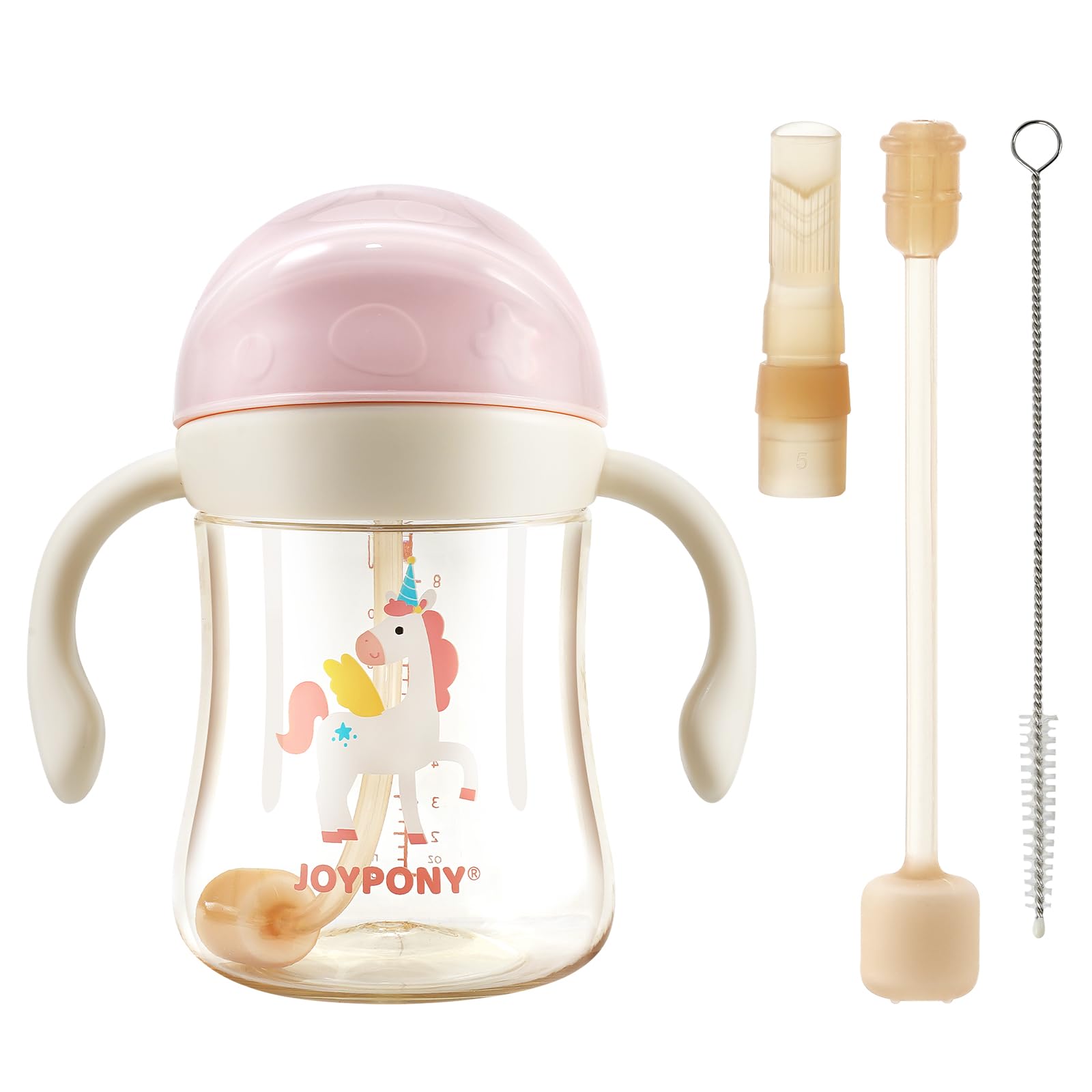
Joypony Sippy Cups for Toddlers 1-3, Spill Proof Weighted Straw Cup with Handle for Baby 6 Months + old, 2 Silicone Straws, PPSU, BPA Free, 9 oz (Pink)
- 【PPSU Material for Durability】Crafted from high-quality PPSU, this sippy cup is BPA-free, offering strong mole
- 【No-Spill, Easy Drinking】With a 4-layer anti-leak design, the cup ensures no spills, even when inverted. The g
- 【Simple to Use & Clean】Joypony toddler cup is designed for effortless use, featuring easy assembly, disassembl
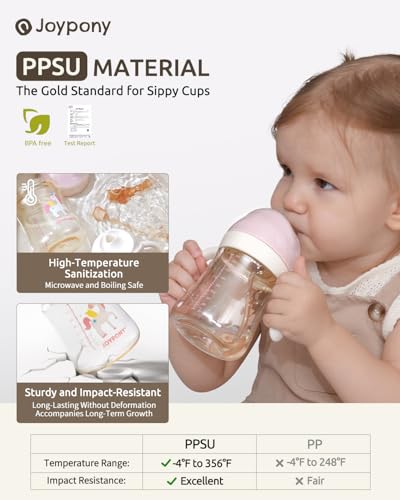
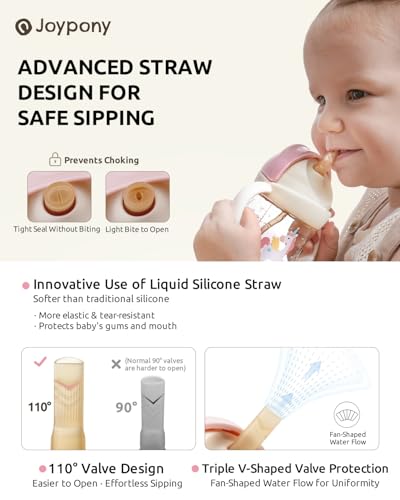
The Joypony Weighted Straw Cup is one of the smartest designs on the market for younger toddlers (6 months and up). The weighted straw — with a small gravity ball at its end — follows the liquid to the bottom of the cup, meaning your baby can drink in any position without getting a mouthful of air. The PPSU material (a medical-grade plastic that's BPA-free, more heat-resistant than standard PP plastic, and tough enough to survive repeated drops) makes this a genuinely durable investment. The 4-layer anti-leak design means you can hand it to a 9-month-old and not spend the afternoon mopping up.
What to Look for in a Straw Cup
4. 360-Degree Cups — The Open-Cup Bridge That Spill-Proofs the Learning Curve
The 360-degree cup (sometimes called a "miracle cup" or "rim cup") is the newest category in the transition cup world, and it occupies a genuinely clever developmental niche. The design is simple: instead of a spout or a straw, the entire rim of the lid is drinkable. The child tips the cup to their lips — just like an open cup — and a valve releases liquid only where their lips make contact. Lift the cup away, and the valve reseals automatically.
The developmental appeal is real. Drinking from a 360 cup uses a lip seal and jaw movement that is much closer to open-cup drinking than either a sippy or a straw cup. There is no spout to clamp down on, no straw to create suction — just lips, jaw, and gravity. For children who are 12 months and older and already have some oral motor competence, the 360 cup can be an excellent bridge toward fully open-cup drinking.
The Honest Limitations of 360 Cups
It's worth being upfront about the caveats, because the marketing around 360 cups can sometimes oversell them:
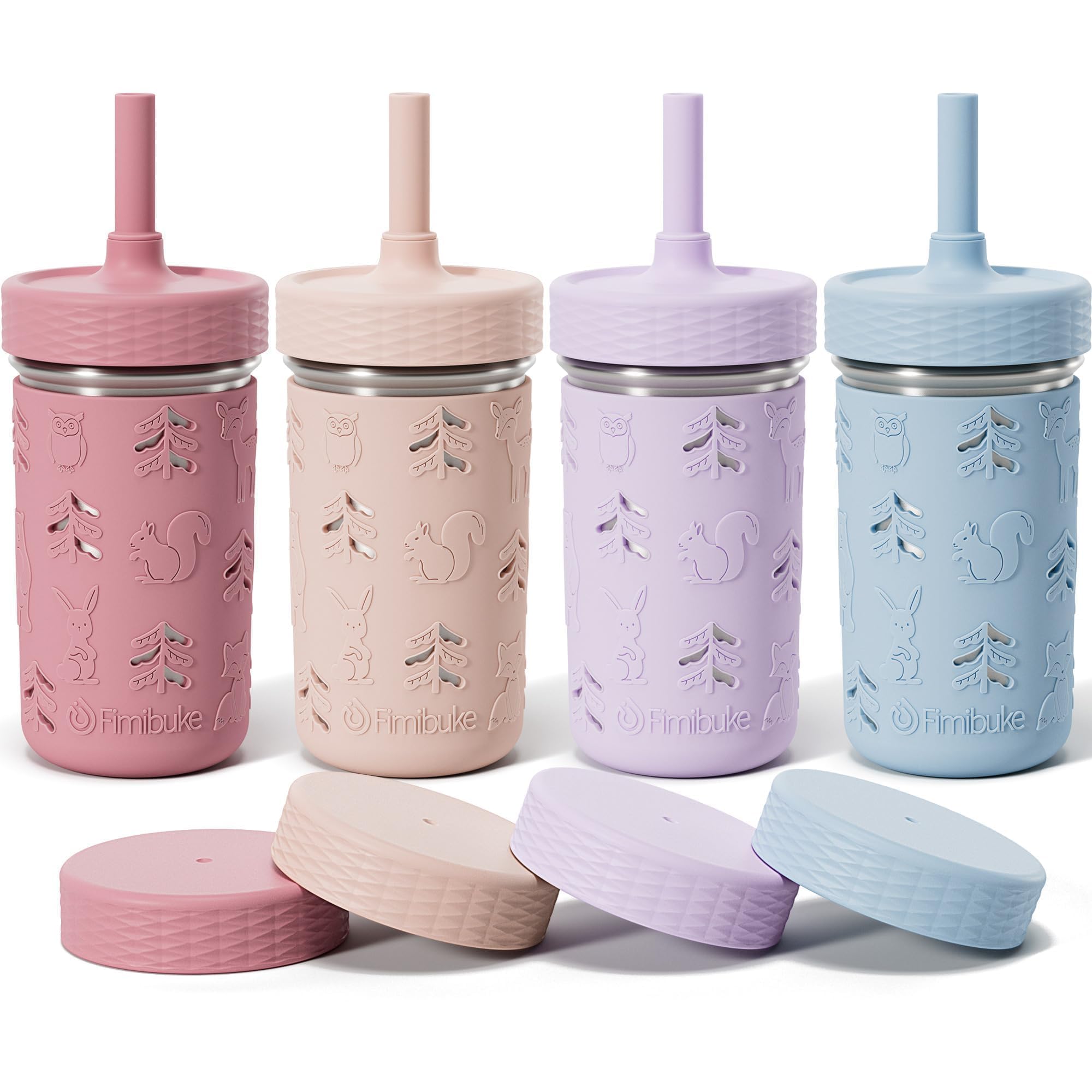
For families who love the 360 concept but want something that grows with their child, the Fimibuke 3-in-1 Stainless Steel Toddler Cup offers a smart alternative: interchangeable lids that let you switch between straw drinking, spout sipping, and even a snack container configuration. It's built for the 3+ age range, making it ideal for preschool-age children who are ready for more independence.
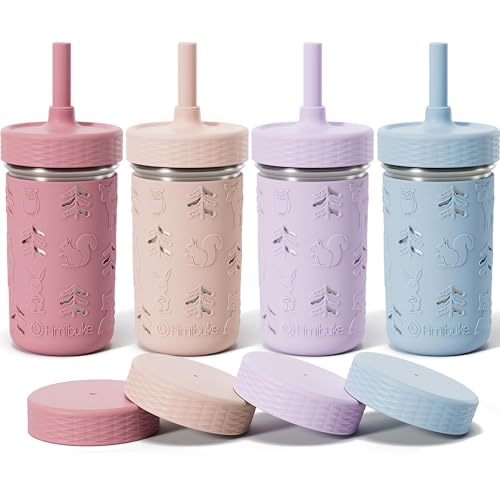
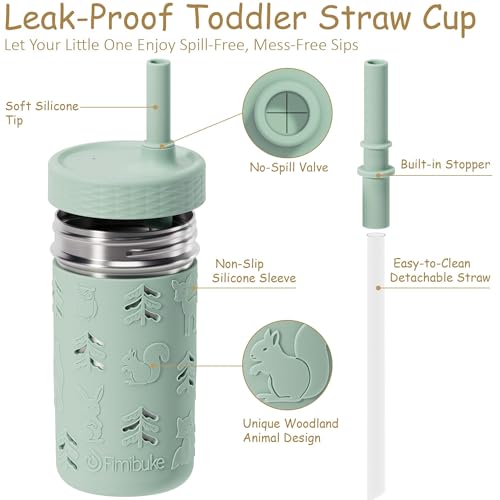
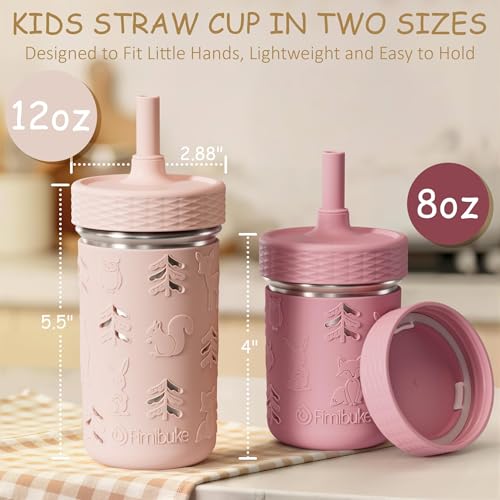
Fimibuke Toddler Cups Spill Proof, 12 OZ Sippy Cups for Kid Girl Boy, Leak Proof Stainless Steel Tumbler with Lid, Silicone Straw & Sleeve, BPA Free Dishwasher Safe Water Bottle Snack Container 4 Pack
- 3-IN-1 KIDS CUP FOR EVERY STAGE OF GROWTH: Designed for ultimate flexibility, our toddler cups boast interchan
- LEAK PROOF & SPILL PROOF TODDLER CUPS: Say goodbye to messy spills with these toddler cups spill proof, design
- KID-FRIENDLY DESIGNS & EASY TO USE: Empower your child’s independence with our thoughtfully designed toddler t
5. Materials Matter — What Your Toddler's Cup Is Made Of
Here's something most cup comparison guides skip entirely: the material your toddler's cup is made from matters as much as its design. Toddlers chew, drop, leave cups in hot cars, and put them through the dishwasher daily. Not all materials hold up equally — and some raise legitimate safety concerns.
Plastic Cups: What to Look For
Not all plastic is created equal. The key terms to understand:
- BPA (Bisphenol A): An industrial chemical used in some plastics that can leach into liquids, particularly when heated. Avoid any cup that doesn't explicitly state BPA-free. - PP (Polypropylene): The most common BPA-free plastic. Safe, lightweight, but can become brittle with repeated high-temperature sterilisation. - PPSU (Polyphenylsulfone): A premium medical-grade plastic. More heat-resistant than PP, more durable, and maintains structural integrity through repeated sterilisation cycles. The Joypony Weighted Straw Cup uses PPSU — a meaningful upgrade for families who sterilise frequently. - Tritan: Another popular BPA-free plastic used in many toddler cups. Durable and clear (easy to check liquid levels), though not as heat-resistant as PPSU.
Parents should look for cups labelled BPA-free, and be aware that repeated heating of any plastic — even BPA-free plastics — may cause degradation over time. When in doubt, replace cups that show signs of wear.
— American Academy of Pediatrics, HealthyChildren.org (2023)
Stainless Steel Cups
Stainless steel is increasingly popular — and for good reason. It's durable, doesn't retain odours or flavours, and doesn't leach chemicals. The Fimibuke Stainless Steel Toddler Cup is a strong example: double-walled insulation keeps drinks cool for hours, and the silicone sleeve adds grip without adding bulk. The trade-off? Stainless steel cups are heavier, which can be challenging for very young toddlers still developing their grip strength.
Silicone Components
Most modern cups combine hard plastic or stainless steel bodies with silicone straws, valves, or sleeves. Food-grade silicone is safe, flexible, and gentle on gum tissue — but it needs to be inspected regularly. Silicone straws can develop micro-tears that harbour bacteria, especially if a child chews them (and they will chew them).
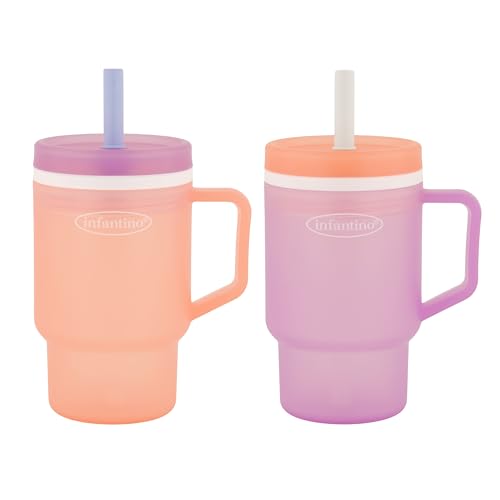
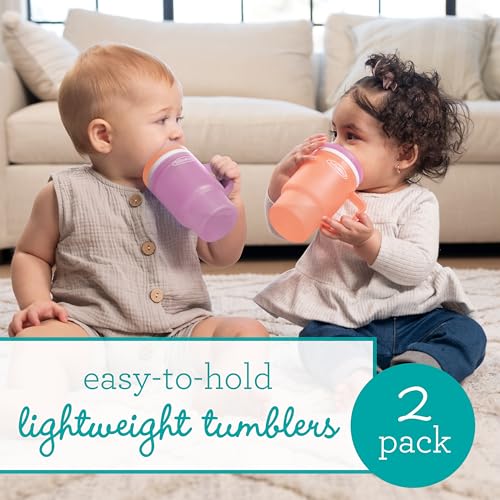
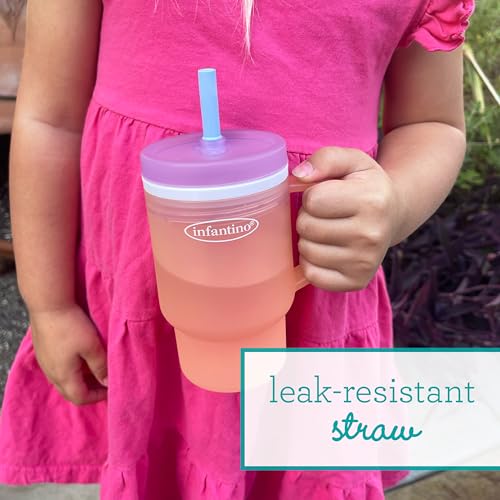
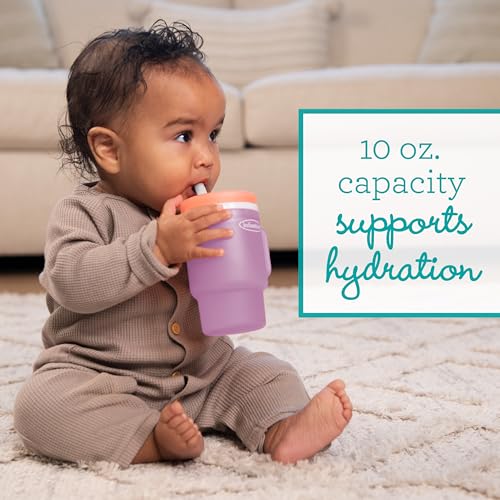
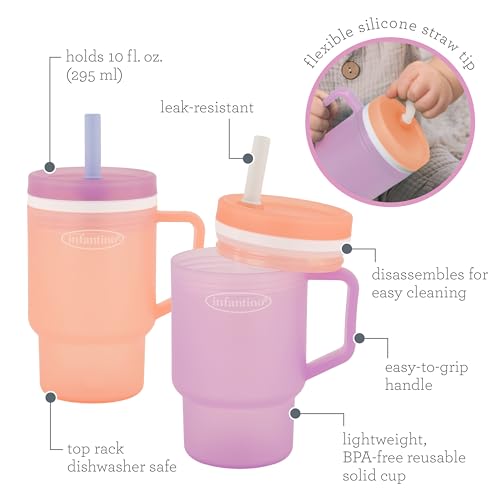
Infantino My 1st Tumbler, 10 Oz. Durable Plastic Sippy Cup with Silicone Leak-Resistant Straw & Handle, for On-the-Go, BPA-Free Transition Cup, Seashell & Lavender, 2-Pack
- TODDLER-FRIENDLY & JUST THE RIGHT SIZE: This lightweight 10oz training cup with handle is perfectly sized for
- LEAK-RESISTANT STRAW DESIGN: The built-in straw features a soft silicone tip and a smart valve to help control
- EASY TO HOLD FOR LITTLE HANDS: The smooth, contoured shape makes gripping simple for toddlers. Great for sippi
The Infantino My 1st Tumbler is a great example of thoughtful material choices at an accessible price point. The soft silicone straw tip has a no-pull design (so your baby can't yank it out and choke on it), and the smart flow valve reduces spills without requiring excessive suction force — important for younger toddlers whose jaw muscles are still developing.
6. Age-by-Age Guide — Matching the Right Cup to Your Child's Stage
One of the most common mistakes parents make is choosing a cup based on what looks appealing rather than what matches their child's developmental stage. Here's a practical, age-by-age breakdown to take the guesswork out of it.
6 Months: The First Introduction
At 6 months, your baby is just beginning solid foods and their oral motor system is primed for new experiences. The goal here is not proficient drinking — it's exploration and familiarity.
9–12 Months: Building Competence
By 9 months, most babies have enough jaw stability and hand-eye coordination to hold a cup with handles and take meaningful sips. This is the ideal window to establish straw cup use before the bottle wean at 12 months.
12–18 Months: The Bottle Wean Window
This is the critical transition period. The AAP recommends completing the bottle wean by 18 months at the latest. Your toddler's oral motor skills are now developed enough to handle a straw cup confidently, and many children are ready to begin exploring a 360 cup or even an open cup at mealtimes.

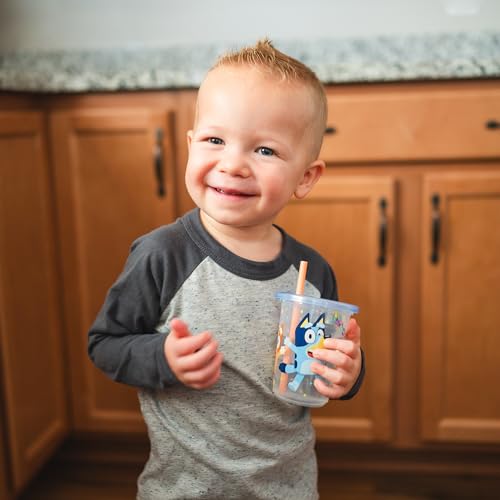
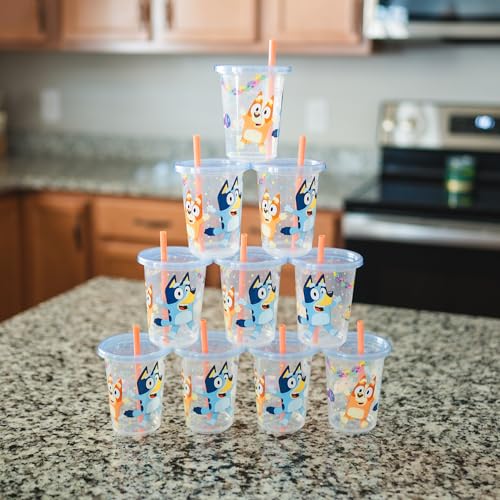
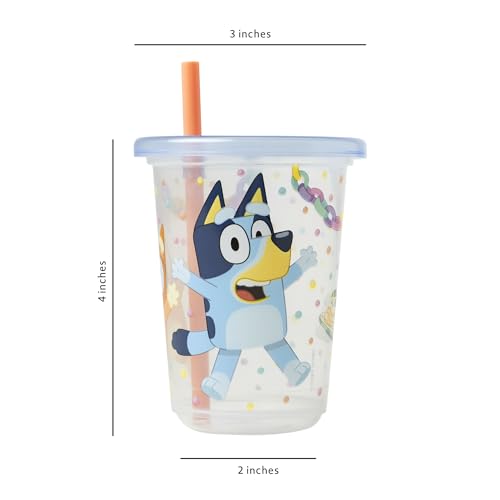
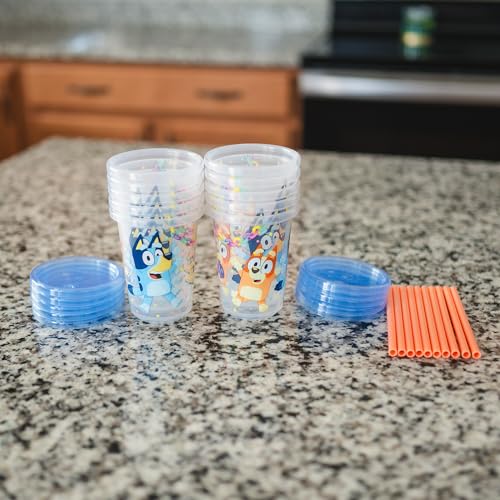
The First Years Bluey Take & Toss Toddler Straw Cups - Spill Proof Toddler Sippy Cups with Snap On Lids and Straws - Bluey Gifts and Bluey Party Supplies - 10 Oz - 10 Count
- Perfect for Families: Your kids will love these cups featuring their favorite Bluey characters and parents wil
- Perfect for Travel: The Take & Toss Bluey toddler cups are durable enough to use again and again, but at a pri
- Perfect for Parties: Skip the line for Bluey party supplies and grab some colorful Take and Toss cups to brigh
18 Months–3 Years: Independence and On-the-Go
Toddlers in this range are increasingly independent drinkers who need cups that keep up with their activity level. Spill-proofing remains important, but the priority shifts toward durability and ease of use.

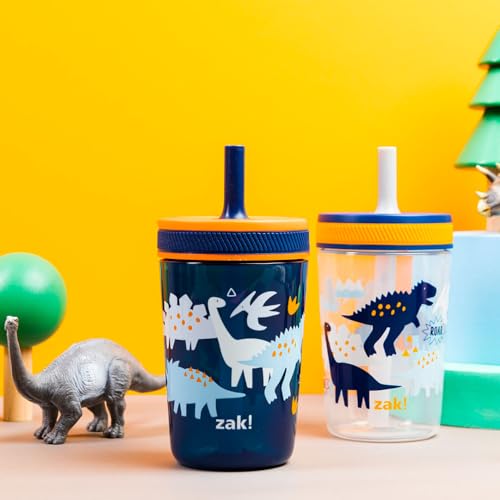
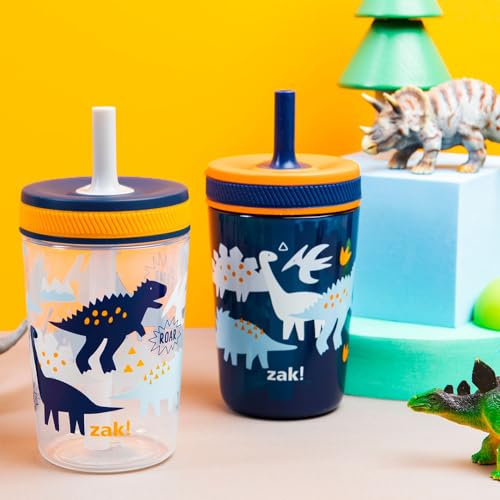


Zak Designs Kelso Toddler Cups For Travel or At Home, 15oz 2-Pack Durable Plastic Sippy Cups With Leak-Proof Design is Perfect For Kids (DinoRoar, Zaksaurus)
- SIZE: The set contains two Zak tumblers that are 3.16 inches in diameter and 6.67 inches tall. They have a cap
- MATERIAL: The durable tumblers are made of plastic with silicone straws. They're dishwasher safe, can be disas
- LEAK-PROOF DESIGN: The silicone straw has a built-in valve that allows liquid to flow when drinking and preven
7. Red Flags, Common Mistakes, and What Paediatric Professionals Actually Warn About
Even with the best intentions, it's easy to fall into patterns with toddler cups that paediatric professionals see create problems down the line. This section covers the most common mistakes — and how to sidestep them.
Mistake 1: Using a Sippy Cup as a "Walking Bottle"
The single biggest cup-related concern raised by paediatric dentists is the habit of allowing toddlers to carry a sippy cup of milk or juice around all day, sipping continuously. This pattern — sometimes called "nursing bottle syndrome" when it involves milk — bathes the teeth in sugar for hours at a time, dramatically increasing the risk of early childhood caries (tooth decay).
Mistake 2: Choosing a Cup Based on Spill-Proofing Alone
The most spill-proof cups are often the ones that require the most suction force to operate — which can actually be counterproductive for young toddlers. A valve that requires strong suction trains a child to work harder than necessary and can reinforce immature oral patterns.
Mistake 3: Never Cleaning the Valve
Silicone valves are the number one site for mould growth in toddler cups. Many parents wash the cup body thoroughly but forget to disassemble and clean the valve separately.
Mistake 4: Skipping the Open Cup Entirely
Many parents use lidded cups so consistently that their child never learns to drink from an open cup. By age 2, the WHO and AAP both recommend that children should be developing open-cup skills — even if it means accepting some spills at mealtimes.
Mistake 5: Keeping the Same Cup Too Long
Cups wear out. Silicone straws develop micro-tears, valves lose their seal, and plastic bodies can develop scratches that harbour bacteria. Most manufacturers recommend replacing cups every 3–6 months with regular use.
8. Best Toddler Cups for Every Budget — Practical Picks That Deliver
You don't need to spend a fortune to get a developmentally appropriate, safe, and durable cup. Here's an honest look at the best options across price points, with real performance context.
Budget-Friendly: Under $15
The First Years Bluey Take & Toss Cups deserve their 4.8-star rating from over 2,200 reviewers. At $13.97 for 10 cups, they're the obvious answer for daycare, grandparents' houses, and the "I-can't-find-any-cups" moments that every parent knows. The snap-on lids and straws are genuinely spill-resistant, and the Bluey branding is a legitimate motivational tool for toddlers who love the show. They're reusable despite the "toss" name — wash them and use them again and again.
The Infantino My 1st Tumbler ($13.27 for 2) is another excellent budget choice, particularly for younger toddlers just learning to use a straw. The no-pull straw design adds a meaningful safety feature at a price that won't make you wince when it gets left at the park.
Mid-Range: $15–$25
The Joypony Weighted Straw Cup ($16.19) is exceptional value for a PPSU cup with a weighted straw. If you're choosing just one cup for the 6–18 month window, this is the one I'd reach for first. The materials are genuinely premium, the weighted straw works beautifully, and the 4.6-star rating from 532 reviewers reflects real-world performance.
The Zak Designs Kelso Toddler Tumbler ($20.99 for 2) is the workhorse cup for the 18-month-to-3-year crowd. Fifteen ounces, a leak-proof silicone straw valve, and over 30,000 reviews — this cup has been field-tested by more families than almost any other product in this category. The DinoRoar design is genuinely fun, and kids who are invested in their cup tend to drink more water.
Premium: $30+
The Fimibuke 3-in-1 Stainless Steel Toddler Cup ($35.99 for 4) is the investment pick for families who want one cup system that grows with their child. The interchangeable lids — straw, spout, and snack container — mean you're buying flexibility, not just a cup. Stainless steel construction means no plastic leaching concerns, and the silicone sleeve makes it genuinely grippy for small hands. Recommended for age 3+, this is the cup to reach for when your toddler is ready to graduate from the training-wheel designs.
The bc babycare Sippy Cup Learner ($31.99 for 2) is the premium choice for very young babies (6+ months) making their first cup transition. The 13-degree ergonomic angle and anti-choking double-outlet design reflect genuine engineering thought — and for parents of babies who are prone to gagging or who have had feeding challenges, that level of design care is worth the price.
Comparison Table: Straw vs Sippy vs 360 vs Hybrid
| Cup Type | Best Age Range | Primary Benefits | Main Drawbacks | Recommended Product | Price Range |
|---|---|---|---|---|---|
| Soft-spout Sippy | 6–9 months | Familiar mechanics, easy grip, maximum spill control | Reinforces immature tongue thrust; not recommended long-term | bc babycare Sippy Cup Learner | $31.99/2pk |
| Weighted Straw Cup | 6 months–18 months | Best for oral motor development; supports speech; reduces dental caries risk | Straw requires cleaning; some babies need coaching to learn | Joypony Weighted Straw Cup | $16.19 |
| Straw Tumbler (budget) | 12 months–3 years | Affordable, motivating character designs, genuinely spill-resistant | Less durable than steel; not ideal for hot liquids | First Years Bluey Take & Toss | $13.97/10pk |
| Straw Tumbler (premium) | 18 months–3+ years | Large capacity, leak-proof valve, child-motivating designs | Heavier; valve needs regular inspection | Zak Designs Kelso Tumbler | $20.99/2pk |
| 360 / Rim Cup | 12–24 months | Closest to open-cup mechanics; no spout; spill-resistant | Valve still requires suction; can confuse younger toddlers | Fimibuke 3-in-1 Cup | $35.99/4pk |
| Multi-stage / Hybrid | 3+ years | Grows with child; interchangeable lids; snack container option | Heavier; more expensive; best for older toddlers | Fimibuke 3-in-1 Cup | $35.99/4pk |
Expert Insights
Choosing the Right Cup Is a Gift That Lasts
Here's the thing about toddler cups that no one tells you when you're standing in that overwhelming aisle: the choice you make now doesn't just affect this week's mealtimes. It shapes the muscles your child uses to form their first clear words. It influences whether they'll need orthodontic work at age 8. It determines whether the bottle wean feels like a battle or a gentle, natural progression.
That's not meant to add pressure — it's meant to reframe the decision. A well-chosen cup is genuinely one of the highest-value, lowest-cost investments you can make in your toddler's development. And the evidence is clear: when in doubt, reach for the straw cup.
The cup your toddler drinks from today is quietly teaching their mouth how to talk, swallow, and grow — choose it with that in mind.
If this guide helped you make sense of the options, save it for when your next mum-group friend is standing in that same aisle, equally confused. Share it, bookmark it, and come back when the next stage arrives — because the cups that work beautifully at 9 months will look very different from the ones your confident 3-year-old needs.
Sources & References
- American Academy of Pediatrics (AAP). "Infant Food and Feeding." HealthyChildren.org. 2023. https://www.healthychildren.org/English/ages-stages/baby/feeding-nutrition/Pages/Switching-To-Solid-Foods.aspx
- American Academy of Pediatrics (AAP). "Weaning from the Bottle." HealthyChildren.org. 2022. https://www.healthychildren.org/English/ages-stages/baby/feeding-nutrition/Pages/Weaning-from-the-Bottle.aspx
- American Academy of Pediatric Dentistry (AAPD). "Policy on Early Childhood Caries (ECC): Classifications, Consequences, and Preventive Strategies." Pediatric Dentistry. 2022. https://www.aapd.org/research/oral-health-policies--recommendations/early-childhood-caries/
- American Speech-Language-Hearing Association (ASHA). "Feeding and Swallowing Disorders in Children." Consumer Resources. 2022. https://www.asha.org/public/speech/swallowing/feeding-and-swallowing-disorders-in-children/
- World Health Organization (WHO). "Infant and Young Child Feeding." WHO Fact Sheets. 2023. https://www.who.int/news-room/fact-sheets/detail/infant-and-young-child-feeding
- Bahr, D. "Nobody Ever Told Me (or My Mother) That! Everything from Bottles and Breathing to Healthy Speech Development." Sensory World, 2010.
- Shaker, C. S. "Cue-Based Co-Regulated Feeding in the Neonatal Intensive Care Unit." SIG 13 Perspectives on Swallowing and Swallowing Disorders. ASHA, 2013.
- Merkel-Walsh, R. & Overland, L. "Functional Assessment and Remediation of Tethered Oral Tissues." TalkTools, 2018.
- American Academy of Pediatric Dentistry (AAPD). "Guideline on Infant Oral Health Care." Reference Manual. 2021. https://www.aapd.org/research/oral-health-policies--recommendations/infant-oral-health-care/
- Centers for Disease Control and Prevention (CDC). "Children's Oral Health." 2023. https://www.cdc.gov/oralhealth/basics/childrens-oral-health/index.html
Frequently Asked Questions
When should I start introducing a cup to my baby?
Are sippy cups bad for my toddler's teeth?
What is a weighted straw cup and does my baby need one?
How do I get my toddler to switch from a bottle to a cup?
Is stainless steel or plastic safer for toddler cups?
At what age should my toddler be drinking from an open cup?
How many cups does my toddler actually need?
Was this helpful?
Thanks — your feedback helps us pick what to write next.